Showing posts with label Arri Amira. Show all posts

Monday, April 13, 2015

Five 4K camcorders threatened by the $2995 4K Blackmagic URSA Mini


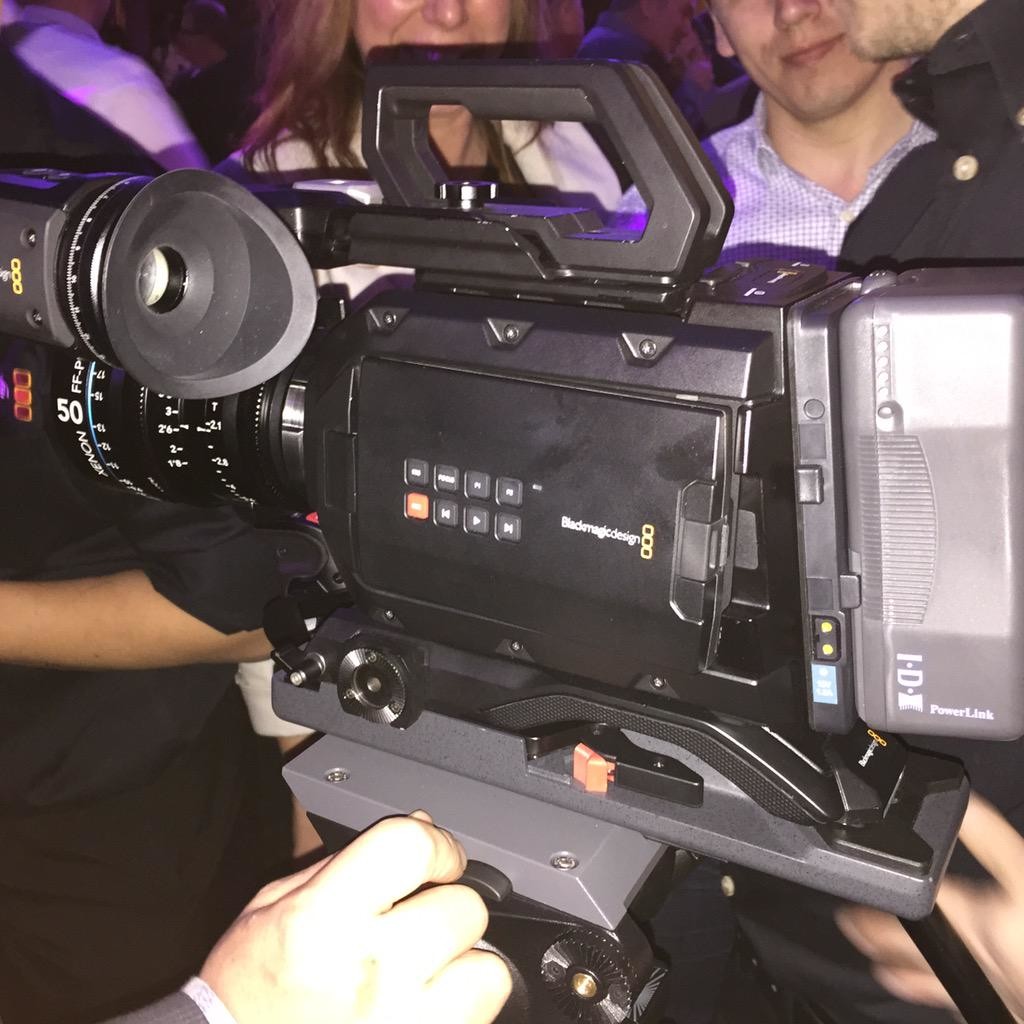
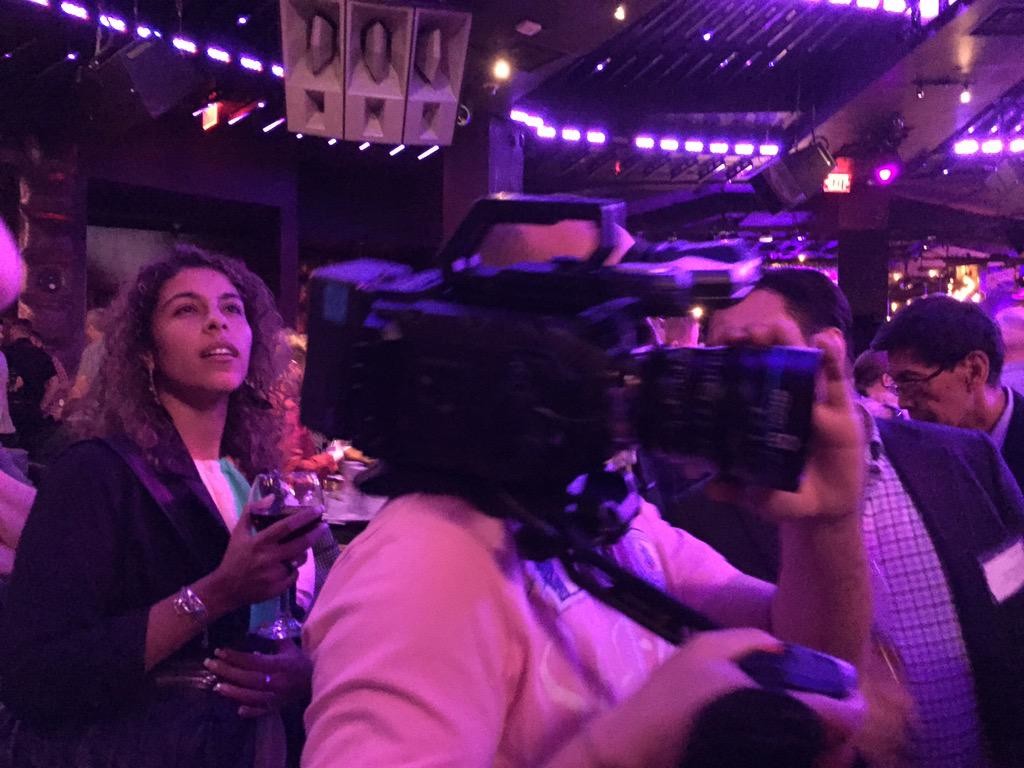
Images courtesy eriknaso.com

Thanks to Noam Kroll and Erik Naso, we have a pretty good idea of what Blackmagic Magic will unveil in Vegas this morning - to include a truly revolutionary $2995 URSA Mini Super 35 camcorder, with interchangeable lenses, a global shutter, Blackmagic's standard CinemDNG RAW, 4K, 12 stops of DR (15 stops on the $4995 4.6K model), an optional EVF and easy compatibility with a shoulder mount.

Even before we see the detailed specs from the Blackmagic press event, we do know one thing - there has to be consternation in the executive suites at AJA, Arri, Canon, JVC, Panasonic and Sony (which is exactly what Blackmagic CEO Grant Petty set out to do when he started building cameras a few years ago).

If URSA Mini can deliver URSA's RAW image quality (or better) for $2995, here are the five 4K cameras that it clearly threatens:


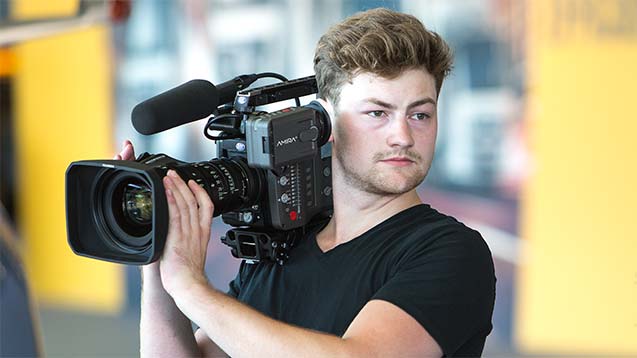
1. $40K Arri Amira. Recently upgraded to 4K, this camera produces amazing images in a near-perfect shoulder mounted form factor. And with Arri color science, it is a perfect match for industry-standard Alexa. But at $40K, its cost is prohibitive for most indies and micro-budget filmmakers. This camera will continue to see considerable use at the high end of the market, but for indies, the price mismatch between Amira and URSA Mini is ridiculous - you could buy a Mini for less than the price of renting an Amira for a week.


2. $16K Canon C300 Mark II (and $2.5K XC10). Canon's pre-NAB announcement of these cameras was clearly designed to steal the limelight at the show. URSA Mini has pretty much stolen it back. The C300 Mark II costs 5 times is much and lacks the Mini's internal raw recording.  Plus, it requires expensive rigging to get it up on your shoulder. As for the XC10 - it costs almost as much as Mini, but is a fixed lens, 1" sensor toy by comparison.


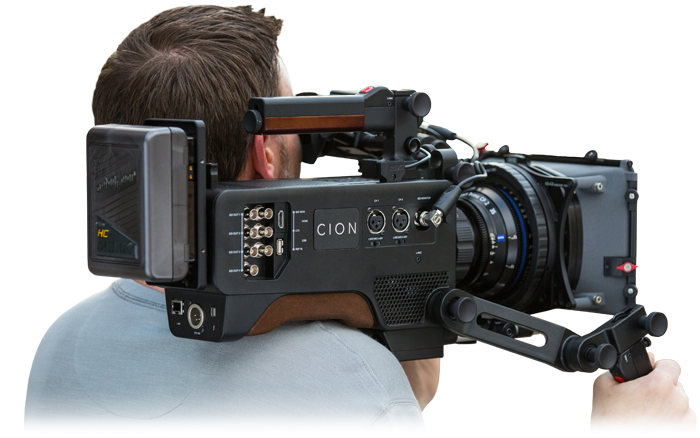
3. $9K AJA CION. Beautiful ProRes images in good light and nice shoulder mounted ergonomics - but no internal RAW. Overpriced compared to every Blackmagic RAW camera, to include Mini.


4. $8K Sony PXW-FS7. With its shoulder mount, optional viewfinder and extensible hand grip, URSA Mini appears to be a clone of the FS7 - but for $5000 less. Plus, Mini has the internal 4K RAW recording the FS7 lacks.


5. $4K JVC GY-LS300. URSA Mini very nearly strangles the LS300 in its cradle. JVC introduced this promising camera late last year, but has yet to ship it in meaningful numbers in the States. Despite the fact that its h.264 compression gave it the weakest codec of any of the cameras on this list,  it had the advantage of being the lowest priced UHD "4K" Super 35 interchangeable lens camera on the market - until today. Unfortunately for JVC, even with the viewfinder and a shoulder mount, Mini will be about the same price as the LS300 - with higher resolution, wider DR and a superior codec - and the LS300 is another camera that needs expensive rigging to get it up on your shoulder.

As far as Panasonic goes, we don't know much about their new "heir of DVX100" camcorder yet, but if it is not competitive on price, it will be stillborn at this morning's press conference.

Bottom line is that URSA Mini will force prices down even faster and further than we have seen already over the past couple of years.   Even if you never buy a Blackmagic camera, you should send Grant Petty a thank you note (unless, of course, you just bought a $2995 4K Blackmagic Production Camera).

Please keep checking back during the day for more updates - and for HCR's view of what all of this means for micro-budget shooters.

As always, if anything here has helped you to make a purchase decision, please shop using the links above or the displays below and in the margins. And even if you're not in the market for a new camera, please comment and make suggestions below. It won't cost you anything extra, and it will help to keep these posts coming.

And for the latest deals, news, tips and techniques, please follow HCR on Blogger, Twitter and YouTube  - and circle us on Google+.


Saturday, February 21, 2015

4K Panasonic VariCam 35 vs 3.2K Arri Alexa


4K Panasonic VariCam 35

3.2K Arriflex Alexa

Over the last few years, as 4K (and higher) resolution digital cinema cameras from other manufacturers have flooded the marketplace, Arri has steadfastly (some might say stubbornly) resisted giving its cameras the ability to record at resolutions higher than 2K.

In answer to a question at IBC 2012 on when there would be a 4K version of Alexa, for example, camera system product manager Marc Shipman-Mueller said  "...there is just not an urgent need for it...".

Suddenly however, the need must have suddenly become more "urgent" - because Arri has, in quick succession, announced UHD ProRes for Amira (August 2014) and 3.2K ProRes for Alexa (February 2015).

Perhaps coincidentally, the Amira upgrade was announced a few weeks before the new Panasonic VariCam 35 started shipping.  This is a camera that Panasonic seems to have aimed squarely at Arri.  With its 14+ stops of advertised dynamic range and true 4K 120fps ProRes recording, DPs are getting results like these:


For more examples of the stunning image quality this camera can produce - especially at its "dual native" ISOs of 800 and 5000, please join the new Panasonic VariCam 35 community I moderate over on Vimeo.

And if you're in the market for a high end 4K, 14+ stop cinema camera that can record 2K and 4K simultaneously, features slow motion at up to 120fps and a native ISO of 5000, you can buy or finance the VariCam 35 at Omega Broadcast for $55K.

As always, even if you're not in the market for a VariCam or an Alexa, please shop using the links above or the displays below and in the margins. It won't cost you anything extra, and it will help to keep these posts coming.

And for the latest deals, news, tips and techniques, please follow HCR on Blogger, Twitter and YouTube  - and circle us on Google+.


Sunday, September 14, 2014

5 Best Shoulder Mounted Super 35mm Cinema Cameras

The Maysles brothers with the Aaton - from "The Cameras that Changed the World"
Courtesy ASC
With this year's introduction of the Aja Cion, Blackmagic URSA (with the $345 OEM shoulder mount) and Sony PXW-FS7, it seems that camera makers are doing their best to bring back the relatively affordable, shoulder mounted cinema cameras that launched the cinéma vérité movement over half a century ago.

At the high end, the Arri Amira and the shoulder mounted version of Panasonic's modular Varicam 35 also appear to be attempts to bring "run and gun" to 35mm digital cinema.

These modern versions of the legendary shoulder mounted film cameras of yesteryear from Aaton, Arri and Eclair look to be perfect for today's digital documentary and reality shooters.

They "look to be" perfect because (except for the Amira) these new cameras are not yet widely available to users - all we really have are beauty shots from the manufacturers and their most trusted DPs.

But we're getting close. The Amira is available now - the Ursa is on pre-order - the Sony is supposed to be available in October - Panasonic's Varicam 35 Press Release says it will ship this fall and Aja is starting to release footage from the Cion.

That said, footage we've seen so far has been very impressive and lends credence to the idea that these cameras may be the harbingers of a brand new era in handheld cinematography.

So - which one should an aspiring feature documentarian buy or rent?  Well, here they are, from least expensive to most expensive, with specs, sample footage and pros and cons - because the internet loves lists.

To make the "HCR 5 Best Shoulder Mounted Super 35mm Cinema Camera" list, cameras must have:

- Super 35mm sensors,

- 10 or 12-bit in-camera codecs,

- 4K or UHD in-camera resolution plus

- An OEM shoulder mount - no third party accessories allowed.

Yes, these criteria are completely arbitrary and I've probably missed someone's favorite camera - if so, please comment below and I'll try to add it.

1. Blackmagic Design Ursa - $5995 (plus $345 OEM Shoulder Kit)


This camera barely makes the list - because it lacks one of the basics for shoulder mounted work - an OEM viewfinder.  Yes, SD-HDI EVFs are pretty easy to find, but a third party viewfinder will be an additional cost (and the time and effort it takes to rig it up) before you can start shooting vérité-style with this camera.

Another issue is Ursa's TV-centric 3840x2160 UHD resoluton.  The Digital Cinema Initiative (DCI) standard is 4096x2160 4K for theatrical projection. Most of the other camera on this list (except the Arri) offer true 4K resolution either out of the box or as a near-term firmware upgrade.

It is also limited to 60fps at both UHD and HD resolutions.  Its competitors all have higher frame rate options.

And the Ursa is a bear.  It is relatively heavy, at 16.5 lbs.  So, unless you are Samson (pre-haircut), you won't want to carry this thing around on your shoulder all day.

The image quality is great, though (see beta footage from John Brawley and Captain Hook below).  Plus it records to the least expensive media on the list - CFast cards.  You'll be able to get a Lexar 32GB CFast card for less than $200.

And because the camera is from Blackmagic Design, it includes in-camera CinemaDNG RAW recording and ProRes HQ straight out of the box - no firmware updates or external adapters required.  If you want to shoot RAW or ProRes without waiting for an upgrade, UHD is all the resolution you need and money is tight - the Ursa may be the camera for you.


2. Sony PXW-FS7 - $7999 Street Price


The FS7, introduced at IBC 2014, is the featherweight champion of this new class of camera at 5.2 lbs.  It is very well thought out, with a nice control handle/trigger/zoom rocker that would have cost thousands from a third party supplier.

It is the only Super 35 camera on the market with affordable power zoom lenses, it records to the proven 10-bit XAVC codec and Sony S-Log and uses affordable XQD S Series cards (you can get a 32GB S Series card for less than $200).

Like the Ursa, it is limited to UHD, but, unlike the Ursa, it will get a firmware upgrade to true 4K in January. That same upgrade will bring ProRes recording to the FS7, which the Ursa has straight out of the box.

The FS7 doesn't have the Ursa's ability to record RAW internally, but it can output uncompressed RAW through an external interface unit to a recorder - and it can record slow motion at up to 180fps in HD - something the Ursa cannot do.

This camera is very price competitive in its class, at $8000 body-only, including the viewfinder, shoulder mount and control handle.

Images from the FS7 appear to be very nice and the color is competent and "Sony like"  - but it will be necessary to see more (preferably downloadable) footage before making a final judgement.


3. Aja Cion - $8995


At 7.4 lbs with the top handle and 6.4 lbs without, the Cion is almost as light as the FS7.  Like the Ursa, it records directly to edit-friendly ProRes - and, like the FS7, it outputs RAW to an external recorder rather than recording it internally.

The camera records to true DCI 12-bit 4:4:4 4096x2160 4K and is the only camera on this list besides the $60K Varicam to meet the full DCI standard straight out of the box.

Aja is the newest camera manufacturer on this list (newer even than Blackmagic) - but they have a great reputation as a maker of high quality external ProRes recorders, and the images we've seen from this camera have, so far, been impressive:


4. Arri Amira - $39,999


Early this year, Arriflex introduced the Amira - a shoulder mounted camera with the advertising tagline "Pick Up > Shoot".  It is a great looking camera, with the fore-aft balance, the viewfinder and the controls all exactly where they should be.

Sadly, however, the Arri Amira needs a waiver to make the HCR list as a "4K" camera - because it was released early in 2014 with 2K output.  Unluckily for Arri, 2014 has turned out to be the year of 4K - and smartphones and superzooms are now out-resolving their $40,000 "Pick Up > Shoot" flagship.

Arri's solution to this challenge was to "up-sample"  Amira's 2K output to UHD with a recently announced firmware update.

It is yet to be seen how the image quality resulting from this process compares to 2K content up-sampled in post or recorded directly to UHD/4K.

All of that said, this camera is a documentarian's dream, with the perfect, relatively lighweight form factor.  It is 9.2 lbs body-only and records to ProRes at up to 200fps (at 2K).  Sadly, there is no implementation of ArriRAW with the Amira - but the Premium model does record up to 12-bit ProRes 4444.

The word "Premium" brings up the Amira's biggest weakness - price.  $40,000 is a lot to pay for a 2K camera in 2014.  If you want an up-sampled 2K image, you can do it in post for significantly less money.

But, again, the Amira is a DP's run and gun dream camera and produces fabulous images with the unmistakable Arri "look".  If budget permits, you can't go wrong with this camera.


Shoulder mounted Varicam HS shown

This is the most expensive camera on the list - and also one of the most interesting.  A "modular" camera, it consists of separate sensor and recorder units.  Upon its introduction, Panasonic announced 2/3" and Super 35 front end sensor modules for the Varicam recorder - but there's no reason there can't be a micro 4/3 module at some point in the future (I haven't heard that anywhere - I'm officially starting the rumor here :)).

I saw this camera at NAB, and it has everything it needs to make it a great run and gun camera - great ergonomics, variable frame rates up to 240fps in HD and 120fps at 4K, the viewfinder is in the right place - and it uses relatively inexpensive and convenient micro P2 cards (you can get a 32GB card for $229).  

At 14+ lbs, this camera is no lightweight, but the 2/3" sensor module is certainly intended for shoulder mount - and there is no reason the Super 35 module can't be put up on the shoulder as well.  

The downside to this camera, like the Amira, is how much it costs.  $60,000?  Really?

Panasonic is clearly competing with Alexa, Genesis, F65 and Epic here - but they could really take it to the competition and carve out a significant part of the market (as they did with the GH4) by undercutting them on price.  It will be interesting to see what Panasonic does.

In the meantime, it looks like the image quality from this camera is the real deal.


Closing Thoughts

This was fun to put together - and it has helped me to think through which of these cameras I would rent or buy.  I hope it was helpful to others as well.

To those who think I should have included other cameras - yes, Canon, Kinefinity, Sony PMW and RED 4K cameras are wonderful - but they are not shoulder-ready right out of the box.

And yes, you can put an Alexa or a Genesis on your shoulder - but these are heavy 2K cameras, and, although mainstream DPs still love them, they are no longer at the forefront of lightweight, high resolution Super 35mm camera technology - so I left them off the list.

Arri Alexa on third party shoulder rig

So which one is best?  As usual, the answer is "it depends".  If you want the lightest weight camera, a power zoom lens and a remote hand grip, you want the Sony.  If you want 12-bit RAW and the lowest price, you want the Blackmagic.  If you want to shoot at 240fps in HD and 120fps at 4K, you want the Varicam 35, if you want 120fps at 4K and the lowest priced shoulder-mounted DCI 4K straight out of the box, the Aja is your camera - and if you want Arri color science in a run and gun package, you should get the Amira.

Bottom line - while the micro budget revolution continues with large sensor 4K cameras such as the Panasonic FZ1000, Panasonic GH4, Sony A7s and others - the emerging Super 35 run and gun revolution is much more likely to affect what most people see on their big screen TVs and in theaters.

Independent filmmakers with moderate budgets will soon be able to own the A7s or a GH4 with a Metabones EF adapter or Speed Booster  - and then go down to the rental house and hire an FS7 or Ursa EF for a reasonable amount of money, while sharing high quality Canon glass between their cameras.

So now there are two revolutions underway - the hybrid still/video camera revolution for which this blog is named, and the "Super 35 revolution" - affordable cinema-quality digital cameras you can carry around on your shoulder.

Some would argue that this new revolution is simply an upmarket echo of the hybrid camera revolution that started a little over 5 years ago with the Nikon D90, Canon 5D Mark II and Panasonic GH1.

Others might posit that the rise of competitors like RED have forced Arri and others to respond with new technology.

I'm not smart enough to know. Whatever the reason, for people with moderate budgets who want to make 35mm movies outside of the big budget Hollywood/New York system, these are indeed the best of times.

If anything here has helped you to make a purchase decision, please shop using the links above or the displays below and in the margins. And, even if you're not in the market for a new camera, please comment and make suggestions below. It won't cost you anything extra, and it will help to keep these posts coming.

For the latest deals, news, tips and techniques, please follow HCR on Blogger, Twitter and YouTube and circle us on Google+ Thanks for your support of the revolution!


Friday, August 29, 2014

The best 4K camera deal is now even better - $500 off list price for the Blackmagic Production Camera!


Just yesterday, we posted a link to a $100 off deal on the 4K Production Camera. Well, the folks at Blackmagic Design have one-upped the discounters and, for a limited time, are offering the BMPC for $2495 at Amazon and Adorama.

$2495 is the bundle price at Adorama - you can get it either with:
Given how quickly the Pocket Cinema Camera disappeared from stock during its $500 off sale a few weeks ago, if you've been considering the Production Camera, you may want to pull the trigger on this deal soon!


Wednesday, August 27, 2014

Best 4K Camera Deal - $100 off list price for a new Blackmagic Production Camera


Here's a great deal on a Super 35mm camera with a global shutter that doesn't need a paid firmware upgrade (e.g., Arri Amira) or a hack (e.g., Sony F5) to record 4K - the Blackmagic Production Camera.

With the addition of RAW recording, histogram, audio meters, and time-to-go in the last few (free) updates, this camera has come into its own. You can get one right now from Top-Rated 100% eBay seller AMG Studios in Ohio for just $2895 - $100 below list.

Only a couple are left at this price, so if you want one, you may want to pull the trigger now (and, if they're sold out, you can still get one by clicking on one of our sponsors' display ads below).  Thanks for helping to keep the posts coming.


Tuesday, August 26, 2014

Arri hops on the 4K bandwagon with an upcoming firmware upgrade for the Amira


Following close on the heels of yesterday's news on the Sony F5 4K hack, Arriflex has issued a press release announcing an official "4K" UHD upgrade for the 2K Arri Amira (full text below). Of course, since this is Arri, the upgrade will not be free (how much it will cost is yet to be determined).

Interestingly, the release notes that the upgrade is in response to "user feedback". In other words, Amira shooters probably wondered why far less expensive cameras from Blackmagic and Panasonic recorded at higher resolution than their $40,000 cameras. It is also interesting to note that the Amira gets the upgrade and the Alexa does not.

Here's the full text of the release:

(August 26th 2014, Munich) – A new software upgrade for ARRI’s documentary-style AMIRA camera will allow it to record ProRes UHD files, answering the 4K requirements of some productions. The upgrade is expected to be available for purchase at the online ARRI License Shop by the end of 2014.
While widespread adoption of 4K or UHD for broadcast is still a long way off, an increasing number of content owners are becoming concerned that they ought to safeguard the longevity of their programs by ensuring that they will be suitable for UHD transmission, should that become a standard in the future. 
For those productions that do need to generate UHD deliverables, AMIRA will now offer the ability to record all ProRes codecs in Ultra High Definition 3840 x 2160 resolution directly onto the in-camera CFast 2.0 cards, at up to 60 fps. This feature, activated through an affordable software license (and a sensor calibration for existing AMIRAs), comes in response to feedback from AMIRA customers, some of whom have been quizzed about 4K deliverables by clients. It is made possible by the camera’s exceptional image quality, its processing power, and its reprogrammable system architecture.
Whether a production is pursuing a UHD workflow all the way through to distribution, or simply wishes to archive in UHD in order to future-proof itself against industry developments, AMIRA now offers an easy solution that requires no additional processes in postproduction.
IN-CAMERA PROCESSING
The ALEXA/AMIRA sensor has repeatedly proved its ability to deliver outstanding image quality for the 4K or even IMAX theatrical releases of high-end feature films such as Gravity, Maleficent and Iron Man 3. This proves that the ALEXA and AMIRA camera systems are already future-proof and more than suitable for the next generation of distribution formats.
For major feature films, an up-sample to 4K can be carried out after visual effects and other postproduction tasks have been completed at 2K resolution. For certain fast-paced AMIRA productions, however, there may not be the time or resources for such processes in post, which is why a 4K or UHD output direct from the camera has been requested.
AMIRA’s UHD output utilizes the same efficient 1.2x up-sample filter that allows ALEXA’s Open Gate mode to optimize the camera’s image performance for 4K distribution, as well as the same best-in-class sensor pixels. The up-sample to UHD happens in camera, and in real time.
SAME GREAT IMAGE QUALITY
Outputting UHD broadens the distribution options for the superior image quality that has helped make AMIRA, and ALEXA, such a success. The wide, 14+-stop dynamic range remains unaltered, as does the accurate colorimetry, natural skin tones, and organic look and feel. By making that high-quality image data coming out of the sensor compatible with higher spatial resolution formats, the UHD upgrade answers the concerns of certain regions and productions about a 4K future, allowing AMIRA to be used on any project, no matter what deliverables are required.
Markus Duerr, ARRI’s Product Manager for the AMIRA system, says, “Feedback about AMIRA from all over the world has been overwhelmingly positive and it is clear that the camera is already a great success, being used on an amazing variety of challenging productions. Already acclaimed for its phenomenal image quality, ease of use and versatility, the new ProRes UHD output will take these benefits even further, adding value for customers in areas like China, where 4K is a major focus of industry attention.”
Wildlife cinematographer Rolf Steinmann, who was nominated for an Emmy Award this year in recognition of his work with ALEXA on the BBC’s Wild Arabia series, is currently using his AMIRA on a movie for Disney Nature. He comments, "For cameramen like me who own their gear, the UHD upgrade is a great way to stay future-proof. From now on when there's pressure from the production side to deliver UHD, I can continue to work with AMIRA and won't have to compromise on image quality or on the camera's robustness and reliability." 
About ARRI:
With headquarters located in Munich, Germany, Arnold and Richter Cine Technik (A&R) was founded in 1917 and is the world's largest manufacturer and distributor of motion picture camera, digital intermediate (DI) and lighting equipment. The ARRI Group comprises a global network of subsidiaries and partners that covers every facet of the film industry, including worldwide camera, grip and lighting equipment rental through ARRI Rental; turnkey lighting solutions through the ARRI System Group; lab services, postproduction and visual effects through ARRI Film & TV; and film distribution through ARRI Worldsales. Manufactured products include the ALEXA camera system and AMIRA documentary-style camera; Master Anamorphic lenses; L-Series LED and M-Series HMI lights; Pro Camera Accessories; and ARRISCAN archive technologies. The Academy of Motion Picture Arts and Sciences has recognized ARRI’s engineers and their technical contributions with 18 Scientific and Engineering Awards.

In my view, this is just the beginning of the wave of 4K/UHD announcements and press releases we will see in the coming year. Manufacturers from Arri to Canon to Sony will introduce new 4K cameras and upgrade older models. If a camera doesn't record 4K, it will lose a lot of its market appeal. As a result, shooters will start unloading old 1080p and 2K cameras at bargain basement prices. It will be the story of the transition from SD to HD all over again.

This will be great news for entry-level amateur shooters who are looking to buy a 1080p camera in the next few months - but pros and high-end amateurs interested in delivering higher resolution to their clients and audiences may want to seriously consider upgrading - especially since there are reasonably priced cameras with 4K/UHD internal recording from Blackmagic and Panasonic already on the market.


Friday, January 31, 2014

In LA? Arri Amira Available for Preview!


According to The Hollywood Reporter, Arri is previewing a prototype Amira at their offices in Burbank this week.  I'd call ahead to check on the camera's availability first, though (818-841-7070).

If you do stop by, please post a comment to the blog to tell us what you thought!

P.S. - sadly, it looks like the camera will be $40K rather than $30K when it is introduced in April - which will push it closer to $2000 a week for rental.  But, as I said in the earlier post, it will save you at least that much in time and money in post-production.


Thursday, January 30, 2014

Arri Amira - Canon C500 Killer?


VS


When I was in film school in the 1970s, I read magazines such as American Cinematographer, AFI's American Film and Filmmaker.  I spent hours poring over articles with pictures of Arri 16 and 35mm cameras on set with my heroes - Stanley Kubrick, John Cassavetes, Martin Scorsese and others.
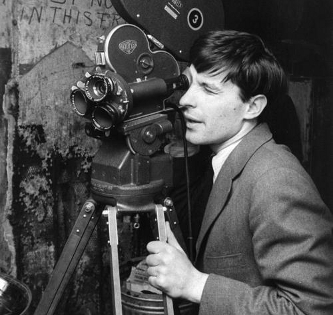
John Cassavetes with Arri 16ST

I remember looking at pictures of the fabulous Arri 16 and 35BL shoulder mounted cameras and thinking - "These are the perfect cameras for independent filmmakers.  Pick one up, load it with film and just go out and shoot.  Maybe, someday, I'll rent one of these, put it up on my shoulder, go out on the street and shoot my movie..."


Kubrick on the set of A Clockwork Orange with Arri IIc

But, then reality would set in.  Even after buying expensive film stock, shooting guerrilla on the street and convincing your friends to act in your movie for free, there were still huge processing and duplication costs and let's not get into editing and coloring.


Martin Scorsese with Arri 35BL

Fast forward 40 years.  A few days ago, Arri turned all that on its head when they announced the European prices for the new, shoulder-mounter, 2K 200fps Arri Amira ProRes camera  - prices aimed squarely at cameras such as the Canon Cinema EOS C500.


AMIRA Showreel from ARRI Channel on Vimeo.

At €25,980, the Amira is likely to come in right around $30,000 when its price is announced in the States. This was the list price for the C500 - until its recent markdown to $19,999 (perhaps Canon knows something?)

Independent filmmakers and DSLR shooters stepping up to the next level have so far gravitated toward the Cinema EOS cameras because they overcame many of the challenges presented by DSLRs - but these "cinema" cameras still require a shoulder rig and an external viewfinder for handheld shooting.

And, if you want the Amira's ability to shoot ProRes straight to the camera, you have to put up with Blackmagic Production Camera's lack of XLR inputs, ND filters and overall poor design (offset somewhat, but not completely, by its amazingly low price).

Or, if you want high speed frame rates comparable to the Amira's 200fps slow motion, you have to buy a Sony FS700 - with its ridiculous top mounted LCD/viewfinder.

Straight out of the box, none of these are handheld, self-contained cinema cameras, by any stretch of the imagination.

As Andrew Reid over at eoshd says in his thoughtful piece on the Amira, "[Canon Cinema EOS]...ergonomics have garnered praise only because the competition has been even worse."

That said, the shoulder mount is very cool, but what has me really excited about this camera is the 2K, 14-stop dynamic range, ProRes output to a CF card.  Straight from a 14-stop DR camera to an inexpensive card reader and into any NLE.  Heck, even my little laptop can handle that.

I have had a tiny taste of what that means for easy, high quality workflow with my little Blackmagic Pocket Cinema Camera.  One of the best things about this $995 marvel is its ProRes 422 output to a relatively inexpensive, fast SDXC card.  Many people started out clamoring for RAW with this camera, and ended up, as I have, shooting primarily to ProRes.  It's just that easy.

For me, this workflow advantage is just as important as the camera's ergonomic superiority and wide dynamic range.  Shooters won't need to go to post-production houses to edit and color their high quality images - they won't even need to buy expensive SSDs or computers capable of processing RAW.

Forty years ago, post-production costs were the barrier that kept many people from making the movies they wanted to make.  This camera breaks that barrier down, in a big way, and may save enough time and money in post to be worth the ~$1500 a week it will cost to rent it (based on the C500 rental price at Borrowlenses).

For me, this is more important than either 4K or internally recorder lossless RAW, and makes this camera revolutionary.

Without buying a shoulder rig, follow focus, SSDs, an external EVF or loupe, an external recorder, screw-on NDs, or the time and expense of complex post-production workflow, filmmakers can, as the Arri tagline says, just "pick up and shoot".


So this morning, for the first time in a few decades, I found myself looking at pictures of a new Arri shoulder mounted camera, and thinking - "maybe..."