With this year's introduction of the Aja Cion, Blackmagic URSA (with the
$345 OEM shoulder mount) and Sony PXW-FS7, it seems that camera makers are doing their best to bring back the relatively affordable, shoulder mounted cinema cameras that launched the
cinéma vérité movement over half a century ago.
At the high end, the Arri Amira and the shoulder mounted version of Panasonic's modular Varicam 35 also appear to be attempts to bring "run and gun" to 35mm digital cinema.
These modern versions of the legendary shoulder mounted film cameras of yesteryear from Aaton, Arri and Eclair look to be perfect for today's digital documentary and reality shooters.
They "look to be" perfect because (except for the Amira) these new cameras are not yet widely available to users - all we really have are beauty shots from the manufacturers and their most trusted DPs.
But we're getting close. The Amira is available now - the Ursa is on pre-order - the Sony is supposed to be available in October - Panasonic's Varicam 35 Press Release says it will ship this fall and Aja is starting to release footage from the Cion.
That said, footage we've seen so far has been very impressive and lends credence to the idea that these cameras may be the harbingers of a brand new era in handheld cinematography.
So - which one should an aspiring feature documentarian buy or rent? Well, here they are, from least expensive to most expensive, with specs, sample footage and pros and cons - because the internet loves lists.
To make the "HCR 5 Best Shoulder Mounted Super 35mm Cinema Camera" list, cameras must have:
- Super 35mm sensors,
- 10 or 12-bit in-camera codecs,
- 4K or UHD in-camera resolution plus
- An OEM shoulder mount - no third party accessories allowed.
Yes, these criteria are completely arbitrary and I've probably missed someone's favorite camera - if so, please comment below and I'll try to add it.
1. Blackmagic Design Ursa - $5995 (plus $345 OEM Shoulder Kit)
This camera barely makes the list - because it lacks one of the basics for shoulder mounted work - an OEM viewfinder. Yes, SD-HDI EVFs are pretty easy to find, but a third party viewfinder will be an additional cost (and the time and effort it takes to rig it up) before you can start shooting
vérité-style with this camera.
Another issue is Ursa's TV-centric 3840x2160 UHD resoluton. The Digital Cinema Initiative (DCI) standard is 4096x2160 4K for theatrical projection. Most of the other camera on this list (except the Arri) offer true 4K resolution either out of the box or as a near-term firmware upgrade.
It is also limited to 60fps at both UHD and HD resolutions. Its competitors all have higher frame rate options.
And the Ursa is a bear. It is relatively heavy, at 16.5 lbs. So, unless you are Samson (pre-haircut), you won't want to carry this thing around on your shoulder all day.
The image quality is great, though (see beta footage from John Brawley and Captain Hook below). Plus it records to the least expensive media on the list - CFast cards. You'll be able to get a
Lexar 32GB CFast card for less than $200.
And because the camera is from Blackmagic Design, it includes in-camera CinemaDNG RAW recording and ProRes HQ straight out of the box - no firmware updates or external adapters required. If you want to shoot RAW or ProRes without waiting for an upgrade, UHD is all the resolution you need and money is tight - the Ursa may be the camera for you.
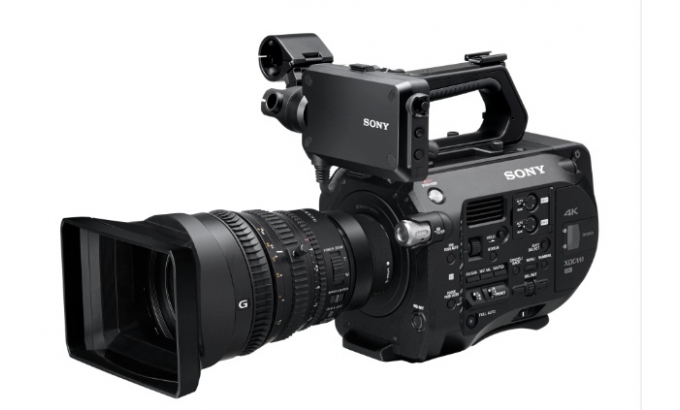
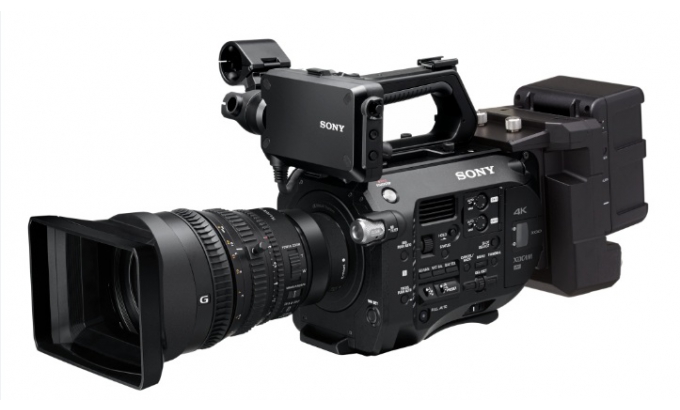
2. Sony PXW-FS7 - $7999 Street Price
The FS7, introduced at IBC 2014, is the featherweight champion of this new class of camera at 5.2 lbs. It is very well thought out, with a nice control handle/trigger/zoom rocker that would have cost thousands from a third party supplier.
It is the only Super 35 camera on the market with
affordable power zoom lenses, it records to the proven 10-bit XAVC codec and Sony S-Log and uses affordable XQD S Series cards (you can get a
32GB S Series card for less than $200).
Like the Ursa, it is limited to UHD, but, unlike the Ursa, it will get a firmware upgrade to true 4K in January. That same upgrade will bring ProRes recording to the FS7, which the Ursa has straight out of the box.
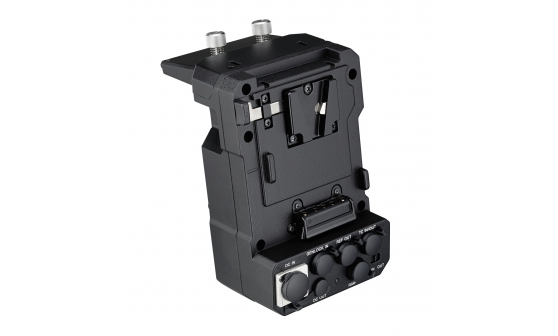
The FS7 doesn't have the Ursa's ability to record RAW internally, but it can output uncompressed RAW through an external interface unit to a recorder - and it can record slow motion at up to 180fps in HD - something the Ursa cannot do.
This camera is very price competitive in its class, at $8000 body-only, including the viewfinder, shoulder mount and control handle.
Images from the FS7 appear to be very nice and the color is competent and "Sony like" - but it will be necessary to see more (preferably downloadable) footage before making a final judgement.
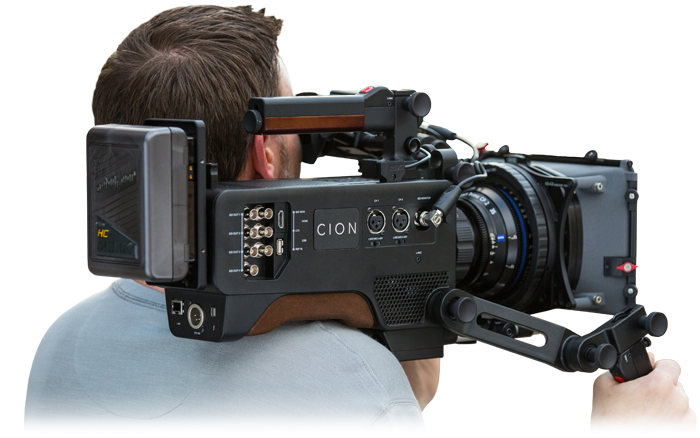
3. Aja Cion - $8995
At 7.4 lbs with the top handle and 6.4 lbs without, the Cion is almost as light as the FS7. Like the Ursa, it records directly to edit-friendly ProRes - and, like the FS7, it outputs RAW to an external recorder rather than recording it internally.
The camera records to true DCI 12-bit 4:4:4 4096x2160 4K and is the only camera on this list besides the $60K Varicam to meet the full DCI standard straight out of the box.
Aja is the newest camera manufacturer on this list (newer even than Blackmagic) - but they have a great reputation as a maker of high quality external ProRes recorders, and the images we've seen from this camera have, so far, been impressive:
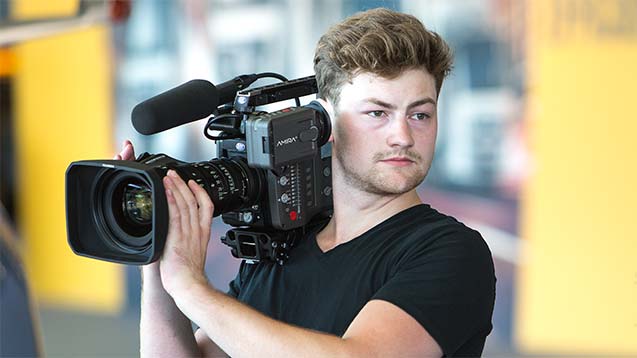
4. Arri Amira - $39,999

Early this year, Arriflex introduced the Amira - a shoulder mounted camera with the advertising tagline "Pick Up > Shoot". It is a great looking camera, with the fore-aft balance, the viewfinder and the controls all exactly where they should be.
Sadly, however, the Arri Amira needs a waiver to make the HCR list as a "4K" camera - because it was released early in 2014 with 2K output. Unluckily for Arri, 2014 has turned out to be the year of 4K - and smartphones and superzooms are now out-resolving their $40,000 "Pick Up > Shoot" flagship.
Arri's solution to this challenge was to "up-sample" Amira's 2K output to UHD with a
recently announced firmware update.
It is yet to be seen how the image quality resulting from this process compares to 2K content up-sampled in post or recorded directly to UHD/4K.
All of that said, this camera is a documentarian's dream, with the perfect, relatively lighweight form factor. It is 9.2 lbs body-only and records to ProRes at up to 200fps (at 2K). Sadly, there is no implementation of ArriRAW with the Amira - but the Premium model does record up to 12-bit ProRes 4444.
The word "Premium" brings up the Amira's biggest weakness - price. $40,000 is a lot to pay for a 2K camera in 2014. If you want an up-sampled 2K image, you can do it in post for significantly less money.
But, again, the Amira is a DP's run and gun dream camera and produces fabulous images with the unmistakable Arri "look". If budget permits, you can't go wrong with this camera.
 |
| Shoulder mounted Varicam HS shown |
This is the most expensive camera on the list - and also one of the most interesting. A "modular" camera, it consists of separate sensor and recorder units. Upon its introduction, Panasonic announced 2/3" and Super 35 front end sensor modules for the Varicam recorder - but there's no reason there can't be a micro 4/3 module at some point in the future (I haven't heard that anywhere - I'm officially starting the rumor here :)).
I saw this camera at NAB, and it has everything it needs to make it a great run and gun camera - great ergonomics, variable frame rates up to 240fps in HD and 120fps at 4K, the viewfinder is in the right place - and it uses relatively inexpensive and convenient micro P2 cards (you can get a
32GB card for $229).
At 14+ lbs, this camera is no lightweight, but the 2/3" sensor module is certainly intended for shoulder mount - and there is no reason the Super 35 module can't be put up on the shoulder as well.
The downside to this camera, like the Amira, is how much it costs. $60,000? Really?
Panasonic is clearly competing with Alexa, Genesis, F65 and Epic here - but they could really take it to the competition and carve out a significant part of the market (as they did with the GH4) by undercutting them on price. It will be interesting to see what Panasonic does.
In the meantime, it looks like the image quality from this camera is the real deal.
Closing Thoughts
This was fun to put together - and it has helped me to think through which of these cameras I would rent or buy. I hope it was helpful to others as well.
To those who think I should have included other cameras - yes, Canon, Kinefinity, Sony PMW and RED 4K cameras are wonderful - but they are not shoulder-ready right out of the box.
And yes, you can put an Alexa or a Genesis on your shoulder - but these are heavy 2K cameras, and, although mainstream DPs still love them, they are no longer at the forefront of lightweight, high resolution Super 35mm camera technology - so I left them off the list.
 |
| Arri Alexa on third party shoulder rig |
So which one is best? As usual, the answer is "it depends". If you want the lightest weight camera, a power zoom lens and a remote hand grip, you want the Sony. If you want 12-bit RAW and the lowest price, you want the Blackmagic. If you want to shoot at 240fps in HD and 120fps at 4K, you want the Varicam 35, if you want 120fps at 4K and the lowest priced shoulder-mounted DCI 4K straight out of the box, the Aja is your camera - and if you want Arri color science in a run and gun package, you should get the Amira.
Bottom line - while the micro budget revolution continues with large sensor 4K cameras such as the
Panasonic FZ1000,
Panasonic GH4,
Sony A7s and others - the emerging Super 35 run and gun revolution is much more likely to affect what most people see on their big screen TVs and in theaters.
Independent filmmakers with moderate budgets will soon be able to own the
A7s or a
GH4 with a Metabones EF
adapter or
Speed Booster - and then go down to the rental house and hire an FS7 or
Ursa EF for a reasonable amount of money, while sharing high quality Canon glass between their cameras.
So now there are two revolutions underway - the hybrid still/video camera revolution for which this blog is named, and the "Super 35 revolution" - affordable cinema-quality digital cameras you can carry around on your shoulder.
Some would argue that this new revolution is simply an upmarket echo of the hybrid camera revolution that started a little over 5 years ago with the Nikon D90, Canon 5D Mark II and Panasonic GH1.
Others might posit that the rise of competitors like RED have forced Arri and others to respond with new technology.
I'm not smart enough to know. Whatever the reason, for people with moderate budgets who want to make 35mm movies outside of the big budget Hollywood/New York system, these are indeed the best of times.
If anything here has helped you to make a purchase decision, please shop using the links above or the displays below and in the margins. And, even if you're not in the market for a new camera, please comment and make suggestions below. It won't cost you anything extra, and it will help to keep these posts coming.
For the latest deals, news, tips and techniques, please follow HCR on
Blogger,
Twitter and
YouTube and
circle us on Google+ Thanks for your support of the revolution!