Showing posts with label 4K. Show all posts

Tuesday, March 31, 2015

Adorama offering free lenses or adapters with preorders of new JVC GY-LS300!

As reported earlier, JVC is going all-out to get its soon-to-ship Super 35mm camcorder into the hands of videographers and filmmakers with a terrific promotion - and the major online retailers have started to include it on their GY-LS300 product pages.

Now, when you pre-order your new LS300 from Adorama for $3995, you get your choice of either a free Rokinon 24mm or 35mm cine lens - or a Canon EF, Nikon or PL mount adapter.

This is a real bargain - "4K for $4K" (sorry, RED) - plus compatibility with your existing lenses straight out of the box (unless you're an NEX shooter :)).

And the image quality is top-notch.

I don't know how I missed this, but when Matthew Allard did his LS300 test a few weeks ago (which I wrote about in this post), he compared the UHD and HD output from the LS300 with UHD/HD output from the Sony A7s - both recorded to the Convergent Design Odyssey 7Q+ in ProRes.

Using the same Zeiss lens on both cameras, the results were surprising.  To Matt's eye (and mine), the LS300 produces "a sharper, more detailed UHD image than the A7s."  Here's the video:


This is the camera many shooters have been waiting for since the beginning of the large sensor, interchangeable lens camera revolution - an affordable Super 35 camera with the ergonomics and features of a traditional camcorder - plus image quality that beats (or at least matches) the best of the still/video hybrids.

There will be a lot of DSLR/DSLM upgraders who will want ditch their unwieldy "rigs" and buy this camera - if only to get away from the hassle of screw-on ND filters and XLR adapters,

This is very good news for JVC - and potentially bad news for Canon, Sony, Blackmagic and Panasonic - whose $4000 offerings are either less capable (Canon, Sony and Panasonic) or less ergonomically friendly (Blackmagic).

Panasonic is especially weak in this price class, with the AF100 long overdue for a refresh.

If Panasonic wants to compete with JVC in this market segment, any new "AG-AF200" will have come in below $4000 - especially if they stick with a micro 4/3 sized sensor.  It's going to be an interesting NAB.

As always, if anything here has helped you to make a purchase decision, please shop using the links above or the displays below and in the margins. And even if you're not in the market for a new camera, please comment and make suggestions below. It won't cost you anything extra, and it will help to keep these posts coming.

And for the latest deals, news, tips and techniques, please follow HCR on Blogger, Twitter and YouTube  - and circle us on Google+.


Thursday, March 26, 2015

4K Canon EOS One - the Panasonic FZ1000 killer?


Looks like Canon is finally about to enter the consumer 4K video market.  Chinese tech site Evolife is reporting that "surprise guest" Jackie Chan joined Canon China Chairman Hideki Ozawa onstage at the Canon Spring Conference in Shanghai yesterday to introduce a new 4K concept camera - the Canon EOS One.


Canon hasn't released the specs yet, but you can see from the photos above that the camera has an external LCD viewfinder and a  fixed 10x 8.9-89mm f2.8-5.6 zoom lens - which means it probably has a 1" sensor.   This puts it squarely in competition with Panasonic's hot-selling 4K FZ1000, which has had the 4K superzoom market all to itself - until now.

This is very good news for Canon shooters, who have been waiting since the introduction of sub-$1000 4K cameras from Panasonic, Sony and Samsung last year for Canon to introduce an affordable 4K video camera.

If Canon includes a decent codec, a headphone jack and more than 30 minutes of recording time, the EOS One becomes a very interesting video camera and serious competition for the FZ1000 (depending on price, of course).

Hopefully, we'll get more details at NAB - but if this is a sign of things to come from Canon, it could mean a great show for them in Vegas this year.

As always, if anything here has helped you to make a purchase decision, please shop using the links above or the displays below and in the margins. And even if you're not in the market for a new camera, please comment and make suggestions below. It won't cost you anything extra, and it will help to keep these posts coming.

And for the latest deals, news, tips and techniques, please follow HCR on Blogger, Twitter and YouTube  - and circle us on Google+.

(all photos above courtesy Evolife.cn and Weibo user Conga)


Friday, March 20, 2015

Pro large sensor, interchangeable lens Sony NEX-EA50 shoulder mount camcorder now costs less than a Handycam!


You can now pick up a sale-priced Sony NEX-EA50UH professional APS-C interchangeable lens camcorder with a shoulder mount, a 18-200mm power zoom lens and XLR mic inputs for $2299 - less than the cost of the NEX-VG30 Handycam with the same lens and a 3.5mm consumer mic input.

These cameras may be limited to 1080p 4:2:0 recording in a 4K 4:2:2 world - but NEX-EA50 shooters such as Henry D.C. Williams nevertheless continue to produce some very good work:


If you're an NEX shooter who wants to upgrade to a professional large sensor camcorder, but who doesn't need 4K, this deal may be for you.

As always, if anything here has helped you to make a purchase decision, please shop using the links above or the displays below and in the margins. And even if you're not in the market for a new camera, please comment and make suggestions below. It won't cost you anything extra, and it will help to keep these posts coming.

And for the latest deals, news, tips and techniques, please follow HCR on Blogger, Twitter and YouTube  - and circle us on Google+.


Saturday, October 25, 2014

Which to buy - the $5499 Canon C100 Mark II or the $5995 Blackmagic URSA EF?


 VERSUS


When Canon introduced the Cinema EOS line back in 2011, they held a big Hollywood event, with expensively produced introductory videos and many of the luminaries of the industry in attendance.  They spent a lot of money and made a big deal of it - and rightfully so.  They were stepping into the big leagues of Super 35mm digital filmmaking with feature-rich and cinematographer-friendly cameras for pro Canon shooters who wanted to step up from DSLRs.

The price points for the new Cinema EOS cameras were high - but not unreasonable in a world where the competition was the then-aging Panasonic AF100 (with its small sensor and poor low light performance) and the newer Sony FS-100 with its strange top mounted LCD/viewfinder and boxy ergonomics.

And when the C100 was introduced a year later, it quickly became a DSLR upgrader's favorite - the only Super 35 camera you could buy below $10,000 with the compact form factor of a DSLR, but with no recording time limit, essentially no moire, built-in XLR jacks with decent pre-amps, a top handle and manual rather than menu-based controls of key camera functions.

And it was 100% compatible with the wide range of Canon EF lenses, which a lot of shooters had in their camera bags.

As a result, over the past couple of years, as the price for this camera dropped from the $6499 introductory price to the current $4499 (for the non-dual pixel autofocus version), Canon sold a lot of them.

But, over the past few years, the landscape has changed. Now we live in a world where $5995 will buy a Blackmagic URSA - an EF mount Super 35 camera with a global shutter and pro SDI out that records to UHD/60p 12-bit RAW.

In this world, it makes a lot less sense to announce a $5499 Canon C100 Mark II that records at a maximum 1080p resolution and 60fps frame rate to an 8-bit compressed codec - and doesn't fix the limitations of the C100's consumer HDMI output.

Nor, as far as I can tell, does it fix the C100's CMOS rolling shutter problem.

Admittedly, URSA is 10 pounds heavier, CFast cards are expensive - and shooting with a "big screen TV" in your face instead of a viewfinder is an acquired taste - but, for TV commercials and indie filmmaking, the URSA's feature set and image quality are competitive with the $20,000 C500 at the price point of a $5499 C100 Mark II with a Blackmagic HDMI to SDI converter.

To quote Filmmaker Magazine, the C100 Mark II "...would be an impressive upgrade — if this were coming out in December 2013."

Even leading C100 advocate and shooter Noam Kroll won't be upgrading.

So, above $10,000, value-conscious filmmakers will probably choose the "C300 killer", the $10,499 4K Sony PXW-FS7 with a 28-135mm f4 servo zoom instead of the $11,999 body-only 1080p C300.

While below $10,000, the $5995 UHD URSA seems to be a much better value for the money than the $5499 C100 Mark II.

If Canon fails to address the resolution/price gap with their competitors, Cinema EOS could very well find itself in the same straits as their DSLR line - where, led by serious shooters like Dave Dugdale and Caleb Pike, Canon shooters seem to be giving up on DSLRs and switching to mirrorless 4K (and 4K capable) Panasonic GH4s and Sony A7s in significant numbers.

As someone whose first video capable interchangeable lens camera was a Canon T2i, I still have hope that the company will step up to the challenge - but even if they don't, there are some great alternatives out there.

As always, if anything here has helped you to make a purchase decision, please shop using the links above or the displays below and in the margins. And even if you're not in the market for a new camera, please comment and make suggestions below. It won't cost you anything extra, and it will help to keep these posts coming.

For the latest deals, news, tips and techniques, please follow HCR on Blogger, Twitter and YouTube and circle us on Google+. Thanks for your support of the revolution!


Monday, September 29, 2014

Price breakthrough - 50" Vizio 4K TV with 240Hz refresh rate for less than $1000


This is a big deal - for both producers and consumers of Ultra High Definition content. US-based Vizio is the first of the major manufacturers to break the $1000 barrier with a 50" 4K TV.

They are also the first to deliver a 240Hz refresh rate at this price point - which will reduce or eliminate blur and artifacts.  It is also 802.11ac and H.265 ready for ultra fast, high quality streaming.

Interestingly, this TV does not have 3D capability.  Vizio seems to have made a conscious decision to ditch 3D in favor of higher resolution.   Good riddance, I say.

Announced at CES in January, this milestone TV is now available for pre-order at Amazon.

As with 1080p a few years ago, screen prices will have to continue to come down for more UHD "4K" content providers to come on board - creating a virtuous cycle and driving screen prices down even further.

In this interview on the Verge, Vizio CTO Matt McRae says "One of the things we like to do is drive transitions faster...use disruptive technology to get people technology they thought they couldn't afford..."

Their stated goal is to "get people to transition to an Ultra Hi Def living room quickly".  Specifically, they want to compress the HD to 4K transition from 3-4 years down to 1-2 years.

With YouTube's rollout of 4K delivery in December 2013, Netflix's delivery of House of Cards and Breaking Bad in 4K - and the Weather Channel's recent announcement of conversion to '4K in 4 years', it looks like the Ultra High Definition era is well and truly on its way.


Friday, September 19, 2014

Deal - Panasonic GH4 with Rokinon 14mm T3.1 cine lens and 32GB U3 card for $1999.95

If you've been looking for a 4K camera with a lens, but are on a budget, here is the best 4K deal out there right now - the 4K Panasonic GH4 with a Rokinon 14mm T3.1 cine lens and a 32GB U3 SD card for less than $2000 from Adorama via eBay .

You'll essentially be getting the lens and the SD card for $300. A great value for your money.

As of this post, there were only two left at this price. If you want one, you should pull the trigger on this deal now.

More GH4 bundles from the Adorama store on eBay here:


And, if you miss out on these Adorama deals, there are some pretty good GH4 bundled deals at Amazon too :)


Thursday, September 18, 2014

Blackmagic URSA pre-orders shipping - first footage from the wild!

The Bear is in the house - Blackmagic URSA EF - $5995 at Adorama


The 4K Super 35 Blackmagic URSA, introduced at NAB 2014 in April, has started shipping. Guy Fiorita at New York production house Shout Chorus appears to be one of the first shooters in the US (and one of the first shooters without a connection to Blackmagic) to get his hands on the camera  - and has taken the time to post a mini-review plus few NYC street scenes (video after the break).

Guy didn't have the shoulder kit, so URSA wasn't on his shoulder very long and he used a tripod for most of the shots.  But he also says that the camera's weight isn't a deal breaker.

I'll let Guy's review and video speak for themselves, but at $5995 (EF version) or $6495 (PL version), shooters might be willing to put up with a little extra weight to get 4K (UHD) RAW or ProRes at 60p plus a global shutter. Goodbye CMOS skew and "jello-vision"!

You would have to pay $28,990 to get UHD/60p and a global shutter from Sony.

It looks like Blackmagic Design is absolutely committed to revolutionizing the price model for cinema cameras - all the way from the sub-$1000 RAW capable Pocket Cinema Camera to feature production with the Super 35 URSA. Good news for filmmakers.  Bad news for the traditional camera manufacturers


Here's Guy's video:


If anything here has helped you to make a purchase decision, please shop using the links above or the displays below and in the margins. And, even if you're not in the market for a new camera, please comment and make suggestions below. It won't cost you anything extra, and it will help to keep these posts coming.

For the latest deals, news, tips and techniques, please follow HCR on Blogger, Twitter and YouTube and circle us on Google+ Thanks for your support of the revolution!


Monday, September 15, 2014

RX100 Mark III Killer? Panasonic LX100 - the world's first 4K compact camera


The news is coming fast and furious from IBC. Panasonic has just announced the long-awaited successor to the classic LX7 - the new 4K (UHD) capable LX1000 (available for pre-order at Amazon, Adorama and B&H).

Here's the press release.

And here is the UHD video image quality you can expect (please watch at your monitor's highest resolution):


With its UHD video resolution, micro 4/3 sensor, and hot shoe (in lieu of a built in flash), this little enthusiast camera is the world's first "4K" compact and will be a great alternative to the similarly priced Sony RX100 Mark III - especially with its smaller 1" sensor, HD video resolution and lack of a hot shoe.

Here are more pictures and video of this lovely little camera:


If anything here has helped you to make a purchase decision, please shop using the links above or the displays below and in the margins. And, even if you're not in the market for a new camera, please comment and make suggestions below. It won't cost you anything extra, and it will help to keep these posts coming.

For the latest deals, news, tips and techniques, please follow HCR on Blogger, Twitter and YouTube and circle us on Google+ Thanks for your support of the revolution!


Wednesday, August 27, 2014

Paul Ream's Sony F5 4K hack is real - Sony F55 owners not happy


Sony F5 owners just got an early Christmas present. Paul Ream's latest podcast describes exactly how he unlocked 4K recording on the heretofore 2K Sony F5 (discussion of Sony business ethics starts at 11:30 - legal caveats and technical discussion start at 17:15).

For those who need to see the procedure in writing, Paul has spelled it out:

Following on from our fourth podcast, this is the page where we’ve written the 4K4F5 guide down. It goes like this:
  • Save a 2K XAVC ‘All Files’ setting to a blank SD card.
  • Pop the SD card into your computer.
  • Go to the Private/Sony/PRO/CAMERA/PMWF5 directory.
  • Open the 001.ALL file with a plain text editor.
  • Delete the whole of the first line (32 digit checksum)
  • Change line 150 to one of the settings listed below.
  • Save the file as 001.ALL (Plain text)
  • Generate a new md5 checksum for the file.
  • Open the file in your text editor again and add the new checksum as a new first line.
  • Save and pop the SD card in your F5.
  • Enjoy your new settings which can then be copied in camera to taste.
Your choice of new line 150′s are:
  • 4K at 23.98 enter: 150=4096,2160,1001,24000,1,1,0,8,0,0,0,1,1,1,6
  • 4K at 24 enter: 150=4096,2160,1,24,1,1,0,8,0,0,0,1,1,1,6
  • 4K at 25 enter: 150=4096,2160,1,25,1,1,0,8,0,0,0,1,1,1,5
  • 4K at 29.97 enter: 150=4096,2160,1001,30000,1,1,0,8,0,0,0,1,1,1,4
  • 4K at 50 enter: 150=4096,2160,1,50,1,1,0,8,0,0,0,1,1,1,3
  • 4K at 59.94 enter: 150=4096,2160,1001,60000,1,1,0,8,0,0,0,1,1,1,3
  • QFHD at 23.98 enter: 150=3840,2160,1001,24000,1,1,0,8,0,0,0,1,1,1,6
  • QFHD at 24 enter: 150=3840,2160,1,24,1,1,0,8,0,0,0,1,1,1,6
  • QFHD at 25 enter: 150=3840,2160,1,25,1,1,0,8,0,0,0,1,1,1,5
  • QFHD at 29.97 enter: 150=3840,2160,1001,30000,1,1,0,8,0,0,0,1,1,1,6>/li>
  • QFHD at 50 enter: 150=3840,2160,1,50,1,1,0,8,0,0,0,1,1,1,3
  • QFHD at 59.94 enter: 150=3840,2160,1001,60000,1,1,0,8,0,0,0,1,1,1,3
To generate an md5 checksum on a mac you can simply use terminal. Just type “md5 001.ALL” when you’re in the same directory as the file. Finally paste the 32digit code back into the first line in the file.

Not sure how to do this on Windows but there are web sites that will generate an md5 file code just by dropping it on a page!

Alternatively, here’s all my ‘ALL file’ settings as an example. They were generated on my camera with firmware 4.11. These can be saved to an SD card and used directly in your camera. Once loaded you can change any other menu settings and save them to your own camera cards as normal.

ALL_files_4.11

It is very interesting to see the shock and outrage over this discovery on Philip Bloom's Facebook page among the F55 crowd, though.

Camera companies make business decisions that disadvantage consumers all the time - at both consumer and pro ends of the market. I don't know why people continue to be surprised by this.

That said, if you've been thinking about getting the F5, but have been holding out for 4K, now may be the time to pick one up from existing stock from retailers (they are still $16,490 at Adorama). Sony will probably close this loophole in units that are yet to ship from the factory.


Tuesday, August 26, 2014

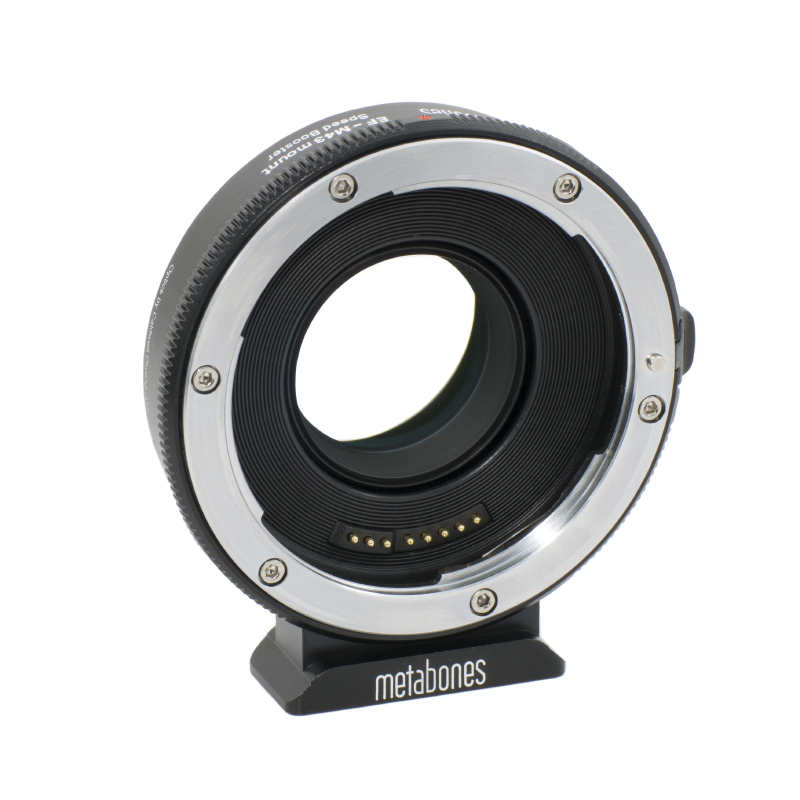
Finally - Metabones releases the Canon EF to micro 4/3 Speed Booster - Andrew Reid at EOSHD has one!


The adapter that so many Canon shooters have longed for has finally arrived. A powered Speed Booster from Metabones that adapts Canon EF (but not EF-S) lenses to micro 4/3 cameras such as the Panasonic GH4 - with full aperture control and image stabilization. I can't wait to get my hands on one - but until then, I'll have to live vicariously through Andrew's hands on experience with it.

That said, everyone is happy about this except Canon. My theory was that they were paying Metabones to delay the release of this adapter to keep Canon shooters from switching to the GH4 (that's a joke, for all of my literally minded readers). Seriously, though, I'll bet a lot of used Canon DSLRs go up on eBay in the next few days.


Arri hops on the 4K bandwagon with an upcoming firmware upgrade for the Amira


Following close on the heels of yesterday's news on the Sony F5 4K hack, Arriflex has issued a press release announcing an official "4K" UHD upgrade for the 2K Arri Amira (full text below). Of course, since this is Arri, the upgrade will not be free (how much it will cost is yet to be determined).

Interestingly, the release notes that the upgrade is in response to "user feedback". In other words, Amira shooters probably wondered why far less expensive cameras from Blackmagic and Panasonic recorded at higher resolution than their $40,000 cameras. It is also interesting to note that the Amira gets the upgrade and the Alexa does not.

Here's the full text of the release:

(August 26th 2014, Munich) – A new software upgrade for ARRI’s documentary-style AMIRA camera will allow it to record ProRes UHD files, answering the 4K requirements of some productions. The upgrade is expected to be available for purchase at the online ARRI License Shop by the end of 2014.
While widespread adoption of 4K or UHD for broadcast is still a long way off, an increasing number of content owners are becoming concerned that they ought to safeguard the longevity of their programs by ensuring that they will be suitable for UHD transmission, should that become a standard in the future. 
For those productions that do need to generate UHD deliverables, AMIRA will now offer the ability to record all ProRes codecs in Ultra High Definition 3840 x 2160 resolution directly onto the in-camera CFast 2.0 cards, at up to 60 fps. This feature, activated through an affordable software license (and a sensor calibration for existing AMIRAs), comes in response to feedback from AMIRA customers, some of whom have been quizzed about 4K deliverables by clients. It is made possible by the camera’s exceptional image quality, its processing power, and its reprogrammable system architecture.
Whether a production is pursuing a UHD workflow all the way through to distribution, or simply wishes to archive in UHD in order to future-proof itself against industry developments, AMIRA now offers an easy solution that requires no additional processes in postproduction.
IN-CAMERA PROCESSING
The ALEXA/AMIRA sensor has repeatedly proved its ability to deliver outstanding image quality for the 4K or even IMAX theatrical releases of high-end feature films such as Gravity, Maleficent and Iron Man 3. This proves that the ALEXA and AMIRA camera systems are already future-proof and more than suitable for the next generation of distribution formats.
For major feature films, an up-sample to 4K can be carried out after visual effects and other postproduction tasks have been completed at 2K resolution. For certain fast-paced AMIRA productions, however, there may not be the time or resources for such processes in post, which is why a 4K or UHD output direct from the camera has been requested.
AMIRA’s UHD output utilizes the same efficient 1.2x up-sample filter that allows ALEXA’s Open Gate mode to optimize the camera’s image performance for 4K distribution, as well as the same best-in-class sensor pixels. The up-sample to UHD happens in camera, and in real time.
SAME GREAT IMAGE QUALITY
Outputting UHD broadens the distribution options for the superior image quality that has helped make AMIRA, and ALEXA, such a success. The wide, 14+-stop dynamic range remains unaltered, as does the accurate colorimetry, natural skin tones, and organic look and feel. By making that high-quality image data coming out of the sensor compatible with higher spatial resolution formats, the UHD upgrade answers the concerns of certain regions and productions about a 4K future, allowing AMIRA to be used on any project, no matter what deliverables are required.
Markus Duerr, ARRI’s Product Manager for the AMIRA system, says, “Feedback about AMIRA from all over the world has been overwhelmingly positive and it is clear that the camera is already a great success, being used on an amazing variety of challenging productions. Already acclaimed for its phenomenal image quality, ease of use and versatility, the new ProRes UHD output will take these benefits even further, adding value for customers in areas like China, where 4K is a major focus of industry attention.”
Wildlife cinematographer Rolf Steinmann, who was nominated for an Emmy Award this year in recognition of his work with ALEXA on the BBC’s Wild Arabia series, is currently using his AMIRA on a movie for Disney Nature. He comments, "For cameramen like me who own their gear, the UHD upgrade is a great way to stay future-proof. From now on when there's pressure from the production side to deliver UHD, I can continue to work with AMIRA and won't have to compromise on image quality or on the camera's robustness and reliability." 
About ARRI:
With headquarters located in Munich, Germany, Arnold and Richter Cine Technik (A&R) was founded in 1917 and is the world's largest manufacturer and distributor of motion picture camera, digital intermediate (DI) and lighting equipment. The ARRI Group comprises a global network of subsidiaries and partners that covers every facet of the film industry, including worldwide camera, grip and lighting equipment rental through ARRI Rental; turnkey lighting solutions through the ARRI System Group; lab services, postproduction and visual effects through ARRI Film & TV; and film distribution through ARRI Worldsales. Manufactured products include the ALEXA camera system and AMIRA documentary-style camera; Master Anamorphic lenses; L-Series LED and M-Series HMI lights; Pro Camera Accessories; and ARRISCAN archive technologies. The Academy of Motion Picture Arts and Sciences has recognized ARRI’s engineers and their technical contributions with 18 Scientific and Engineering Awards.

In my view, this is just the beginning of the wave of 4K/UHD announcements and press releases we will see in the coming year. Manufacturers from Arri to Canon to Sony will introduce new 4K cameras and upgrade older models. If a camera doesn't record 4K, it will lose a lot of its market appeal. As a result, shooters will start unloading old 1080p and 2K cameras at bargain basement prices. It will be the story of the transition from SD to HD all over again.

This will be great news for entry-level amateur shooters who are looking to buy a 1080p camera in the next few months - but pros and high-end amateurs interested in delivering higher resolution to their clients and audiences may want to seriously consider upgrading - especially since there are reasonably priced cameras with 4K/UHD internal recording from Blackmagic and Panasonic already on the market.


Thursday, July 24, 2014

Blackmagic Design announces audio meters, time-to-go & histogram for the Production Camera 4K!


Finally! Today, Blackmagic Design announced the release of firmware update 1.9 for the Production Camera 4K, delivering long-awaited features such as audio meters, SSD record time remaining and a histogram - all in a semi-transparent "heads up display" at the bottom of the screen.

This update was important enough to Blackmagic Design that CEO Grant Petty shot a hands-on video to showcase the new features: http://www.blackmagicdesign.com/support/video/1446

Sadly, this update is not yet available for long-suffering Blackmagic Cinema Camera owners or for the entry-level Pocket Cinema Camera, but Blackmagic assures us that this upgrade will roll out for the other cameras in the Blackmagic line over the next few weeks.

Here's the press release:

Blackmagic Design announces new “heads up display” for Blackmagic Production Camera 4K

Fremont, CA - July 24, 2014 - Blackmagic Design today announced the immediate availability of Camera 1.9 software which includes new “heads up display” on screen metering that provides customers with histogram, peak audio meters and recording time remaining for the Blackmagic Production Camera 4K.

Camera 1.9 update is available now free of charge from the Blackmagic Design website.

Using these additional displays for the Blackmagic Production Camera 4K means that customers can easily and quickly check important camera settings such as exposure, audio level and the remaining space on their recording disk.

Using the histogram scope, customers can now easily and rapidly set exposure in a shot as the histogram shows the the distribution of luminance in their images and if highlights or shadows are being clipped. Images with clipped highlights or shadows make it much harder to color grade the shots in post production, so having the histogram feature helps DOP’s shoot with confidence. The histogram scope is real time so highlights and shadows can be adjusted interactively with the lens setting, ensuring images are not clipped and maximum detail in tonal ranges is preserved, critically important for allowing colorists to create amazing grading effects in post production using the full contrast range of the camera.

Camera 1.9 software update also includes a new audio metering with peak hold feature to allow setting audio levels for Channels 1 and 2 when using the built in microphone as well as externally connected audio sources. The audio meters make it fast to view audio levels and adjust camera audio gain so that audio is not clipped or distorted.

The new heads up display also includes a recording time remaining indicator that shows remaining space on the recording disk. The time remaining indicator is automatically re-calibrated to ensure an accurate time remaining value if the either the frame rate or codec are changed, and displays red when the disk is getting full.

This update is available to our Blackmagic Production Camera 4K customers free of charge. Customers can download this update now and install it onto their camera from either Mac or Windows computers using a simple USB cable connection to the camera. Once the update is complete, customers can view the new on screen menus by simply swiping their finger up from the bottom of the capacitative touch screen.

This new heads up display will be released for other models of Blackmagic Design cameras over the coming weeks, so an even wider range of Blackmagic Design camera customers can get the benefits of this new display.

“We are extremely excited that we have been able to provide yet another release for our camera customers ,” said Grant Petty, CEO of Blackmagic Design. “Having this new heads up display with on screen scopes will enable film makers to shoot the most amazing images with confidence that they will get incredible results in post production!”

Another hat tip to Blackmagic Design for making these amazingly capable and affordable cameras more usable - but it would have been nice to have these basic features built-in when they were shipped.

That said, with these new updates, it may be time to take a fresh look at Blackmagic Cameras. The $2995 Production Camera 4K is still the least expensive UHD Super 35mm RAW camera on the market with a "no-jello" global shutter and the Pocket Cinema Camera is now an unbelievable bargain at $495


Saturday, July 5, 2014

Another Canon blog says, "It's time to move on and say goodbye to the Mark III"


In the course of his terrific short review of the new $2498 Sony A7s, Johnnie Behiri of cinema5d joins the chorus of Canon bloggers who are either leaving Canon themselves - or explicitly recommending that shooters "move on" from the 5D Mark III.

I happen to agree with Johnnie (and Dave Dugdale and Caleb Pike) on this. The $3000+ 5D Mark III is not a very good value for money for video shooters at this point - especially now that it has lost its competitive advantage as the only moire-resistant full frame video-capable camera in the marketplace.

Like the GH4, the full-frame A7s meets or beats the 5D Mark III's image quality without forcing shooters to deal with a on old-fashioned fixed LCD, lack of video viewfinder, poor codec selection and soft 1080p.

Johnnie also prefers the A7s' full-frame look to the GH4's at 1080p - even though the Sony is a 30 minute, region-locked camera with no internal 4K recording (and its external 4K ouput is 8-bit).

As you can tell from this list, I differ a little from Johnnie here. I need a video camera with hours of continuous recording, a battery that will last me all day and internal 4K for future-proofing.  The full-frame look doesn't make up for the A7s' lack of these basics, in my view.

But for Canon shooters who are hesitant to move to a micro 4/3 sensor - especially those who want a smart adapter for their EF lenses- the best full-frame video-capable camera on the market right now is the Sony A7s (and I haven't even mentioned its amazing low light capabilities).

To underline how good this camera is (and how good Johnnie is), here's the video that accompanied his review:


Pretty much the only way for Canon to beat the A7s among full-frame afficionados would be to introduce a "1D C lite" 5D Mark IV with internal 4K recording to a decent codec. Or, as Dave Dugdale suggested the other day, they could just lower the price on the 1D C.

It will be very interesting to see what Canon does here.

If anything here has helped you to make a purchase decision - please shop by clicking on the links above or the display ads below. And please support our sponsors by clicking on their banners in the headers and in the margins.  It won't cost you anything extra, and it helps to keep the blog up and running. Thanks for your support!

For the latest hybrid camera news, deals and tips, please follow HCR on Blogger, on YouTube, on Google+ and on Twitter.


Friday, July 4, 2014

Great Price for Open Box Panasonic GH4 at Adorama - Won't Last Long!


Even though my used GH4 came in last week, I promised you that I would keep looking for used cameras deals for you - and I found one! This open box Panasonic GH4 is just $1613.09 from Adorama!

At this price, my guess is that this camera won't be there for long. If you want a GH4 right now, and don't want to pay full retail - click here or on the picture above to order this barely used, factory warrantied unit.

If it's already sold, and you're ready to order at full price, you can click on the display ad below. It won't cost you anything extra, and it will help keep these posts coming. Thanks for your support for the Hybrid Camera Revolution!


Wednesday, July 2, 2014

Which is better for Chromakey - the 4K compressed Panasonic GH4 or the 2.5K RAW Blackmagic Cinema Camera?


Here's a very nicely done video from Paul Shillito at Video-Alchemy, who gives us an in-depth discussion of keying with 10-bit ProRes 422 and uncompressed RAW video from the 2.5K Blackmagic Cinema Camera (BMCC)  - and then compares the results to an 8-bit 4:2:0 compressed video key from the 4K Panasonic GH4.

In this 15:25 video, Paul does a 9 minute, detailed walk through of the setup - and then about 6 minutes of side-by-side conclusions. If you'd like to cut straight to the bottom line, please click here.

It would be reasonable to expect that the 8-bit compressed video would not hold up well to the key as uncompressed RAW - but let's take a look at the video and see:


So - to my eyes at least, compressed 4K looks clean enough for a production quality key. This should be interesting to two groups of people. First, those who have already bought their GH4s, and who have had concerns that they'll need to buy an external 10-bit recorder to get a clean key. Those folks can relax - internally recorded 4K works just fine.

The second group is those who have hesitated before buying the GH4 because they were concerned about this issue. Those folks can relax too - and go ahead and order their cameras.  The best price for an in-stock GH4 right now is $1793.95 at Cameta via eBay.


Tuesday, July 1, 2014

Sony A7s Now In Stock and Shipping from Adorama and Amazon!


You have to give it to Sony. When they promise a camera on the first of July, they deliver it on the first of July! The amazing full frame Sony A7s is now in stock and shipping at Adorama, Amazon and B&H.

Some reviewers who've shot with it like it better than the GH4. Here's one of the earliest and best examples of what the A7s can do from W. Ashley Maddox of Missionary Films:


In an interview over on newsshooter.com, Ashley says, "The buttons took about an hour to get used to – compared to days that it took for me to get used to the Panasonic GH4’s buttons" and "Editing [A7s footage] was way easy compared to the GH4 and FS700 in S-Log 2. I found that the noise was low. And when there was noise, it had a natural grain look to it vs. the muddy blacks that I am seeing in the GH4".

For shooters who are accustomed to Sony menus, who really really want mirrorless full frame with great low light performance, don't mind buying an external recorder to get UHD, and who don't need 10 bit output or true 4096x2160 4K, this may be the right camera.

If anything here has helped you to make a buying decision, please order through the links above or the display ads below and support our sponsors in the margins. Ordering through these links doesn't cost you anything extra and allows us to keep these posts coming. Thanks for your support of the Hybrid Camera Revolution!


Saturday, June 28, 2014

What features do you want to see in the Panasonic GH5?


Philip Johnston, the HD Warrior from Scotland, is now shooting with the GH4 (two of them, actually) in the course of writing his review.  Philip has just set up a great separate blog called "GH4 Crew" that is focused exclusively on the GH4.

There's lots of good stuff here and on HD Warrior - to include behind the scenes coverage of a photo shoot he did recently at a local event.

As much as he likes the camera, in his latest post, Philip makes a in interesting list of the features he'd like to see in the GH5:
  • The thumbwheel at the back of the GH4 controls the speed in manual mode, I would like Panasonic to update the Firmware (FW) to allow me to lock this at 1/50th preventing me moving this to another speed accidentally as has happened.
  • Could we also have the ability to switch on the LCD display rather than the present mode where it switches off at about seven minutes.
  • Can we also have the ability to buy an upgrade FW package that gets rid of the 30m record time.
  • A menu mode to allow us to view 4K as 1080 via the SDI connectors the same as you offer with the HDMI output.
  • Can you make sure that the GH5 has 2 SDXC slots please.
I agree with Philip  on a few of these, but my list is a little different from his.  What I really want in the GH5 (in this order):
  • Built-in ND filter
  • The ability to set the screen blanking time on the LCD (same as his #2)
  • Internal 10-bit 4:2:2 4K
  • 2 SDXC slots (same as his #5)
  • 4K/60p
  • 1080/120p
  • Hole on the bottom of the camera to match the anti-twist pin on standard quick release plate
What's your list?  Please answer in the comment section or back on Reddit.

Look forward to seeing your list!


Sunday, June 22, 2014

GH4 Leads Major Bloggers to Leave Canon DSLRs - A Trickle or Beginning of a Flood?


Image courtesy wikimedia.org


A few years ago, when one of the most outspoken Canon EOS bloggers on the web, Andrew Reid of eoshd.com, switched to the Panasonic GH2 and starting writing about the lack of innovation in Canon video DSLRs, he was a bit of a voice in the wilderness.

In the early part of this decade, most of the bloggers I followed, emm at cheesycam.com; Dave Dugdale at learningdslrvideo.com; Caleb Pike at dslrvideoshooter.com; DJ at dslrfilmnoob.com and others were all shooting video pretty much exclusively with Canon DSLRs (I really respect all of these guys, so please visit their blogs and support them).

As long time readers of this blog and my forum postings will know, I tried a Canon video DSLR for a few months in early 2010, but quickly became frustrated with its limitations - no viewfinder in video mode, no autofocus in video mode, limited recording time and lack of a swiveling LCD. My GH2 fixed all of those problems for me back then (plus problems I didn't know I had, such as moire and aliasing) and I have been a mirrorless shooter ever since, upgrading to the GH3 in 2012 and to the GH4 this year.

That is why what is happening now is so interesting to me personally (and I admit it, a little satisfying). In the wake of the GH4's release, several of the bloggers on the list above, all of whom have been identified very closely with Canon DSLRs, are now very publicly expressing their displeasure with Canon's lack of innovation over the past 5 years and failure to add even the most basic video features, such as 1080/60p and focus peaking, to their DSLRs below the $10,000 Canon 1D C. Heck, they won't even give shooters a headphone jack below the price of the $3000+ Canon 5D Mark III.

Here is why Dave Dugdale and Caleb Pike are leaving Canon, in their own words:


At the high end, DSLR shooters who can afford it have already moved away from DSLRs entirely, and up to large sensor, interchangeable lens large sensor camcorders from Canon Cinema EOS, Blackmagic and Sony. So many, in fact, that many mainstream professional shooters and blogs have declared the DSLR revolution to be "over".

But there are still many serious shooters who have resisted the move away from Canon DSLRs because of the size & cost of high end camcorders - or because, like me, they want to carry a single hybrid camera for stills and video. Among these shooters were Dave Dugdale and Caleb Pike - but now, because of Canon's failure to innovate, these serious Canon DSLR shooters are moving on.

This is very bad news for Canon, in my view.  Many mature industries over the past few decades have taken their market position for granted, failed to innovate, kept prices higher than the market was wiling to pay - and been overtaken by smaller, more nimble competitors (see the US auto and micro-computer industries circa 1974).

The mass market often follows key thought-leaders who drive what the media and then consumers start to believe about products.  If the "Canon" brand and the words "lack of innovation" start to become linked in the minds of a critical number of consumers, this great company could very well suffer the fate of many leading companies that have gone before it.

If anything on this page has helped you to make a buying decision, please click on the links and images above and below, and please support our sponsors by clicking on the banners in the margins.  It won't cost you anything extra, and it will help keep these posts coming.  Thanks so much!


Tuesday, June 10, 2014

How to Record 4K with the Sony A7s - Without Waiting for the Atomos Shogun!


A lot of the excitement surrounding the introduction of the $2498 full frame video-centric "4K" Sony A7s at NAB a few months ago was a little muted when we discovered that the camera could only record 4K externally. But, we were told, the new $1995 Atomos Shogun 4K HDMI recorder was coming soon - and for just $4500, we would have an awesome 4K low light machine.

Well, filmmaker Yoshihiro Enatsu was unwilling to wait. He lashed up a $280 Blackmagic Design 4K HDMI-6G SDI converter and an $1895 Blackmagic Design HyperDeck Studio Pro, and created this incredible 4K video:


The setup is a lot bulkier than a Shogun, but the results speak for themselves. If you need 4K full frame right now, can get AC power into the field - and you don't want to spend the money for a $3495 Aja Ki Pro Quad - this looks like a workable solution.

If anything here has helped you to make a purchase decision, please click on the links above or the display ad below - it won't cost you anything extra, and it will help keep the information in these posts coming. Thanks for your support!

Sunday, June 8, 2014

Record 10-bit 4:2:2 ProRes with a $295 Atomos Ninja Star Recorder and $160 Atomos CFast 1.0 Card!


When Atomos announced their new 1080p ProRes recorder, the $295 Ninja Star, at NAB 2014, it was seriously overshadowed by all the hype surrounding their new 4K HDMI recorder, the $1995 Shogun. But, over the last few months, excitement has built over the Star - principally because of its price point.

But the catch has been Atomos' choice of the Star's recording medium - CFast cards, the 2.0 versions of which have been priced in the thousands of dollars. But Atomos has just fixed that with the announcement of an Atomos-branded CFast 1.0 card.

Here's the announcement from Jeromy Young (CEO and founder of Atomos) to Nate Weber over at newsshooter.com - shot last week at CineGear 2014 in LA (I wanted to drive down, but the CEO here is cutting back on my expenses :)):


This is really exciting news. Until now, the least expensive "field" recorder has been the bulkier $327 Blackmagic Hyperdeck Shuttle. I put "field" recorder in quotes because powering the Hyerdeck requires an AC outlet or generator.

The Ninja Star, on the other hand, will be just $295 and battery powered - with HDMI pass-through; an audio level monitoring display, a time remaining indicator and large, readable controls.  With a $159 64GB CFast 1.0 card, you'll be able to record 10-bit 4:2:2 Pro Res to a CF card for a total of $455!  For those who don't need the monitor built into the $695 Atomos Ninja 2, that's a big deal.

The other exciting news in the video is Atomos' custom micro HDMI to micro HDMI cable. With this cable, Panasonic GH4 shooters will be able to record 1080p 10-bit 4:2:2 ProRes straight to a tiny external recorder without the additional hassle and weight of a micro HDMI to HDMI adapter.  This will be ideal for aerial or run and gun shooters, who need a compact and lightweight solution.

If anything here has helped you to make a buying decision, please click on the links above or the display ads below.  It won't cost you anything extra, and it will help to keep these posts coming.

And please follow us on Blogger, YouTube and Google Plus. Thanks for your support!