Showing posts with label Canon. Show all posts

Thursday, March 26, 2015

4K Canon EOS One - the Panasonic FZ1000 killer?


Looks like Canon is finally about to enter the consumer 4K video market.  Chinese tech site Evolife is reporting that "surprise guest" Jackie Chan joined Canon China Chairman Hideki Ozawa onstage at the Canon Spring Conference in Shanghai yesterday to introduce a new 4K concept camera - the Canon EOS One.


Canon hasn't released the specs yet, but you can see from the photos above that the camera has an external LCD viewfinder and a  fixed 10x 8.9-89mm f2.8-5.6 zoom lens - which means it probably has a 1" sensor.   This puts it squarely in competition with Panasonic's hot-selling 4K FZ1000, which has had the 4K superzoom market all to itself - until now.

This is very good news for Canon shooters, who have been waiting since the introduction of sub-$1000 4K cameras from Panasonic, Sony and Samsung last year for Canon to introduce an affordable 4K video camera.

If Canon includes a decent codec, a headphone jack and more than 30 minutes of recording time, the EOS One becomes a very interesting video camera and serious competition for the FZ1000 (depending on price, of course).

Hopefully, we'll get more details at NAB - but if this is a sign of things to come from Canon, it could mean a great show for them in Vegas this year.

As always, if anything here has helped you to make a purchase decision, please shop using the links above or the displays below and in the margins. And even if you're not in the market for a new camera, please comment and make suggestions below. It won't cost you anything extra, and it will help to keep these posts coming.

And for the latest deals, news, tips and techniques, please follow HCR on Blogger, Twitter and YouTube  - and circle us on Google+.

(all photos above courtesy Evolife.cn and Weibo user Conga)


Sunday, June 22, 2014

GH4 Leads Major Bloggers to Leave Canon DSLRs - A Trickle or Beginning of a Flood?


Image courtesy wikimedia.org


A few years ago, when one of the most outspoken Canon EOS bloggers on the web, Andrew Reid of eoshd.com, switched to the Panasonic GH2 and starting writing about the lack of innovation in Canon video DSLRs, he was a bit of a voice in the wilderness.

In the early part of this decade, most of the bloggers I followed, emm at cheesycam.com; Dave Dugdale at learningdslrvideo.com; Caleb Pike at dslrvideoshooter.com; DJ at dslrfilmnoob.com and others were all shooting video pretty much exclusively with Canon DSLRs (I really respect all of these guys, so please visit their blogs and support them).

As long time readers of this blog and my forum postings will know, I tried a Canon video DSLR for a few months in early 2010, but quickly became frustrated with its limitations - no viewfinder in video mode, no autofocus in video mode, limited recording time and lack of a swiveling LCD. My GH2 fixed all of those problems for me back then (plus problems I didn't know I had, such as moire and aliasing) and I have been a mirrorless shooter ever since, upgrading to the GH3 in 2012 and to the GH4 this year.

That is why what is happening now is so interesting to me personally (and I admit it, a little satisfying). In the wake of the GH4's release, several of the bloggers on the list above, all of whom have been identified very closely with Canon DSLRs, are now very publicly expressing their displeasure with Canon's lack of innovation over the past 5 years and failure to add even the most basic video features, such as 1080/60p and focus peaking, to their DSLRs below the $10,000 Canon 1D C. Heck, they won't even give shooters a headphone jack below the price of the $3000+ Canon 5D Mark III.

Here is why Dave Dugdale and Caleb Pike are leaving Canon, in their own words:


At the high end, DSLR shooters who can afford it have already moved away from DSLRs entirely, and up to large sensor, interchangeable lens large sensor camcorders from Canon Cinema EOS, Blackmagic and Sony. So many, in fact, that many mainstream professional shooters and blogs have declared the DSLR revolution to be "over".

But there are still many serious shooters who have resisted the move away from Canon DSLRs because of the size & cost of high end camcorders - or because, like me, they want to carry a single hybrid camera for stills and video. Among these shooters were Dave Dugdale and Caleb Pike - but now, because of Canon's failure to innovate, these serious Canon DSLR shooters are moving on.

This is very bad news for Canon, in my view.  Many mature industries over the past few decades have taken their market position for granted, failed to innovate, kept prices higher than the market was wiling to pay - and been overtaken by smaller, more nimble competitors (see the US auto and micro-computer industries circa 1974).

The mass market often follows key thought-leaders who drive what the media and then consumers start to believe about products.  If the "Canon" brand and the words "lack of innovation" start to become linked in the minds of a critical number of consumers, this great company could very well suffer the fate of many leading companies that have gone before it.

If anything on this page has helped you to make a buying decision, please click on the links and images above and below, and please support our sponsors by clicking on the banners in the margins.  It won't cost you anything extra, and it will help keep these posts coming.  Thanks so much!


Thursday, April 3, 2014

GH4 Footage Starting to Arrive Before NAB


Panasonic DMC-GH4 with DMW-YAGH Pro A/V Interface Unit - $3298

We're starting to see more GH4 footage in advance of the big show. Here is a nice little fashion film from Mytherapy in London:


Here is the Behind-The-Scenes:


And for the pixel peepers in the audience (you know who you are), here is Andrew Reid's side-by-side between the GH4, GH3 , 5D Mark III (RAW and h.264) and D7100 . Please read Andrew's blog post after you watch the video:


In my view, the frame grabs at the bottom of Andrew's blog post tell the story. The reigning champ of micro-budget cinema, the Panasonic GH3, seems to have been decisively dethroned (especially now that prices have gone back up to list).

The Blackmagic Pocket Cinema Camera - and even the Sony RX10 - were mere pretenders to the throne. But now, the king is dead - long live the new king!

Wednesday, April 2, 2014

$2000 Instant Rebate on Canon 1D C - Now Less Than $10,000!


         VS            


If you've been waiting for the 4K Canon Cinema EOS 1D C to come down in price, today's the day! Now, at $9999 after a $2000 instant rebate, the Canon 1D C costs only five times more than the body-only GH4 .

Snark aside, this is very good news for shooters. 4K innovation from companies like Panasonic, Blackmagic, Sony (and Kinefinity) is already pushing Canon prices downward - now, let's hope the trend continues!

Saturday, March 8, 2014

Panasonic Announces Pricing and Availability for GH4 and 4K Interface Unit!


Several sources are reporting that Panasonic has announced official pricing and availability for the new DMC-GH4 4K camera and its DMW-YAGH pro audio video interface.

Prices and estimated arrival dates will be:
Preorder links are up at some of the smaller retailers (and at Adorama) already.  They are not up at Amazon yet, but should be soon (EDIT: the pre-order link is now up at Amazon ).

It looks like my earlier estimate for the price of the GH4 was about right - but my guess on the price of the YAGH was off by $200 to the high side.

This is very exciting news.  It means that existing micro 4/3 shooters will be able to step up to 8-bit 4K from their existing cameras for less than $1700.  And new micro 4/3 shooters can step up for $1700 plus the price of a lens or adapter.

For indie movie shooters who want to step into the world of 10-bit 4K motion picture production this means that for less than $7000, they can record true cinematic 4096x2160 4K.

That $7000 number is based on $3300 for the GH4 /interface kit, plus either a $2295 for a Convergent Design Odyssey 7Q or a $3495 Aja Ki Pro Quad).

Yes, this setup would be several thousand dollars more than a $2995 Blackmagic Production Camera (and would lack RAW recording capability) - but it would allow indies to start at the lower $1700 entry point (lower than the price of a $1995 Blackmagic Cinema Camera), and would give them an upgrade path to:

  • Real 4K recording as opposed to UHD
  • The same bit depth and color space as ProRes
  • 2 XLR mic inputs on the YAGH (and 2 more with the Ki Pro Quad) with decent sound quality - instead of the Production Camera's 1/4" input jacks and dodgy preamps
  • The ability to perform simple camera functions, such as the ability to erase clips in-camera
  • A built-in EVF
  • A pretty good still camera to boot.
As for Canon and Sony 4K cinema cameras - when it comes to price, they are not even in this conversation.

Welcome to the next phase of the hybrid still/video camera revolution!


Friday, February 14, 2014

How much will it cost to turn a $1699 Panasonic GH4 into a 4K DCI Cinema Camera?


Here is a great picture from Gizmodo Japan of the recently announced Panasonic GH4 mounted on the DMW-YAGH interface unit, fully rigged out for shooting theatrical quality 4K motion pictures -  on display this week at CP+ in Yokohoma.

So - how much would something like this cost?  Let's add it up (to include a Speed Booster and SLR Magic Anamorphot adapter [not pictured] for a "Hollywood" style anamorphic image with a Super 35 crop):


The total price for all of the components listed above is $11,278 - and that doesn't include a matte box, 12V power or recording media.

Sounds like a lot, but contrast that with the cost of recording 4K with a $20,000 Canon C500 and a $3495 Ki Pro Quad, as pictured here:


And that doesn't even include lenses.

No more excuses.  For less than $15,000, students, independent filmmakers, small production houses and even camera enthusiasts will soon be able to buy a camera package that can record full projection quality 4096x2160 24fps Cinematic 4K at 10-bit 4:2:2.

Smart production houses will save even more money by buying Odyssey 7Qs instead of the more expensive Ki Pro Quad.

The GH4 is as close as we have come to the culmination of the hybrid camera revolution - an affordable still/video camera with world class stills and video.


Thursday, January 30, 2014

Arri Amira - Canon C500 Killer?


VS


When I was in film school in the 1970s, I read magazines such as American Cinematographer, AFI's American Film and Filmmaker.  I spent hours poring over articles with pictures of Arri 16 and 35mm cameras on set with my heroes - Stanley Kubrick, John Cassavetes, Martin Scorsese and others.
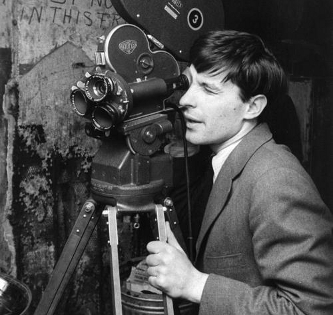
John Cassavetes with Arri 16ST

I remember looking at pictures of the fabulous Arri 16 and 35BL shoulder mounted cameras and thinking - "These are the perfect cameras for independent filmmakers.  Pick one up, load it with film and just go out and shoot.  Maybe, someday, I'll rent one of these, put it up on my shoulder, go out on the street and shoot my movie..."


Kubrick on the set of A Clockwork Orange with Arri IIc

But, then reality would set in.  Even after buying expensive film stock, shooting guerrilla on the street and convincing your friends to act in your movie for free, there were still huge processing and duplication costs and let's not get into editing and coloring.


Martin Scorsese with Arri 35BL

Fast forward 40 years.  A few days ago, Arri turned all that on its head when they announced the European prices for the new, shoulder-mounter, 2K 200fps Arri Amira ProRes camera  - prices aimed squarely at cameras such as the Canon Cinema EOS C500.


AMIRA Showreel from ARRI Channel on Vimeo.

At €25,980, the Amira is likely to come in right around $30,000 when its price is announced in the States. This was the list price for the C500 - until its recent markdown to $19,999 (perhaps Canon knows something?)

Independent filmmakers and DSLR shooters stepping up to the next level have so far gravitated toward the Cinema EOS cameras because they overcame many of the challenges presented by DSLRs - but these "cinema" cameras still require a shoulder rig and an external viewfinder for handheld shooting.

And, if you want the Amira's ability to shoot ProRes straight to the camera, you have to put up with Blackmagic Production Camera's lack of XLR inputs, ND filters and overall poor design (offset somewhat, but not completely, by its amazingly low price).

Or, if you want high speed frame rates comparable to the Amira's 200fps slow motion, you have to buy a Sony FS700 - with its ridiculous top mounted LCD/viewfinder.

Straight out of the box, none of these are handheld, self-contained cinema cameras, by any stretch of the imagination.

As Andrew Reid over at eoshd says in his thoughtful piece on the Amira, "[Canon Cinema EOS]...ergonomics have garnered praise only because the competition has been even worse."

That said, the shoulder mount is very cool, but what has me really excited about this camera is the 2K, 14-stop dynamic range, ProRes output to a CF card.  Straight from a 14-stop DR camera to an inexpensive card reader and into any NLE.  Heck, even my little laptop can handle that.

I have had a tiny taste of what that means for easy, high quality workflow with my little Blackmagic Pocket Cinema Camera.  One of the best things about this $995 marvel is its ProRes 422 output to a relatively inexpensive, fast SDXC card.  Many people started out clamoring for RAW with this camera, and ended up, as I have, shooting primarily to ProRes.  It's just that easy.

For me, this workflow advantage is just as important as the camera's ergonomic superiority and wide dynamic range.  Shooters won't need to go to post-production houses to edit and color their high quality images - they won't even need to buy expensive SSDs or computers capable of processing RAW.

Forty years ago, post-production costs were the barrier that kept many people from making the movies they wanted to make.  This camera breaks that barrier down, in a big way, and may save enough time and money in post to be worth the ~$1500 a week it will cost to rent it (based on the C500 rental price at Borrowlenses).

For me, this is more important than either 4K or internally recorder lossless RAW, and makes this camera revolutionary.

Without buying a shoulder rig, follow focus, SSDs, an external EVF or loupe, an external recorder, screw-on NDs, or the time and expense of complex post-production workflow, filmmakers can, as the Arri tagline says, just "pick up and shoot".


So this morning, for the first time in a few decades, I found myself looking at pictures of a new Arri shoulder mounted camera, and thinking - "maybe..."

Tuesday, January 28, 2014

New Panasonic Social Media Campaign

Panasonic pokes a little fun at the big lens crowd with a new social media campaign called, "Why DSLR?"

The first shot in the campaign is a short video called, "Why are DSLR lenses so big?"

I think Freud had part of the answer.

Fuji X-T1 - Proof That Fuji Still Doesn't Care About Video


Fujifilm X-T1 - #1 Selling Compact System Camera at Amazon as of 28 January 2014

Like a lot of people, I was looking forward to the release of the new $1299 (body only) Fuji X-T1 today. Perhaps naively, I thought Fuji might use this opportunity to get serious about hybrid still/video cameras - until I saw the specs.

Yes, it records at 1080/60p - something just about every still/video camera manufacturer except Canon and Olympus have figured out how to do - but only 14 minutes of continuous video? And a 2.5mm mic jack? You've got to be kidding me.

This is marching backwards. Canon ditched the 12 minute limit two years ago. And Panasonic finally got rid of the 2.5mm jack with the GH3 last year.

I can't tell from the specs, but I doubt they'll have a decent video bit rate, audio metering or manual audio gain control.  Sadly, this looks like another video fail from Fuji.

I'm a big fan of the X-Trans sensor for still photography and anyone who has been waiting for a weathersealed DSLR-styled" X-Trans still camera should definitely buy the X-T1 - but it is clear that video continues to be an afterthought for Fuji, so, unless the video image quality turns out to be phenomenal, I won't be interested in buying, renting or recommending this camera for video.

Can't wait for the 200mbps 4K Panasonic GH4K announcement on February 7th (hat tip to 4/3 rumors for the date)!

Saturday, December 21, 2013

Blackmagic Production Camera 4K vs RED ONE MX - Fight's On!


We've been waiting for this for a long time. The first images from the Blackmagic Production Camera, announced in April 2013 at NAB, are finally here! Yesterday, Blackmagic CEO, Grant Petty, posted a 10GB downloadable sample that he shot personally (if you want to see it and experiment with how it performs in the grade, you can download it here).

This was a very cool thing for him to do, but the community of interest for this camera continued to clamor for images shot by a "real DP".

Well today, we have those images - and the backstory is almost as interesting as the video itself.

Turns out that Captain Hook (of Captain Hook LUT fame) took his test BMPC out on a music video shoot as the "B" cam to a RED MX.

The director liked the early images so much that the BMPC was promoted to the "A" cam:


This camera essentially delivers Hollywood quality 4K motion pictures at an "amateur movie" price of $3995 - which is less than a 1080p Canon 5D Mark III with the 24-70 lens, $1500 less than an 8 bit 1080p Canon C100, $8000 less than a non-RAW capable 4K Canon 1DC, $13,000 less than the 10 bit 1080p Canon C300 and $23,000 (!) less than Canon's 4K C500.

RED and Sony prices for equivalently equipped 4K cinema cameras are also at or above $10K.  The new 2K Arri Amira is $20K.

My guess is that Blackmagic will be able to sell as many Production Cameras as the factory can crank out.  I also predict that we will start to see downward price adjustments from Canon and Sony - and perhaps even RED and Arri.

This may be bad news for the large camera companies, but it is a terrific Christmas gift to photographers and moviemakers everywhere - even those who will never buy a Blackmagic camera.

As always, if anything here has helped you to make a buying decision, please use the links embedded above or the display ads below to order.

And even if you're not in the market for a cinema camera right now, please support our sponsors - Adorama, Amazon, BorrowLenses, CoolLCD, DigitalRev, uBid, Vimeo, the the Warner Brothers Shop and others whose display ads you see in the margins.

It won't cost you anything extra, and it will help to keep these blog posts coming.  Thanks so much!