Showing posts with label Panasonic GH4. Show all posts

Thursday, April 23, 2015

JVC GY-LS300 review coming soon!

As some of you know, HCR rented a JVC GY-LS300 UHD "4K" Super 35mm camcorder last weekend to run some side-by-side tests with the GH4. Sadly, our partners at Borrowlenses don't have one yet, so we rented it from the great folks at LensRentals. Still putting the review together, but here's a preview pic:

JVC GY-LS300 with Panasonic 14-140 lens and AT835b mic

It was nice to shoot with a real camcorder again - the UHD image quality is great - and the adjustable crop sensor is really cool - but the camera does have a couple of challenges.

Please check back for the complete review!

Tuesday, April 14, 2015

Blackmagic wins NAB 2015

Best of Show

Micro-budget and independent filmmakers had high expectations this year after the excitement of last year's breakthrough NAB, which saw the introduction of the Panasonic GH4, the first interchangeable lens 4K camera below $2000; the Sony A7s, the first full frame camera with UHD output; the AJA Cion, the first 4K Super 35 shoulder mount below $10K; and the bargain priced Blackmagic URSA, the first UHD production camera below $7000 with XLR mic inputs and a standard external battery mount.

Canon was the odd man out at NAB 2014, with no major new camera announcements in this category. Their floor display was a live demonstration of the overpriced 4K Canon 1D C, which was already several years old at the time of the show.

So, when NAB 2015 rolled around, more breakthroughs were expected from the major camera manufacturers.  Would Sony introduce a 4K A7000?  Would Canon introduce an interchangeable lens competitor to the GH4 below $10K?  Would Panasonic finally give us a successor to the AF100 - with the GH4's features in a camcorder body?  What did Blackmagic have up its sleeve?

As the smoke clears from the big press conferences and announcements on Monday, it seems that all of the major manufacturers have chosen to rest on their laurels - except Blackmagic.

Sony had nothing to show in this market segment this year - while Canon and Panasonic did have new offerings for micro-budget cinematic shooters, the $2499 XC10 and the "under $5000" AG-DVX200.

Surprisingly, however, both of these cameras turned out to have fixed lenses, and "smallish" sensors. A little disappointing in a marketplace that has shifted towards interchangeable lens, large sensor cameras.

Panasonic's timing was especially unfortunate. In a series of leaks overnight and early on the morning of the DVX200's rollout - Blackmagic pursued their now-standard NAB strategy. They posted banners with images of their new cameras around the convention center for bloggers to find and post on social media. Images of their major new camera leaked from their pre-announcement party. And they posted images and tech specs for their new camera before Panasonic had a chance to make their announcement (even now, the URSA Mini product page is up, while there is nothing official to be found about Panasonic's AG-DVCX200 outside of a stale press release).

By the time Panasonic held its press conference Monday morning, Blackmagic had stolen their thunder with buzz surrounding a camera that both outspec'd the DVX200 and undercut it on price.

But it wasn't just a well executed communications plan that won the show for Blackmagic - it was a new camera with features the market has been asking for; an affordable, lightweight Super 35 interchangeable lens camera with good shoulder-mounted ergonomics, built in XLRs with phantom, standard battery mounts and solid 4K codecs (to include losslessly compressed RAW) - all in a rugged body.

It is clear when you compare the specs between the new Canon, Panasonic and Blackmagic offerings in this class, that Blackmagic has delivered what many micro-budget filmmakers and 'cinematic videographers' have been looking for with the URSA Mini:


Canon XC10 Blackmagic URSA
Mini 4K EF
Panasonic
AG-DVX200
Blackmagic URSA
Mini 4.6K EF
Price $2499 $2995 $4195 $4995
Sensor Size 1" Super 35 Micro 4/3 Super 35
Lens Mount Fixed EF (add $500 for PL) Fixed EF (add $500 for PL)
Max Resolution 3840x2160 4000x2160 4096x2160 4608x2592
Max HD Frame Rate 60fps 120fps 120fps 120fps
Codec MPEG-4 AVC RAW or ProRes MP4/MOV RAW or ProRes
Shutter Rolling Global Rolling Selectable Global/Rolling
Mic Input(s) 3.5mm 2xXLR w phantom 2xXLR w phantom 2xXLR w phantom
Headphone Output(s) Yes Yes Yes Yes
SDI Out(s) No Yes Yes Yes
Storage 1xCFast 2.0 1xSD 2xCFast 2.0 2xSD 2xCFast 2.0
Stabilization 5-axis (HD only) No 5-axis No
ND Filter Yes No Yes No
Power Zoom Lens No No Yes No
Viewfinder No (LCDVF) $1495 option Yes $1495 option
Still Photos 12MP No 8MP No
Weight 2.29 lbs. 6.6 lbs. 5.95 lbs. 6.6 lbs.

No, specs aren't everything - it will be important to see images from these cameras in the hands of real shooters - but if the indie market wants a 4K RAW (or 10-bit ProRes), large sensor, interchangeable lens Super 35 camcorder with 160fps HD slow motion and a global shutter that can be either handheld or shoulder mounted without breaking the shooter's back (or bank account), then URSA Mini is pretty much the only game in town.

As regular readers know, I've been looking for a replacement for my trusty Panasonic TM900 camcorder for a few years now.  I want a large sensor, interchangeable lens camera with camcorder ergonomics plus pro mic inputs and a strong, gradeable codec to pair with my GH3, and later, my GH4.

I had almost settled on the $3995 UHD JVC GY-LS300 - but its weak 8-bit h.264 compression was a challenge - and made it difficult to sell my Blackmagic Pocket Cinema Camera, with its robust, gradeable 10-bit ProRes and CinemaDNG RAW.

URSA Mini solves this problem.  I can now sell the TM900, the Pocket Camera, the GH1, GH2, GH3 and all of my MFT glass - then buy an URSA Mini EF (plus a $599 Metabones EF to MFT Speed Booster for the GH4) and skinny down to two cameras and one lens system.

Farewell, BMPCC - we hardly knew ye
So, for offering lightweight Super 35 cameras that shooters can afford - and for solving my personal camcorder dilemma - the Blackmagic URSA Mini wins HCR's first annual "Best of Show" award for NAB 2015.

Working on the awards banquet - perhaps at NAB 2016.

As always, if anything here has helped you to make a purchase decision, please shop using the links above or the displays below and in the margins. And even if you're not in the market for a new camera, please comment and make suggestions below. It won't cost you anything extra, and it will help to keep these posts coming.

And for the latest deals, news, tips and techniques, please follow HCR on Blogger, Twitter and YouTube  - and circle us on Google+.


Saturday, April 11, 2015

Five 4K cameras you should buy instead of the $2499 Canon XC10

New Canon XC10


A few days ago, in a post entitled "4K Canon EOS One - the Panasonic FZ1000 killer?", HCR previewed this week's announcement of the $2499 Canon XC10.  We got the name wrong, but we did get one thing right:
"If Canon includes a decent codec, a headphone jack and more than 30 minutes of recording time, the EOS One becomes a very interesting video camera and serious competition for the FZ1000 (depending on price, of course). [emphasis added]"
Well, now we know the price.  Yes, Canon has come up with an interesting 1" sensor, fixed lens camcorder with a solid codec, 4:2:2 color sub-sampling and a headphone jack - but both the price and the still/video feature set are a real disappointment.

As a serious video camera, the XC10 fails on two fronts - if you're going to buy a fixed lens camcorder, you expect a viewfinder and a power zoom.  This camera has neither. And with this lens, Canon has delivered the worst of both worlds.  No DSLR-style interchangeability - and no camcorder-style servo zoom.  Fail.

In still camera mode, its challenges are more serious.  Its maximum still photo frame rate is a snail-like 2.8 fps, it has no built-in flash and it is a JPEG only camera (no RAW).  Many point and shoots can do better.

Worst of all, Canon has taken its usual path of overpricing a new camera and making it non-competitive in the broad marketplace - where there are better options at significantly lower prices.  This is similar to the mistake they made with the EOS M, which was initially overpriced - and now sells for bargain basement prices.

Eventually, we will see the XC10 marked down severely, but in the meantime, it is another pricing disappointment from Canon.

But instead of lamenting the lost opportunity represented by the XC10, HCR would like to offer alternatives to Canon shooters with budgets below $3000 who have been waiting for Canon to give them a worthwhile upgrade from their entry level Canon DSLRs - but who are not willing to pay $2500 for a fixed lens "camcorder" that has neither a viewfinder nor a power zoom.

So, without any further ado, here are the five 4K cameras below $3000 that Canon DSLR shooters might want to consider instead of shelling out $2500 for the Canon XC10:


1. $1498 Panasonic DMC-GH4 with a $599 Metabones EF Speed Booster.  If you need compatibility with your EF/EF-S glass, true 4096x2160 4K, 10 bit HDMI out, time code, color bars, hours of continuous recording, affordable Panasonic power zooms, a fully articulated LCD - plus the option to add the YAGH interface with its XLR inputs and SDI outputs - this may be the camera for you.  Here is a terrific piece from Elif Kalkan shot with the Metabones and Canon glass:


2. $1299.99 (on sale, as of this post) Samsung NX-1 with an $80 Canon EF to NX adapter with manual aperture control.  This camera would be #1 on the list if there was a Metabones-type Canon to NX lens adapter for it.  Its APS-C sized sensor, advanced h.265 compression and LOG-like color profile give it the edge over the GH4.  But, for Canon shooters, its limited compatibility with Canon lenses is a challenge.  That said, Andrew Reid is nevertheless creating beautiful images with the NX1 and adapted EOS glass:


3. $750 Panasonic DMC-FZ1000.  This camera is one third of the XC10's price, shares its 1" sensor size and UHD resolution - but also features the power zoom, electronic viewfinder, serious still photo chops and fully articulated LCD that the XC10 is missing.  No, it doesn't have a headphone jack, but you can buy a pretty nice recorder with the $1700 you'll save.  Here is the video image quality shooters are getting from the FZ1000:


4. $750 Panasonic DMC-LX100.  No mic or headphone jacks and no built-in flash, but this camera has a larger sensor than the XC10 and many of the still and video features the Canon lacks - e.g., a power zoom lens, an electronic viewfinder, 11 fps and the ability to shoot RAW stills.  It's a pretty darned good UHD video camera too:


5. $2695 JVC GY-HM200. If you don't need a large sensor or the ability to shoot stills, but want a 4K camcorder with pro mic inputs, SDI out and built-in web streaming - this camera is the best value for your money in this price range. The HM200 was just released, so there are only a few examples of what it can do - but here is one (please watch at 2160p):


And as a bonus for those who aren't ready to upgrade to 4K, there are still a couple of solid Canon 1080p alternatives:

1. $2499 Canon 5D Mark III. After recent mark downs, the full frame 5D Mark III is at the same price as the 1" sensor XC10.  If you like the "full-frame look", want native compatibility with your Canon lenses plus the option to shoot Magic Lantern RAW - you might want to consider upgrading from an entry level Canon DSLR to the Mark III.

2. $2999 Canon C100. For $500 more than the XC10, you can buy a real professional Super 35 camcorder with XLR inputs, a viewfinder and 100% compatibility with your Canon lenses.  This camera's 4K sensor, downscaled in-camera, still creates some of the best 1080p video in the marketplace.

The bottom line is that you can do a lot better than the XC10  - either near or well below its $2499 price point.

As always, if anything here has helped you to make a purchase decision, please shop using the links above or the displays below and in the margins. And even if you're not in the market for a new camera, please comment and make suggestions below. It won't cost you anything extra, and it will help to keep these posts coming.

And for the latest deals, news, tips and techniques, please follow HCR on Blogger, Twitter and YouTube  - and circle us on Google+.


Saturday, February 7, 2015

Olympus OM-D E-M5 Mark II - lone standout in another boring bunch of camera announcements

Olympus OM-D E-M5 Mark II


With the recent spate of new camera announcements, one might have expected something new from the major manufacturers on the video front.

Not so fast.

Yes, Canon now offers a new super high resolution full frame still camera to compete with the Sony A7r - but it offers nothing new for video.

There's a new version of the mirrorless Canon EOS M - but they won't be selling it in the States.

Samsung has announced the NX500, a new 4K mirrorless NX-1 "mini me" for a great price - but they've stripped the NX1 not only of its viewfinder and headphone jack  - but also its microphone input. Fail.

And the new Canon T6i has now caught up with 2013-era still/video cameras, adding wi-fi and fast video autofocus (but still no 1080/60p - and, of course, no headphone jack).

In my view, the only recent announcement that might be exciting for filmmakers is the new $1099.99 list Olympus OM-D E-M5 Mark II. With its 5-axis stabilization, new fully articulated LCD, 1080/24p/60p, 50mbps bit rate and headphone jack, Olympus finally appears to be taking video seriously.

The handheld walking clip at 9:10 in The Camera Store's review of the E-M5 Mark II is very impressive:


Except for the 30 minute continuous clip length limit, the OM-D E-M5 Mark II is now very competitive with the Panasonic GH3 for videography and filmmaking. Links for pre-ordering the silver (or black) Mark II are up now at Amazon and Adorama.

Unfortunately for Olympus, the GH3 is a two year old camera and the street price is now below $800. In my view, Oly is going to have to step up its game just a little more to catch Panasonic in the hybrid still/video race.

My suggestion - a 4K version of this camera (with 5-axis stabilization) that lifts the 30 minute continuous recording limit.  Such a camera would certainly give Panasonic's GH4 a run for its money. OM-D EM1 Mark II, anyone?

All of that said, despite the good news from Olympus, the other major manufacturers don't seem interested in fixing the problems that still bedevil video-capable large sensor interchangeable lens cameras in 2015, e.g. weak codecs (no in-camera RAW), rolling shutter, no XLR inputs, the lack of built in stabilization, no affordable power zooms and no built-in NDs.

The Blackmagic URSA comes close, but it has no stabilization, no NDs and it's a 20 lb. camera.  The JVC GY-LS300 looks like it produces high quality, gradeable 4K video - but it lacks internally recorded RAW and a global shutter (as does the Sony PXW-FS7).

What we need is a "usable" (10 lbs or less) Blackmagic Camera with a viewfinder, stabilization and compatibility with Panasonic power zooms - or an affordable Canon Cinema EOS camera with RAW, a global shutter and a power zoom - or something like the FS7 from Sony with RAW and a global shutter.

Perhaps we'll see some progress at NAB.  I hope I can convince the Board Chair here at HCR to let me go this year :)

As always, if anything here has helped you to make a purchase decision, please shop using the links above or the displays below and in the margins. And even if you're not in the market for a new camera, please comment and make suggestions below. It won't cost you anything extra, and it will help to keep these posts coming.

And for the latest deals, news, tips and techniques, please follow HCR on Blogger, Twitter and YouTube  - and circle us on Google+.


Sunday, February 1, 2015

Panasonic GH4 marked back down to $1497.99


After a post-Christmas spike up to $1697.99, Amazon and Adorama* show the GH4 marked back down to $1497.99 as of this morning - and manufacturer authorized reseller Cameta Auctions is selling brand new Panasonic GH4 bodies (with full Panasonic USA warranties) for $1497.99 via eBay.

This is a very interesting price point, in light of the Samsung NX1's $1499.99 list price, which has remained rock steady over the past few months.

I wonder if Panasonic is starting to feel a little pressure from Samsung?  Or, perhaps there's a new 4K camera from Panasonic on the horizon? Whatever the cause, this $200 price drop is good news for shooters.

As always, if anything here has helped you to make a purchase decision, please shop using the links above or the displays below and in the margins. And even if you're not in the market for a new camera, please comment and make suggestions below. It won't cost you anything extra, and it will help to keep these posts coming.

And for the latest deals, news, tips and techniques, please follow HCR on Blogger, Twitter and YouTube and circle us on Google+.

*The Adorama bundle includes a 32GB SDHC and a $50 gift card.


Monday, January 26, 2015

New Panasonic GH4 v2.1 firmware update is great for Shogun & 25p shooters - everyone else, not so much


As you have probably read elsewhere, Panasonic released firmware updates v2.1 for the GH4 and v1.1 for the YAGH last night.   You can download these updates here.

Along with a couple of other minor fixes, the headline updates add timecode and a start/stop command to HDMI out when the camera and/or YAGH are connected to the Atomos Shogun.

Panasonic has also added 30p and 25p native output to HDMI at 1080p - a big deal for 25p shooters.

This is great news for owners (and potential owners) of the $1995 Atomos Shogun - and for shooters in PAL areas, especially Europe.

But it is a little disappointing for the rest of us.

While Panasonic fixes the GH4's compatibility issues with Shogun, other 4K camera manufacturers (e.g., Blackmagic and Samsung) are moving ahead with more substantive fixes and upgrades.  And the Sony A7s remains the only camera in this class with a LOG profile.

To stay competitive, Panasonic might want to aim the next GH4 update at fixing more fundamental problems for the entire user base - such as:
  • Lack of a LOG profile.  GH4 shooters need a flat, gradeable profile we can dial in without having to memorize a bunch of sharpness, saturation, contrast and master pedestal settings. Without a LOG profile, the GH4 is less competitive with the Sony A7s and S-LOG2.

  • Single, fixed 4K/24p frame rate. Blackmagic added 4K/80p to the URSA after release. 4K/60p for the GH4 would be nice, but I'd even take UHD/60p.

  • Single, fixed autofocus speed. The GH4 needs a variable video autofocus speed control to make autofocus plane changes less jarring. Samsung added this feature to the NX1 after release.

In my view, firmware update strategy has become an arms race.  The manufacturer that can match or outpace its competitors in this race over time will maintain leadership in the marketplace.  Those that are slow to respond are likely to lose out to more agile companies.

The GH4 is a great camera, and still a very good value for the money, but Panasonic needs a more competitive firmware update strategy.

If the company isn't careful, the GH4 could become this era's "AF100" - a camera that invents a whole new category - and is then eclipsed by more agile competitors.

As always, if anything here has helped you to make a purchase decision, please shop using the links above or the displays below and in the margins. And even if you're not in the market for a new camera, please comment and make suggestions below. It won't cost you anything extra, and it will help to keep these posts coming.

And for the latest deals, news, tips and techniques, please follow HCR on BloggerTwitter and YouTube and circle us on Google+.


Sunday, January 25, 2015

Finally - sample video from the new $4450 "4K" MFT mount Super 35 JVC GY-LS300


After its introduction and a press release from JVC a couple of months ago, we haven't heard much about this camera.  With its Super 35mm sensor, micro 4/3 interchangeable lens mount, UHD/30p or UHD/24p recording, internal 4:2:2, dual card slots, 3 built in ND filters, shotgun mic, XLR jacks, top handle and camcorder form factor, the LS300 has remained a tantalizing prospect.

This was especially true since JVC priced it at just $4450, the lowest price point ever for a Super 35mm "4K" camcorder and only about $500 more than it would cost to buy a $3297 GH4/YAGH combo plus the $599 Metabones Speed Booster/Focal Reducer the GH4 needs in order to mimic a Super 35 crop.

With a GH4, however, you would still need to buy the top handle, ND filter and mic.  And dual card slots are not an option.

That said, we have seen impressive 4K video from the GH4 - but we have had no idea what kind of images the LS300 would produce - and JVC wasn't talking.

Well, that's starting to change.  JVC announced a few days ago that they would take the LS300 to Sundance this week to show it off to independent filmmakers  - and rental house Delimex in Belgium has the camera in stock and has produced a slick narrative style short to promote it.

Here's the video (hat tip to Philip Johnston, the HD Warrior, for the find):


Sadly, the clip is downscaled to 1080p HD, so we don't get the full benefit of Ultra HD - and there's not much motion, so we can't tell whether the sensor has a challenge with CMOS skew - but the skin tones look natural, the blacks seem to hold up in low light and the bokeh is gorgeous.

This is the first JVC camera that looks to be competitive with sub-$10,000 large sensor, interchangeable lens 4K/UHD camcorders from Sony, Blackmagic, Aja, and Kinefinity.  And its feature set and UHD resolution make the $4499 1080p-only dual pixel Canon C100 look overpriced.

Note that Panasonic is MIA from this list. Unfortunately for Panasonic, since Sony's NEX-FS100 trumped their AG-AF100 back in 2010, the company seems to have ceded this market to its competitors.

With the introduction of the Varicam 35, GH4, FS1000 and LX100 in 2014, Panasonic is now competitive at both the low end and the high end  - but they left a huge gap in the middle, and JVC has driven through it with a truck.

It is long past time for Panasonic to replace the aging AF100 with a modern large sensor camcorder - but the market will not wait for them.

Personally, I'm saving my nickels for a sub-$10,000 4K Super 35 camcorder, and right now, the LS300 is one of the top contenders, along with the $5995 Blackmagic URSA and its global shutter.

As always, if anything here has helped you to make a purchase decision, please shop using the links above or the displays below and in the margins. And even if you're not in the market for a new camera, please comment and make suggestions below. It won't cost you anything extra, and it will help to keep these posts coming.

And for the latest deals, news, tips and techniques, please follow HCR on BloggerTwitter and YouTube and circle us on Google+.


Saturday, October 25, 2014

Which to buy - the $5499 Canon C100 Mark II or the $5995 Blackmagic URSA EF?


 VERSUS


When Canon introduced the Cinema EOS line back in 2011, they held a big Hollywood event, with expensively produced introductory videos and many of the luminaries of the industry in attendance.  They spent a lot of money and made a big deal of it - and rightfully so.  They were stepping into the big leagues of Super 35mm digital filmmaking with feature-rich and cinematographer-friendly cameras for pro Canon shooters who wanted to step up from DSLRs.

The price points for the new Cinema EOS cameras were high - but not unreasonable in a world where the competition was the then-aging Panasonic AF100 (with its small sensor and poor low light performance) and the newer Sony FS-100 with its strange top mounted LCD/viewfinder and boxy ergonomics.

And when the C100 was introduced a year later, it quickly became a DSLR upgrader's favorite - the only Super 35 camera you could buy below $10,000 with the compact form factor of a DSLR, but with no recording time limit, essentially no moire, built-in XLR jacks with decent pre-amps, a top handle and manual rather than menu-based controls of key camera functions.

And it was 100% compatible with the wide range of Canon EF lenses, which a lot of shooters had in their camera bags.

As a result, over the past couple of years, as the price for this camera dropped from the $6499 introductory price to the current $4499 (for the non-dual pixel autofocus version), Canon sold a lot of them.

But, over the past few years, the landscape has changed. Now we live in a world where $5995 will buy a Blackmagic URSA - an EF mount Super 35 camera with a global shutter and pro SDI out that records to UHD/60p 12-bit RAW.

In this world, it makes a lot less sense to announce a $5499 Canon C100 Mark II that records at a maximum 1080p resolution and 60fps frame rate to an 8-bit compressed codec - and doesn't fix the limitations of the C100's consumer HDMI output.

Nor, as far as I can tell, does it fix the C100's CMOS rolling shutter problem.

Admittedly, URSA is 10 pounds heavier, CFast cards are expensive - and shooting with a "big screen TV" in your face instead of a viewfinder is an acquired taste - but, for TV commercials and indie filmmaking, the URSA's feature set and image quality are competitive with the $20,000 C500 at the price point of a $5499 C100 Mark II with a Blackmagic HDMI to SDI converter.

To quote Filmmaker Magazine, the C100 Mark II "...would be an impressive upgrade — if this were coming out in December 2013."

Even leading C100 advocate and shooter Noam Kroll won't be upgrading.

So, above $10,000, value-conscious filmmakers will probably choose the "C300 killer", the $10,499 4K Sony PXW-FS7 with a 28-135mm f4 servo zoom instead of the $11,999 body-only 1080p C300.

While below $10,000, the $5995 UHD URSA seems to be a much better value for the money than the $5499 C100 Mark II.

If Canon fails to address the resolution/price gap with their competitors, Cinema EOS could very well find itself in the same straits as their DSLR line - where, led by serious shooters like Dave Dugdale and Caleb Pike, Canon shooters seem to be giving up on DSLRs and switching to mirrorless 4K (and 4K capable) Panasonic GH4s and Sony A7s in significant numbers.

As someone whose first video capable interchangeable lens camera was a Canon T2i, I still have hope that the company will step up to the challenge - but even if they don't, there are some great alternatives out there.

As always, if anything here has helped you to make a purchase decision, please shop using the links above or the displays below and in the margins. And even if you're not in the market for a new camera, please comment and make suggestions below. It won't cost you anything extra, and it will help to keep these posts coming.

For the latest deals, news, tips and techniques, please follow HCR on Blogger, Twitter and YouTube and circle us on Google+. Thanks for your support of the revolution!


Thursday, October 23, 2014

Side-by-side: Samsung NX1 4K vs Nikon D750 - which one for video?

The folks at Nikon Motion just posted this short, but well-executed side-by-side video comparison of the new Samsung NX1 and the Nikon D750:


It's an interesting test, but there are no real surprises here. As one might expect, the downscaled 4K from the NX1 out-resolves the D750 at 1080p - while the full frame Nikon delivers shallower depth of field than the "crop sensor" APS-C Samsung.

But the most exciting news is that early examples of the NX1 are starting to appear in the wild. Hopefully, this means that we will soon see comparisons between the NX1 and its real competitors, the Sony A7s and the Panasonic GH4.

It will be especially interesting to see how the NX1's new backlit APS-C sensor stacks up against the GH4's micro 4/3 sensor in low light. If Samsung has managed to combine the GH4's internal 4K recording capability with improved low light performance, the NX1 could be a formidable video camera.

Please check back over the next few days as we get closer to the official October 27th ship date for the NX1. I'll post the newest video tests and examples as they become available.

As always, if anything here has helped you to make a purchase decision, please shop using the links above or the displays below and in the margins. And even if you're not in the market for a new camera, please comment and make suggestions below. It won't cost you anything extra, and it will help to keep these posts coming.

For the latest deals, news, tips and techniques, please follow HCR on Blogger, Twitter and YouTube and circle us on Google+. Thanks for your support of the revolution!


Friday, September 19, 2014

Deal - Panasonic GH4 with Rokinon 14mm T3.1 cine lens and 32GB U3 card for $1999.95

If you've been looking for a 4K camera with a lens, but are on a budget, here is the best 4K deal out there right now - the 4K Panasonic GH4 with a Rokinon 14mm T3.1 cine lens and a 32GB U3 SD card for less than $2000 from Adorama via eBay .

You'll essentially be getting the lens and the SD card for $300. A great value for your money.

As of this post, there were only two left at this price. If you want one, you should pull the trigger on this deal now.

More GH4 bundles from the Adorama store on eBay here:


And, if you miss out on these Adorama deals, there are some pretty good GH4 bundled deals at Amazon too :)


Monday, September 15, 2014

The Best Thing About the Release of the New Samsung NX1


It looks like Samsung has knocked one out of the park today with the introduction of their new NX1 - a $1499 body-only 4K APS-C mirrorless camera (already available for pre-order at Adorama, Amazon and B&H).

The headline specs for video are very impressive - true 4096x2160 4K at 24fps, UHD at 30fps, HD at up to 60fps; a headphone jack and ISO up to 25600 in auto and 51200 in extended mode (complete specs here).

Perhaps just as important as its ability to record to 4K internally (something the UHD-only Sony A7s cannot do at $1000 more - even externally) is the introduction of the new h.265 codec, which should allow high quality compression of 4K to manageable file sizes.  We'll have to see whether the video quality really holds up.

To be fair, the camera has some shortcomings.  It has no slow motion frame rates above 60fps, for example.

And there's one other caveat for event shooters.  It is limited to a 29 minute, 59 second maximum clip length worldwide - while the GH4's max clip length is around 220 minutes (outside of the EU).

That said, it's stunning that Samsung has been able to pull this off for $200 less than the list price of the GH4 - which brings us to the absolute best thing about the introduction of this camera - it puts pressure on Panasonic and Sony to lower the prices of their flagship 4K cameras.

This is not so good for those of us who have already invested in these cameras - but it is terrific news for shooters who have been waiting for prices to come down.

Here are some more pics of the NX1 to whet your appetite (courtesy Adorama):


Bottom Line
Samsung has steadily improved the quality and feature sets of their interchangeable lens cameras. They have made a few missteps along the way (e.g., the interchangeable lens Galaxy smartphone camera), but they have also created the foundation for long term success - their own lens mount, a reputation for quality and service after the sale - and getting to market with new features before the competition.
To sell their 4K TVs, Samsung is likely to put affordable 4K or UHD in every smartphone and camera in their product line.  And they have the cash flow from their smartphone business to do it.  If I were the other camera manufacturers, especially Canon and Nikon, I would be worried.

If anything here has helped you to make a purchase decision, please shop using the links above or the displays below and in the margins. And, even if you're not in the market for a new camera, please comment and make suggestions below. It won't cost you anything extra, and it will help to keep these posts coming.

For the latest deals, news, tips and techniques, please follow HCR on Blogger, Twitter and YouTube and circle us on Google+ Thanks for your support of the revolution!


Sunday, September 7, 2014

Great 4K Camera Deal - $50 off list price for a brand new Panasonic GH4


It can be a challenge to find the hot-selling Panasonic GH4 at less than list price, but here's a deal - a brand new US warrantied GH4 marked down by $50 to $1649.95 at 99.3% positive seller Global Distributions via eBay.

As of this post, there were only 8 left at this price - so, if you want to take advantage of this deal, you may want to pull the trigger now.

If you miss the sale, and don't mind a pre-owned camera, you can still find open box and used bargains at the Adorama Used Store and Amazon.

For the latest deals, news, tips and techniques, please follow HCR on Blogger, Twitter and YouTube and circle us on Google+

Thanks so much for your support!


Thursday, August 28, 2014

Here's how to get clean low light footage from the Panasonic GH4


I have heard from several video shooters who are concerned about buying or renting the Panasonic GH4 because they have heard that it has less than stellar performance above ISO 800.

To address this concern, Sohail over at Borrowlenses (one of our terrific sponsors) has posted a great blog entry on shooting with the GH4 at night.

He makes the interesting point that low light and high ISO are not necessarily the same thing - and that with fast enough lenses, shooters can produce great footage with the GH4 for night exteriors.

As an example, here's some 4K footage he shot with the GH4 at San Francisco's Fishermans' Wharf using the Voigtlander 17.5mm f0.95 and a Sigma 18-35mm f1.8 (with Speed Booster). Cleanest shots are between ISO 200 and 400 :


As Sohail says - shooting with superfast lenses doesn't give the GH4 the incredible light-gathering capability of the A7s - but it does give shooters the ability to deliver clean low-light footage at reasonable ISOs.

And for budget-conscious shooters, the additional benefit is that a $1698 Panasonic GH4 with a $799 Sigma 18-35mm f1.8 Nikon mount lens is about the same price as a $2498 body-only Sony A7s.

Yes, you'll need a $429 Nikon G to MFT Speed Booster, but that's less than the cost of a decent lens for the Sony.

If you need a camera that can essentially see in the dark, the A7s is the better choice - but if you want internal 4K recording and you occasionally shoot in low light, the GH4 will do a terrific job.

If you've found this helpful, please shop through the links above or the display ads in the margins. It won't cost you anything extra and it will help keep these posts coming. Thanks for your support!


Tuesday, August 26, 2014

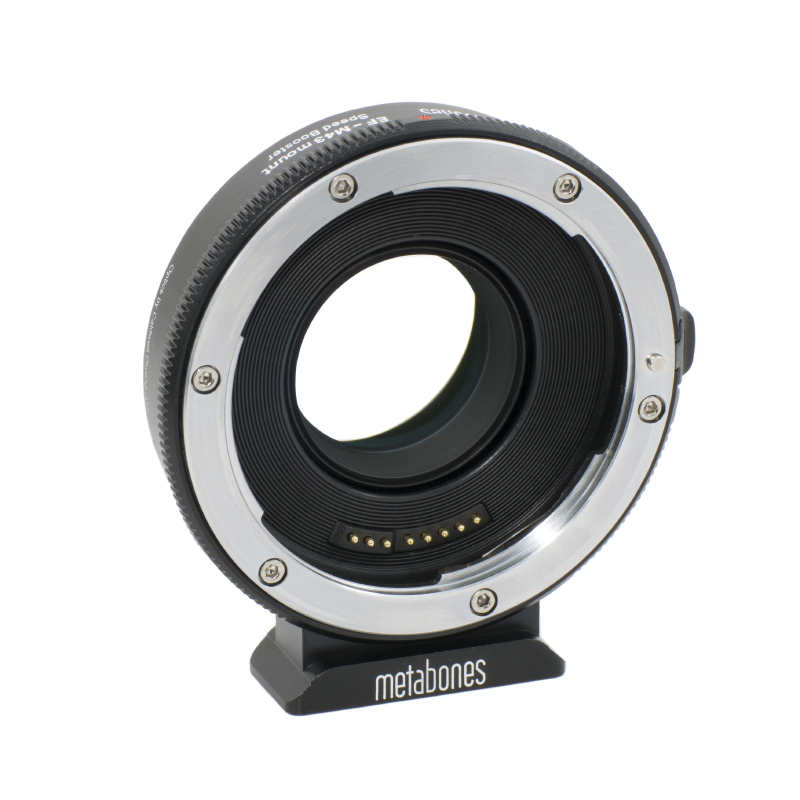
Finally - Metabones releases the Canon EF to micro 4/3 Speed Booster - Andrew Reid at EOSHD has one!


The adapter that so many Canon shooters have longed for has finally arrived. A powered Speed Booster from Metabones that adapts Canon EF (but not EF-S) lenses to micro 4/3 cameras such as the Panasonic GH4 - with full aperture control and image stabilization. I can't wait to get my hands on one - but until then, I'll have to live vicariously through Andrew's hands on experience with it.

That said, everyone is happy about this except Canon. My theory was that they were paying Metabones to delay the release of this adapter to keep Canon shooters from switching to the GH4 (that's a joke, for all of my literally minded readers). Seriously, though, I'll bet a lot of used Canon DSLRs go up on eBay in the next few days.


Arri hops on the 4K bandwagon with an upcoming firmware upgrade for the Amira


Following close on the heels of yesterday's news on the Sony F5 4K hack, Arriflex has issued a press release announcing an official "4K" UHD upgrade for the 2K Arri Amira (full text below). Of course, since this is Arri, the upgrade will not be free (how much it will cost is yet to be determined).

Interestingly, the release notes that the upgrade is in response to "user feedback". In other words, Amira shooters probably wondered why far less expensive cameras from Blackmagic and Panasonic recorded at higher resolution than their $40,000 cameras. It is also interesting to note that the Amira gets the upgrade and the Alexa does not.

Here's the full text of the release:

(August 26th 2014, Munich) – A new software upgrade for ARRI’s documentary-style AMIRA camera will allow it to record ProRes UHD files, answering the 4K requirements of some productions. The upgrade is expected to be available for purchase at the online ARRI License Shop by the end of 2014.
While widespread adoption of 4K or UHD for broadcast is still a long way off, an increasing number of content owners are becoming concerned that they ought to safeguard the longevity of their programs by ensuring that they will be suitable for UHD transmission, should that become a standard in the future. 
For those productions that do need to generate UHD deliverables, AMIRA will now offer the ability to record all ProRes codecs in Ultra High Definition 3840 x 2160 resolution directly onto the in-camera CFast 2.0 cards, at up to 60 fps. This feature, activated through an affordable software license (and a sensor calibration for existing AMIRAs), comes in response to feedback from AMIRA customers, some of whom have been quizzed about 4K deliverables by clients. It is made possible by the camera’s exceptional image quality, its processing power, and its reprogrammable system architecture.
Whether a production is pursuing a UHD workflow all the way through to distribution, or simply wishes to archive in UHD in order to future-proof itself against industry developments, AMIRA now offers an easy solution that requires no additional processes in postproduction.
IN-CAMERA PROCESSING
The ALEXA/AMIRA sensor has repeatedly proved its ability to deliver outstanding image quality for the 4K or even IMAX theatrical releases of high-end feature films such as Gravity, Maleficent and Iron Man 3. This proves that the ALEXA and AMIRA camera systems are already future-proof and more than suitable for the next generation of distribution formats.
For major feature films, an up-sample to 4K can be carried out after visual effects and other postproduction tasks have been completed at 2K resolution. For certain fast-paced AMIRA productions, however, there may not be the time or resources for such processes in post, which is why a 4K or UHD output direct from the camera has been requested.
AMIRA’s UHD output utilizes the same efficient 1.2x up-sample filter that allows ALEXA’s Open Gate mode to optimize the camera’s image performance for 4K distribution, as well as the same best-in-class sensor pixels. The up-sample to UHD happens in camera, and in real time.
SAME GREAT IMAGE QUALITY
Outputting UHD broadens the distribution options for the superior image quality that has helped make AMIRA, and ALEXA, such a success. The wide, 14+-stop dynamic range remains unaltered, as does the accurate colorimetry, natural skin tones, and organic look and feel. By making that high-quality image data coming out of the sensor compatible with higher spatial resolution formats, the UHD upgrade answers the concerns of certain regions and productions about a 4K future, allowing AMIRA to be used on any project, no matter what deliverables are required.
Markus Duerr, ARRI’s Product Manager for the AMIRA system, says, “Feedback about AMIRA from all over the world has been overwhelmingly positive and it is clear that the camera is already a great success, being used on an amazing variety of challenging productions. Already acclaimed for its phenomenal image quality, ease of use and versatility, the new ProRes UHD output will take these benefits even further, adding value for customers in areas like China, where 4K is a major focus of industry attention.”
Wildlife cinematographer Rolf Steinmann, who was nominated for an Emmy Award this year in recognition of his work with ALEXA on the BBC’s Wild Arabia series, is currently using his AMIRA on a movie for Disney Nature. He comments, "For cameramen like me who own their gear, the UHD upgrade is a great way to stay future-proof. From now on when there's pressure from the production side to deliver UHD, I can continue to work with AMIRA and won't have to compromise on image quality or on the camera's robustness and reliability." 
About ARRI:
With headquarters located in Munich, Germany, Arnold and Richter Cine Technik (A&R) was founded in 1917 and is the world's largest manufacturer and distributor of motion picture camera, digital intermediate (DI) and lighting equipment. The ARRI Group comprises a global network of subsidiaries and partners that covers every facet of the film industry, including worldwide camera, grip and lighting equipment rental through ARRI Rental; turnkey lighting solutions through the ARRI System Group; lab services, postproduction and visual effects through ARRI Film & TV; and film distribution through ARRI Worldsales. Manufactured products include the ALEXA camera system and AMIRA documentary-style camera; Master Anamorphic lenses; L-Series LED and M-Series HMI lights; Pro Camera Accessories; and ARRISCAN archive technologies. The Academy of Motion Picture Arts and Sciences has recognized ARRI’s engineers and their technical contributions with 18 Scientific and Engineering Awards.

In my view, this is just the beginning of the wave of 4K/UHD announcements and press releases we will see in the coming year. Manufacturers from Arri to Canon to Sony will introduce new 4K cameras and upgrade older models. If a camera doesn't record 4K, it will lose a lot of its market appeal. As a result, shooters will start unloading old 1080p and 2K cameras at bargain basement prices. It will be the story of the transition from SD to HD all over again.

This will be great news for entry-level amateur shooters who are looking to buy a 1080p camera in the next few months - but pros and high-end amateurs interested in delivering higher resolution to their clients and audiences may want to seriously consider upgrading - especially since there are reasonably priced cameras with 4K/UHD internal recording from Blackmagic and Panasonic already on the market.