Showing posts with label Arri Alexa. Show all posts

Monday, April 13, 2015

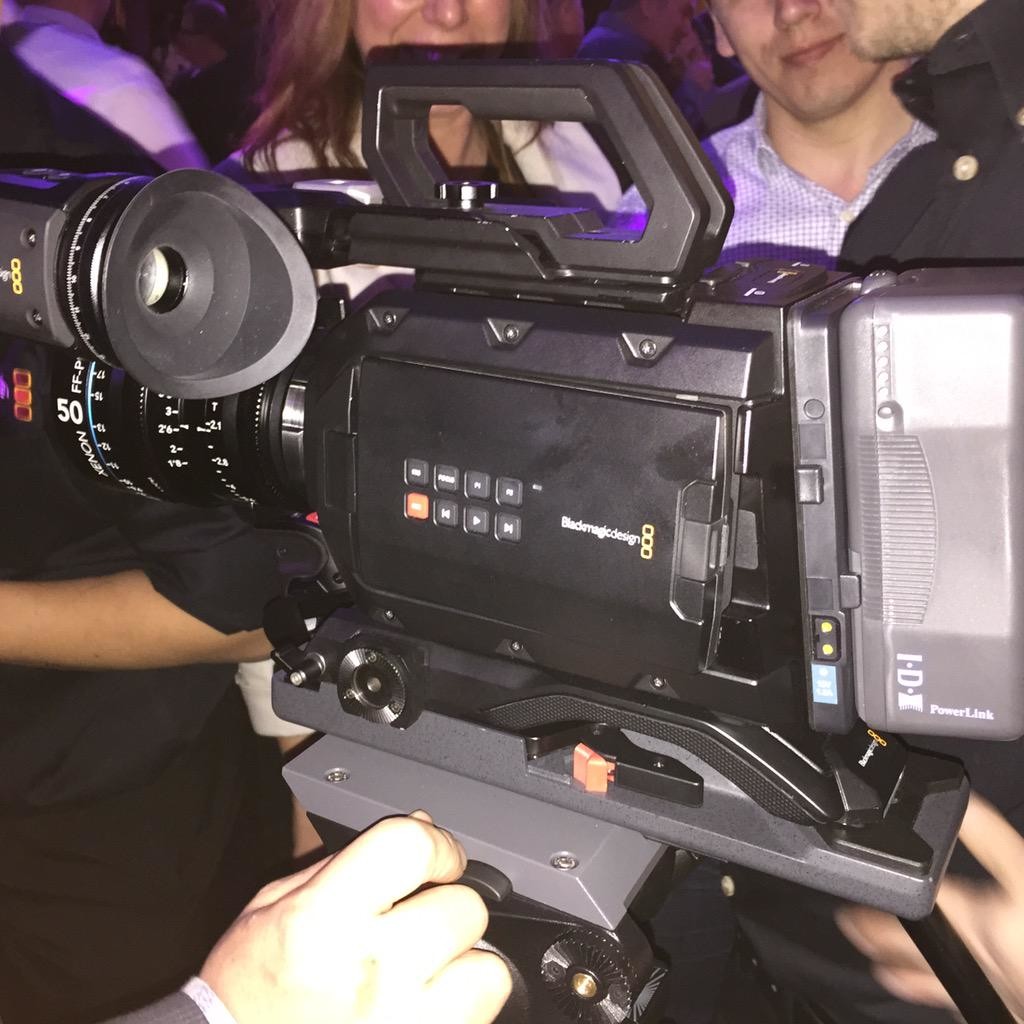
Five 4K camcorders threatened by the $2995 4K Blackmagic URSA Mini


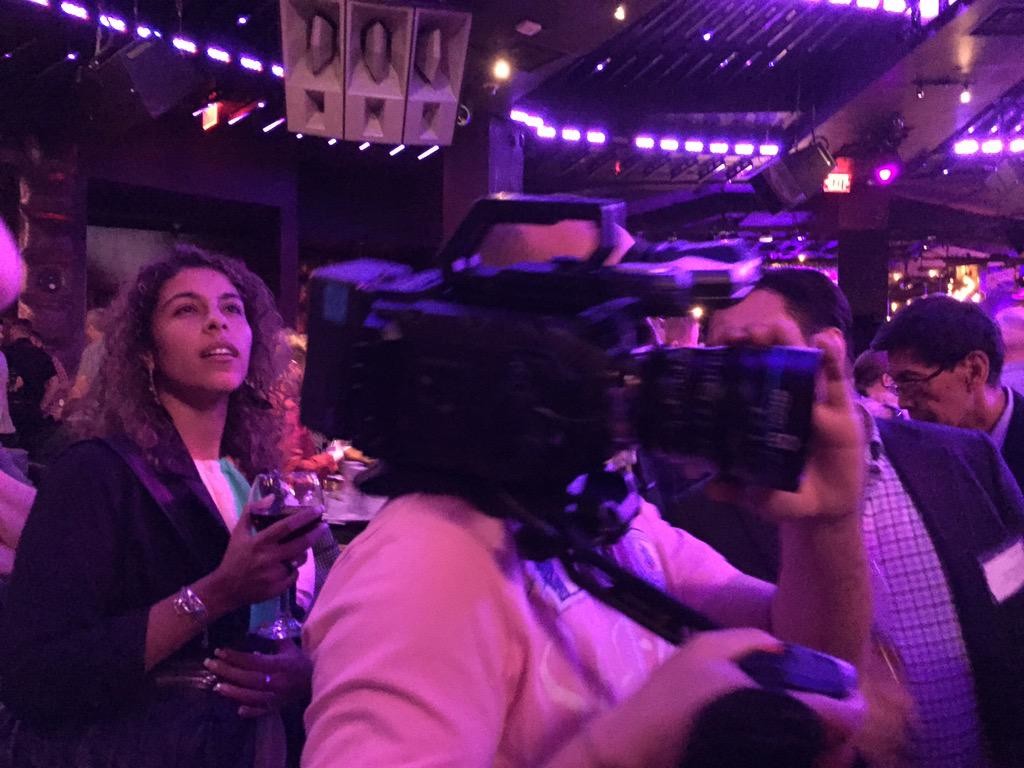
Images courtesy eriknaso.com

Thanks to Noam Kroll and Erik Naso, we have a pretty good idea of what Blackmagic Magic will unveil in Vegas this morning - to include a truly revolutionary $2995 URSA Mini Super 35 camcorder, with interchangeable lenses, a global shutter, Blackmagic's standard CinemDNG RAW, 4K, 12 stops of DR (15 stops on the $4995 4.6K model), an optional EVF and easy compatibility with a shoulder mount.

Even before we see the detailed specs from the Blackmagic press event, we do know one thing - there has to be consternation in the executive suites at AJA, Arri, Canon, JVC, Panasonic and Sony (which is exactly what Blackmagic CEO Grant Petty set out to do when he started building cameras a few years ago).

If URSA Mini can deliver URSA's RAW image quality (or better) for $2995, here are the five 4K cameras that it clearly threatens:
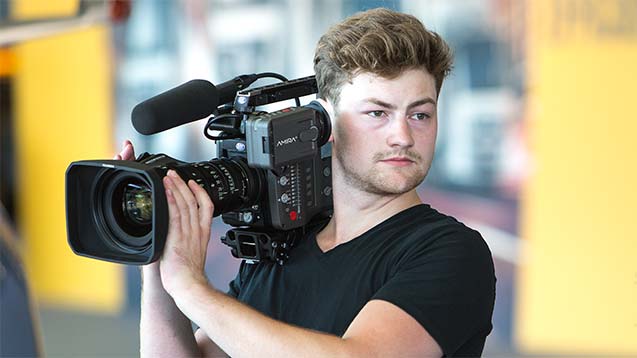


1. $40K Arri Amira. Recently upgraded to 4K, this camera produces amazing images in a near-perfect shoulder mounted form factor. And with Arri color science, it is a perfect match for industry-standard Alexa. But at $40K, its cost is prohibitive for most indies and micro-budget filmmakers. This camera will continue to see considerable use at the high end of the market, but for indies, the price mismatch between Amira and URSA Mini is ridiculous - you could buy a Mini for less than the price of renting an Amira for a week.


2. $16K Canon C300 Mark II (and $2.5K XC10). Canon's pre-NAB announcement of these cameras was clearly designed to steal the limelight at the show. URSA Mini has pretty much stolen it back. The C300 Mark II costs 5 times is much and lacks the Mini's internal raw recording.  Plus, it requires expensive rigging to get it up on your shoulder. As for the XC10 - it costs almost as much as Mini, but is a fixed lens, 1" sensor toy by comparison.
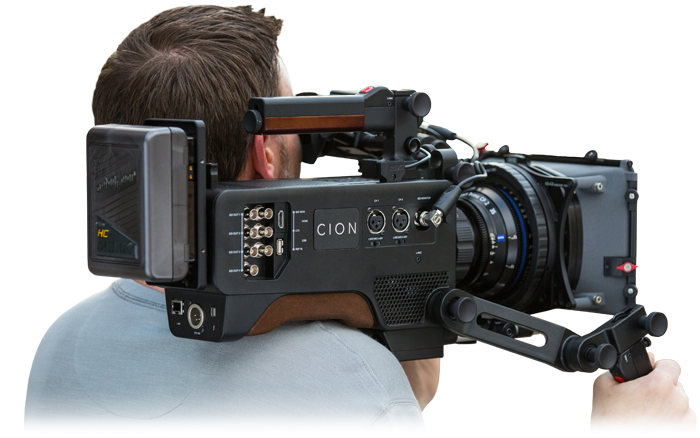


3. $9K AJA CION. Beautiful ProRes images in good light and nice shoulder mounted ergonomics - but no internal RAW. Overpriced compared to every Blackmagic RAW camera, to include Mini.


4. $8K Sony PXW-FS7. With its shoulder mount, optional viewfinder and extensible hand grip, URSA Mini appears to be a clone of the FS7 - but for $5000 less. Plus, Mini has the internal 4K RAW recording the FS7 lacks.


5. $4K JVC GY-LS300. URSA Mini very nearly strangles the LS300 in its cradle. JVC introduced this promising camera late last year, but has yet to ship it in meaningful numbers in the States. Despite the fact that its h.264 compression gave it the weakest codec of any of the cameras on this list,  it had the advantage of being the lowest priced UHD "4K" Super 35 interchangeable lens camera on the market - until today. Unfortunately for JVC, even with the viewfinder and a shoulder mount, Mini will be about the same price as the LS300 - with higher resolution, wider DR and a superior codec - and the LS300 is another camera that needs expensive rigging to get it up on your shoulder.

As far as Panasonic goes, we don't know much about their new "heir of DVX100" camcorder yet, but if it is not competitive on price, it will be stillborn at this morning's press conference.

Bottom line is that URSA Mini will force prices down even faster and further than we have seen already over the past couple of years.   Even if you never buy a Blackmagic camera, you should send Grant Petty a thank you note (unless, of course, you just bought a $2995 4K Blackmagic Production Camera).

Please keep checking back during the day for more updates - and for HCR's view of what all of this means for micro-budget shooters.

As always, if anything here has helped you to make a purchase decision, please shop using the links above or the displays below and in the margins. And even if you're not in the market for a new camera, please comment and make suggestions below. It won't cost you anything extra, and it will help to keep these posts coming.

And for the latest deals, news, tips and techniques, please follow HCR on Blogger, Twitter and YouTube  - and circle us on Google+.


Saturday, February 21, 2015

4K Panasonic VariCam 35 vs 3.2K Arri Alexa


4K Panasonic VariCam 35

3.2K Arriflex Alexa

Over the last few years, as 4K (and higher) resolution digital cinema cameras from other manufacturers have flooded the marketplace, Arri has steadfastly (some might say stubbornly) resisted giving its cameras the ability to record at resolutions higher than 2K.

In answer to a question at IBC 2012 on when there would be a 4K version of Alexa, for example, camera system product manager Marc Shipman-Mueller said  "...there is just not an urgent need for it...".

Suddenly however, the need must have suddenly become more "urgent" - because Arri has, in quick succession, announced UHD ProRes for Amira (August 2014) and 3.2K ProRes for Alexa (February 2015).

Perhaps coincidentally, the Amira upgrade was announced a few weeks before the new Panasonic VariCam 35 started shipping.  This is a camera that Panasonic seems to have aimed squarely at Arri.  With its 14+ stops of advertised dynamic range and true 4K 120fps ProRes recording, DPs are getting results like these:


For more examples of the stunning image quality this camera can produce - especially at its "dual native" ISOs of 800 and 5000, please join the new Panasonic VariCam 35 community I moderate over on Vimeo.

And if you're in the market for a high end 4K, 14+ stop cinema camera that can record 2K and 4K simultaneously, features slow motion at up to 120fps and a native ISO of 5000, you can buy or finance the VariCam 35 at Omega Broadcast for $55K.

As always, even if you're not in the market for a VariCam or an Alexa, please shop using the links above or the displays below and in the margins. It won't cost you anything extra, and it will help to keep these posts coming.

And for the latest deals, news, tips and techniques, please follow HCR on Blogger, Twitter and YouTube  - and circle us on Google+.


Monday, October 27, 2014

"D" Cam for Avengers: Age of Ultron - the Blackmagic Pocket Cinema Camera!


IMDB's Technical Specifications page for the upcoming sequel to Marvel's the Avengers - Avengers: Age of Ultron (teaser trailer below) shows the usual list of very expensive Hollywood cameras - the Arri Alexa XT, the RED Epic, the Canon EOS C500 - but it also lists the $900 Blackmagic Pocket Cinema Camera shooting ProRes 4:2:2.

Here's the trailer:


The GoPro HD Hero 3 is also listed (probably as a POV cam).

It is terrific to see a camera from the world of micro-budget filmmaking used on a major Hollywood production - and it's also a testament to the quality of the images produced by the Pocket.

This camera has already been used for major TV advertising campaigns and on the set of the TNT series Dallas - but this is one of the first feature films.

Given this camera's price/performance ratio, it's likely that we'll see more BMPCCs on set in Hollywood going forward.

Hat tip to an anonymous poster over on 4chan for the heads up.


Tuesday, August 26, 2014

Arri hops on the 4K bandwagon with an upcoming firmware upgrade for the Amira


Following close on the heels of yesterday's news on the Sony F5 4K hack, Arriflex has issued a press release announcing an official "4K" UHD upgrade for the 2K Arri Amira (full text below). Of course, since this is Arri, the upgrade will not be free (how much it will cost is yet to be determined).

Interestingly, the release notes that the upgrade is in response to "user feedback". In other words, Amira shooters probably wondered why far less expensive cameras from Blackmagic and Panasonic recorded at higher resolution than their $40,000 cameras. It is also interesting to note that the Amira gets the upgrade and the Alexa does not.

Here's the full text of the release:

(August 26th 2014, Munich) – A new software upgrade for ARRI’s documentary-style AMIRA camera will allow it to record ProRes UHD files, answering the 4K requirements of some productions. The upgrade is expected to be available for purchase at the online ARRI License Shop by the end of 2014.
While widespread adoption of 4K or UHD for broadcast is still a long way off, an increasing number of content owners are becoming concerned that they ought to safeguard the longevity of their programs by ensuring that they will be suitable for UHD transmission, should that become a standard in the future. 
For those productions that do need to generate UHD deliverables, AMIRA will now offer the ability to record all ProRes codecs in Ultra High Definition 3840 x 2160 resolution directly onto the in-camera CFast 2.0 cards, at up to 60 fps. This feature, activated through an affordable software license (and a sensor calibration for existing AMIRAs), comes in response to feedback from AMIRA customers, some of whom have been quizzed about 4K deliverables by clients. It is made possible by the camera’s exceptional image quality, its processing power, and its reprogrammable system architecture.
Whether a production is pursuing a UHD workflow all the way through to distribution, or simply wishes to archive in UHD in order to future-proof itself against industry developments, AMIRA now offers an easy solution that requires no additional processes in postproduction.
IN-CAMERA PROCESSING
The ALEXA/AMIRA sensor has repeatedly proved its ability to deliver outstanding image quality for the 4K or even IMAX theatrical releases of high-end feature films such as Gravity, Maleficent and Iron Man 3. This proves that the ALEXA and AMIRA camera systems are already future-proof and more than suitable for the next generation of distribution formats.
For major feature films, an up-sample to 4K can be carried out after visual effects and other postproduction tasks have been completed at 2K resolution. For certain fast-paced AMIRA productions, however, there may not be the time or resources for such processes in post, which is why a 4K or UHD output direct from the camera has been requested.
AMIRA’s UHD output utilizes the same efficient 1.2x up-sample filter that allows ALEXA’s Open Gate mode to optimize the camera’s image performance for 4K distribution, as well as the same best-in-class sensor pixels. The up-sample to UHD happens in camera, and in real time.
SAME GREAT IMAGE QUALITY
Outputting UHD broadens the distribution options for the superior image quality that has helped make AMIRA, and ALEXA, such a success. The wide, 14+-stop dynamic range remains unaltered, as does the accurate colorimetry, natural skin tones, and organic look and feel. By making that high-quality image data coming out of the sensor compatible with higher spatial resolution formats, the UHD upgrade answers the concerns of certain regions and productions about a 4K future, allowing AMIRA to be used on any project, no matter what deliverables are required.
Markus Duerr, ARRI’s Product Manager for the AMIRA system, says, “Feedback about AMIRA from all over the world has been overwhelmingly positive and it is clear that the camera is already a great success, being used on an amazing variety of challenging productions. Already acclaimed for its phenomenal image quality, ease of use and versatility, the new ProRes UHD output will take these benefits even further, adding value for customers in areas like China, where 4K is a major focus of industry attention.”
Wildlife cinematographer Rolf Steinmann, who was nominated for an Emmy Award this year in recognition of his work with ALEXA on the BBC’s Wild Arabia series, is currently using his AMIRA on a movie for Disney Nature. He comments, "For cameramen like me who own their gear, the UHD upgrade is a great way to stay future-proof. From now on when there's pressure from the production side to deliver UHD, I can continue to work with AMIRA and won't have to compromise on image quality or on the camera's robustness and reliability." 
About ARRI:
With headquarters located in Munich, Germany, Arnold and Richter Cine Technik (A&R) was founded in 1917 and is the world's largest manufacturer and distributor of motion picture camera, digital intermediate (DI) and lighting equipment. The ARRI Group comprises a global network of subsidiaries and partners that covers every facet of the film industry, including worldwide camera, grip and lighting equipment rental through ARRI Rental; turnkey lighting solutions through the ARRI System Group; lab services, postproduction and visual effects through ARRI Film & TV; and film distribution through ARRI Worldsales. Manufactured products include the ALEXA camera system and AMIRA documentary-style camera; Master Anamorphic lenses; L-Series LED and M-Series HMI lights; Pro Camera Accessories; and ARRISCAN archive technologies. The Academy of Motion Picture Arts and Sciences has recognized ARRI’s engineers and their technical contributions with 18 Scientific and Engineering Awards.

In my view, this is just the beginning of the wave of 4K/UHD announcements and press releases we will see in the coming year. Manufacturers from Arri to Canon to Sony will introduce new 4K cameras and upgrade older models. If a camera doesn't record 4K, it will lose a lot of its market appeal. As a result, shooters will start unloading old 1080p and 2K cameras at bargain basement prices. It will be the story of the transition from SD to HD all over again.

This will be great news for entry-level amateur shooters who are looking to buy a 1080p camera in the next few months - but pros and high-end amateurs interested in delivering higher resolution to their clients and audiences may want to seriously consider upgrading - especially since there are reasonably priced cameras with 4K/UHD internal recording from Blackmagic and Panasonic already on the market.


Sunday, August 10, 2014

First "4K"/60p footage from the Blackmagic Ursa!


Today, Pro cinematographer and Blackmagic tester John Brawley posted the first UHD/60p footage we've seen from the Ursa PL on his blog. I saw this camera at NAB and it is physically gorgeous - with a huge, bright screen, sound meters you can see from across the room and lots of proper SDI outputs. And from the looks of John's footage, the image quality doesn't disappoint, even at ISO 400 with a T3.7 lens:


At $5995 for the EF mount version and $6495 for PL mount, this camera seems to address many of the Blackmagic Production Camera 4K's limitations (with the exception of the "black sun" problem) at a price point that significantly undercuts 4K cameras from RED, Sony and Canon that cost a lot more.

If Blackmagic were to add DCI standard 12-bit 4K (4096x2160) 4:4:4 RAW to this camera (instead of UHD), and fix the darned black sun, they'd sell a whole lot more of them in Hollywood. Maybe at next year's NAB.


Thursday, March 27, 2014

Panasonic GH4 - "C" Cam for Alexas?


Panasonic DMC-GH4 with DMW-YAGH Pro Audio Video Interface Unit - $3298


Another video from Thai cinematographer Sittipong Kongtong - scouting locations for his next picture with the Panasonic GH4 . Interestingly, the movie will be shot with two Arri Alexas, and, if he can get production firmware for the GH4, he'll use it as his "C" camera.
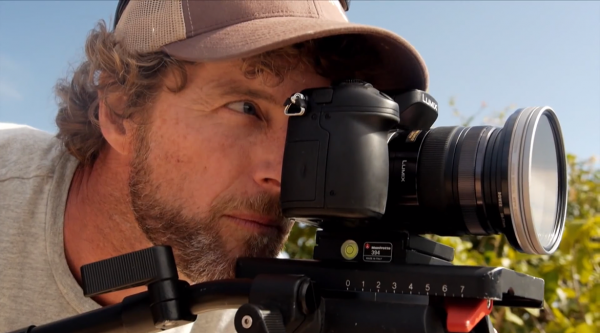


Once they get their hands on this camera, my guess is that a lot of professional cinematographers will use the GH4 to complement their REDs and Alexas.

As usual, if anything here has helped you to make a buying decision, please order through the links above or the display ads below. It won;t cost you anything extra, and it will help to keep these blog posts coming. Thanks so much for your support.

Sunday, March 23, 2014

Panasonic GH4 versus Arri Alexa Round 2 - 1080/96p Slow Motion!


Another side-by-side of the Panasonic GH4 and the Arri Alexa from Sittipong Kongtong in Bangkok. This time at 1080/96p conformed to 24p for 4X slow motion. Once again, the Arri is shooting a flat LOG 12-bit ProRes 4444, while the GH4 is shooting a normal color profile and h.264 8 bit 4:2:0.

But this time, the originating resolution and the delivery resolution is the same (even though compressed for YouTube). As in the previous GH4 96fps examples from Sittipong and from Jordan at The Camera Store, the GH4's 96fps looks to be very smooth and detailed. Freeze frames show no, or very little, motion blur (e.g., as is seen in Twixtor interpolation). Please watch at your monitor's highest resolution:


Again, at least for YouTube delivery, the $1700 GH4 stands up very well to the $44,000 Alexa.

For filmmakers on micro-budgets, this is very good news. For about the same price as a two day daily Alexa rental, filmmakers can buy a 4K GH4 with the YAGH audio video interface.

I am certainly grateful to Sittipong for posting these comparisons, but it would be nice to see a comparison between Panasonic's CineLook D color profile and Arri LOG. Perhaps next time.

As usual, if anything here has helped you to make a buying decision, please order through the links above or the display ads below. It won;t cost you anything extra, and it will help to keep these blog posts coming. Thanks so much for your support.

Thursday, March 20, 2014

Panasonic GH4 versus Arri Alexa - How Does 8-bit 4K compare to 12-bit 2K?


Sittipong Kongtong, a DP in Bangkok, Thailand has his hands on a preproduction Panasonic GH4 and has posted a few interesting clips. The latest is this side-by-side comparison (below) between the GH4 and the Arri Alexa.

Sittipong is a working DP and seems to be shooting these clips on the margins of his day job, so they're not as scientific as many of us would like. This test, for example, is not really a color space test - the Alexa is shooting a flat LOG 12-bit ProRes 4444 in 2K, while the GH4 is shooting a normal color profile and h.264 8 bit 4:2:0 in 4K (downscaled to 2K in post). This is more a resolution, 24 fps motion, moire and dynamic range comparison than anything else - and, in my view, the GH4 intercuts pretty well with the Arri in every one of those categories (at least on my small screen):


Panasonic GH4 4096x2160 vs Alexa 2048x1152 24P from Sittipong Kongtong on Vimeo.

I just booked my flight to Vegas for NAB - I am really pumped to see this camera in person. I have to make sure to order a Kingston UHS-I Speed Class 3 card before I go so I can record the usual shaky, dark trade show footage.

Seriously, I hope I can bring back something that is steady, in focus and decently lit so that people can make real judgments about what the camera can do. Hopefully, my familiarity with the GH3 will allow me to at least turn the camera on and record something useful.

As usual, if anything here has helped you to make a buying decision, please order through one of the links or display ads on this page. It wont cost you anything extra, and it will help to keep these posts coming. Thanks again for your support!