Showing posts with label Blackmagic URSA Mini. Show all posts

Monday, September 28, 2015

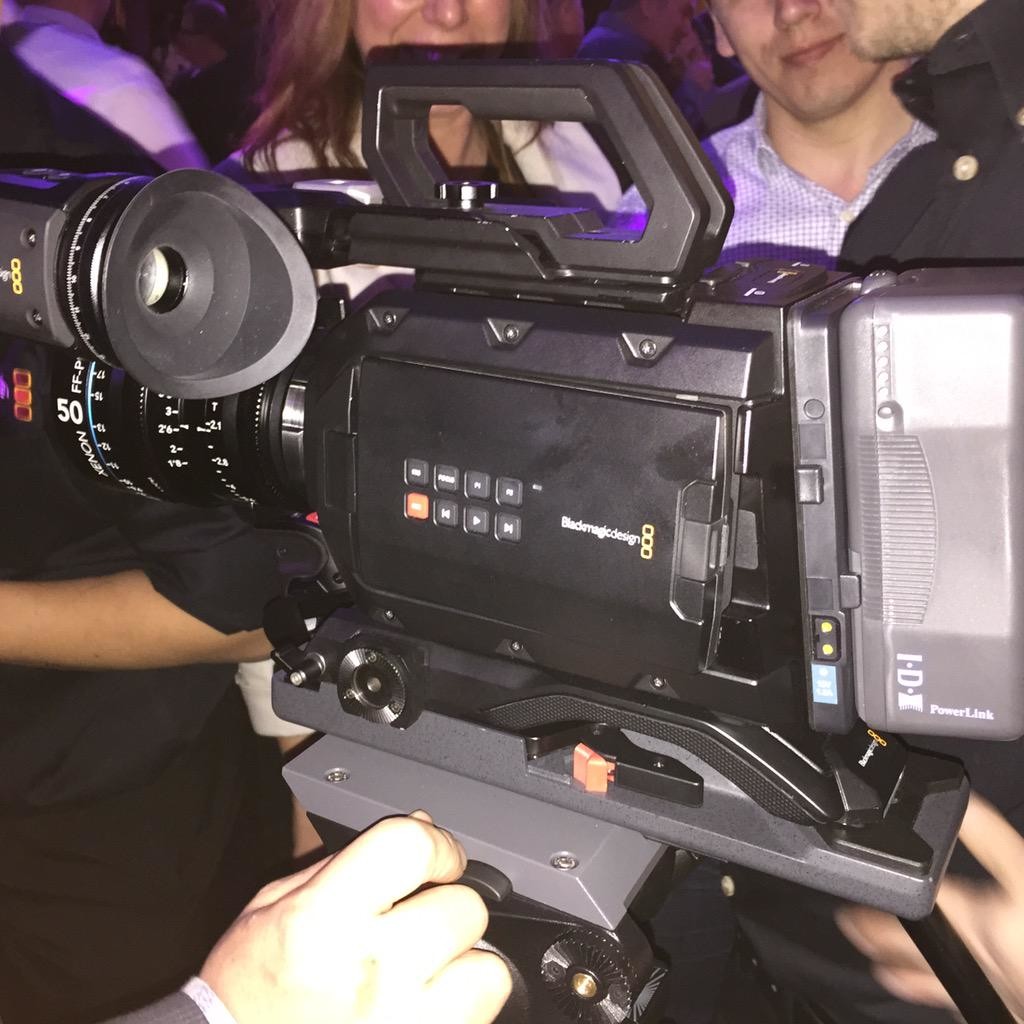
Which $3000 camera should you buy - Sony A7s II or URSA Mini 4K?


Over the past couple of years, as Sony has introduced more and more capable full frame video cameras in still camera bodies - and as Blackmagic Design has driven the price of 12-bit RAW Super 35 cinema cameras downward - shooters have had an increasingly difficult time deciding whether to buy a high end hybrid camera or a RAW-capable budget cinema camera.

Still/video hybrid cameras have had the advantage that they are relatively light and can do double duty as still cameras. And although their highly compressed codecs and 8-bit color spaces aren't the greatest for grading, LOG profiles and increasingly clever compression algorithms have made up for these shortcomings (especially on the small screens where most content is displayed).

One thing they haven't been able to overcome, however, has been the inherent limitations of the still camera form factor. There isn't the volume to fit XLR input jacks or dual card slots - and shooters generally need to spend extra money on cages for these cameras to mount accessories - plus ungainly shoulder rigs for steady handheld shooting.

But low-budget cinema cameras have had their problems too. Early cameras from Blackmagic didn't have XLR inputs. Nor did they have dual card slots or ergonomics that were conducive to shoulder mounting. And, although the 2013-era Blackmagic Production Camera 4K was a bargain compared to a 4K Super 35 camera from Sony or Canon, it was still expensive (and an ergonomic disaster) when compared to a standard mirrorless still/video hybrid camera - which was typically less than $2000 and had interchangeable batteries, a usable viewfinder and was easier to operate than the BMPC 4K..

This year, however, something has happened that changes the conversation. The two trends have finally met in the middle - with the introduction of the new Sony A7s II (street price $2998) and the $2995 Blackmagic URSA Mini 4K (both likely to ship in October).

Both cameras are relatively lightweight, with decent ergonomics and the ability to record high quality UHD to LOG profiles.  Both cameras have already shown they can create cinematic Super 35 (URSA Mini) or full frame (A7s) motion images.


With body-only prices at just less than $3000, these cameras seem to be similarly priced.  But neither is really ready to take out on a shoot straight out of the box.

This begs the question - once these cameras are rigged up and ready to shoot - are they still price competitive?

To help the typical DSLR or mirrorless shooter looking to upgrade to one of these two cameras, HCR has put together two charts, the first comparing upgrade prices for the typical DSLR upgrader and the second comparing specs.

For the sake of argument, we'll assume that this 'typical' upgrader already has Canon EF lenses and an HDMI EVF (or plans to use the Sony's built-in EVF) - but needs an audio solution and a new cage/shoulder rig compatible with the A7s II. Of course, these assumptions won't be true for everyone, but we have to start somewhere.

Upgrade Price Comparison

For handheld work, URSA Mini needs a battery plate, a battery, the URSA Mini shoulder kit and relatively expensive CFast 2.0 cards, at a minimum, to get started - while the A7s II needs (assuming we want in-camera pro sound and compatibility with EF lenses) an XLR adapter/preamp, a U3 SDXC card, an EF to NEX adapter and a shoulder rig of some kind. Let's run the numbers and see how that prices out:


Mini 4K EF A7s II
Body Only Price$2995$2998
Electronic Viewfinder$599 (non-OEM SDI)Built-in
Battery Plate$95 (OEM V-Mount)NA
Battery$40+$20 (Sony L to V-Mount adapter)Included
Shoulder Rig$395 (OEM)$170-$1100 (avg. ~$635)
Media$250 (128GB Delkin)$60 (128GB Transcend)
XLR jacks/preampBuilt-in$329
EF AdapterNA$439


So, micro-budget filmmakers with EF lenses who don't mind shooting with a $599 800x600 viewfinder (instead of Blackmagic's $1495 1920x1080p viewfinder) can get URSA Mini 4K up and running for about $4395 - while a similar Sony A7s II setup would cost a little more, at around $4460.

These totals are approximate - shaving a few dollars off the A7s II shoulder rig and buying an external recorder rather than a JuicedLink preamp would get the price down for the hybrid camera - but the total cost of getting these cameras ready to shoot is about the same (for this set of assumptions).

One of these side-by-sides wouldn't be complete without a specs comparison:

Specs Comparison


Mini 4K EF A7s II
Body Only Price$2995$2998
Electronic ViewfinderSDI (additional cost)Built-in
Sensor SizeSuper 3535mm
Lens MountEF (add $500 for PL)Sony E
Max Resolution4000x21603840x2160
Base ISO4003200
Max HD Frame Rate120fps120fps
CodecProRes 422 or RAWXAVC S
ShutterGlobalRolling
Mic Input(s)2xXLR w phantom3.5mm
Headphone Output(s)YesYes
SDI Out(s)YesNo
StorageCFast 2.0SDXC
Dual Card SlotsYesNo
In Body StabilizationNoYes
ND FilterNoNo
Native Power ZoomNAYes
Still PhotosNoYes
Weight5 lbs.1.3 lbs.

So how do the specs compare? The URSA Mini, with internal RAW recording and a global shutter, generates high quality images that stand up very well to color grading and camera motion. But (outside of 8MP freeze frames) URSA Mini is not a still camera, needs supplemental lighting in low-light situations and has no in-body stabilization.

The A7s II, on the other hand, is lighter, smaller and the clear winner in low light - but is likely to be more susceptible to "skew" resulting from camera or subject motion - and its 8-bit codec will have a more limited color palette in the grade.

HCR's bottom line for these charts - even though the ready-to-shoot costs are similar, these are two very different cameras with unique strengths and weaknesses.  As always, which one you buy or rent depends on your specific needs and preferences and not on comparison charts.

That said, these numbers have broader implications.  They show that you can get an ergonomically friendly 4K Blackmagic RAW cinema camera up on your shoulder and ready to shoot - for less than the price of a RED RAVEN brain or a body-only (8-bit) Sony FS5.

This could be a problem for Sony and RED.

If this post has helped you to make a buying decision, please use the links above or the display ads in the margins to make your purchases.  It won't cost you anything extra, and it will help keep these posts coming.

And please follow HCR here, on G+, on YouTube on Vimeo and on Twitter (button below) for the latest news on micro-budget video and cinema.


Friday, September 25, 2015

RED Announces Raven - takes on URSA Mini 4.6K, Sony FS7


Seven years after the "3K for $3K" Scarlet debacle, RED is delivering 4K for $6K with the EF mount $5950 (brain only) RED RAVEN.

Ready to shoot, with a V-Lock battery mount, touch screen LCD, 120GB RED MAG and handle, RAVEN will be less than $10,000.  Not quite #4K4ALL, but a lot closer than we've seen from RED to date.

Nice beauty shots in the intro video:


Sadly, there is no footage from the camera yet, but we have seen enough from RED sensors and color science to be fairly confident in Raven's ability to produce theatrical quality images.

With a brain-only weight of 3.5 lbs, 4K/120p and 2K/240p recorded internally to REDCODE RAW and an advertised 16.5(!) stops of latitude - this is going to be a powerful tool for filmmakers. RED says it's versatile enough for "documentaries, online and television" - but indies will almost certainly choose this camera for feature films on a budget.

But it's still relatively expensive.  Ready to shoot, it will cost about the same as a C300 Mark II - but that's not saying much. For shooters upgrading from DSLRs or entry level Super 35 cameras, Raven is going to be a very hard sell  - especially when you add the price of a viewfinder, ND filter and rigging.

A similarly equipped URSA Mini 4.6K EF will be $4995 plus the cost of a 128GB CFast 2.0 card (currently $249) while the Sony FS7 (with LCD, viewfinder and built-in NDs)  is $7999 and a 128GB XQD card is $685.

Here's our usual side-by-side specs comparison with cameras in the same price class (excluding 8-bit cameras such as the Sony FS5, Panasonic DVX200, Canon C100 and JVC LS300):


Mini 4.6K EF RED RAVENSony PXW-FS7 Canon C300 II
Body Only Price $4995 $5950 $7999 $15999
OEM Viewfinder $1495 option $3200 option Yes Yes
Sensor Size 25.34x14.25mm 20.48x10.88mm 25.5x15.6mm 24.4x13.5mm
Lens Mount EF (add $500 for PL) EF Sony E EF or PL
Max Resolution 4608x2592 4096x2160 4096x2160 4096x2160
Sensor S/N (advertised) NA 80dB 57dB NA
Dynamic Range (advertised) 15 16.5+ NA NA
Max HD Frame Rate 120fps 120fps (240fps at 2K) 240fps 120fps
Codec ProRes 422 or CDNG RAW RED RAW, ProRes 422 (2K only) XAVC 4:2:2 (ext. RAW) XF-AVC 4:2:2 (4:4:4 HD)
Shutter Selectable Global/Rolling Rolling Rolling Rolling
Mic Input(s) 2xXLR w phantom None 2xXLR w phantom 2xXLR w phantom
Headphone Output(s) Yes No Yes Yes
SDI Out(s) Yes No Yes Yes
Storage 2xCFast 2.0 MINI MAG 2xXQD 2xCFast 2.0/1xSD
In Body Stabilization No No No No
ND Filter No No Yes Yes
Native Power Zoom NA NA $548 $31K
Weight 5 lbs. 3.5 lbs. 4.4 lbs. 7.4 lbs.


Again, specs aren't everything - and neither is price - but, in my view, it is useful to know what you're getting for your money.

RED RAVEN is a significant camera. With an advertised March 2016 ship date, we should see it on the show floor alongside URSA Mini at NAB next spring.  I can't wait.

Please follow HCR here, on G+, on YouTube on Vimeo and on Twitter (button below) for the latest news on micro-budget video and cinema.

Monday, September 21, 2015

First official footage from the new Panasonic DVX200!

Here are some very nice 4K V-LOG images from Panasonic's first official DVX200 footage (please watch at 2160p and your monitor's highest resolution:


Behind-the-scenes:


And the "First Look" from Zacuto:


I agree with Jens and Steve - at $4195 (pre-order here), this camera is going to be very popular with wedding shooters, documentarians and run and gunners.

That said, the DVX's 8-bit color space and h.264 compression are still a problem. After recording 10-bit 4:2:2 and losslessly compressed RAW to an SD card on a $1000 Pocket Cinema Camera, I don't understand why Panasonic, Canon and Sony still have such a hard time with this in $4000+ cameras.

For me, and other shooters who want less compression and more gradable images, something like the $4995 URSA Mini 4.6K EF is probably a better option - but for shooters who want the convenience of a built-in power zoom lens and don't want or need a lot of flexibility in post, this is going to be a terrific camera.


Tuesday, September 15, 2015

First footage from new URSA Mini 4K!

Looks like the shooters who make up "The Dreamers", a wedding video production house in the Netherlands, are the first customers to take delivery of a couple of $2995 4K Blackmagic URSA Minis (plus accompanying $1495 Blackmagic viewfinders) - and they've been good enough to take the camera out on a couple of wedding shoots and share the results.

They shot the first wedding in 10-bit 4:2:2 ProRes HQ at 1080/60p rather than 4K, but I have to say that it looks pretty good - except for the moire on the groom's jacket at 1:10.


The second wedding was shot in 3840x2160 Ultra High Definition, again in ProRes.

This video has been password protected as private, but you can still see it in the URSA group I moderate over on Vimeo:

A Styled Shoot with the Ursa Mini 4K (in UHD)


This one looks a lot cleaner. If you have a Vimeo Plus or Pro account, you can download it and see for yourself (if you don't, you can sign up for a Pro account here).

The best news, however, is ergonomic.  After a couple of generations of Blackmagic cameras that have either looked like toasters or cellphones or weighed too much to carry, the Dreamers say "[The Mini] is incredibly well designed -- everything is exactly where you expect it to be..." (hat tip to nofilmschool.com for the quote).

At $2995 body-only, this camera is a pretty amazing value for the money.  For those who can't afford the extra $2000 for the 4.6K version, this is going to be a great, 10-bit entry-level cinema camera.

Blackmagic is clearly going to have to drop the price of the vanilla $2995 Production Camera 4K when URSA Mini 4K starts shipping in volume.

Friday, September 11, 2015

New Sony FS5 - URSA Mini Killer?

Today, 5 months after NAB 2015, Sony has launched a major counterattack against the URSA Mini (which finally started shipping yesterday).

The new $6699 (body only) Sony PXW-FS5 is a lightweight Super 35, E mount camera with a 240 fps super slow motion burst capability, a built-in electronic ND filter and compatibility with affordable Sony power zooms (such as the $548 Sony 18-105mm constant f/4).

As usual, Sony's marketing department had a sample video ready on the day of the announcement, something Blackmagic has not done in the 5 months since NAB:


Here's a BTS and interview with Producer Den Lennie and DP Mick Jones:


The size, weight and image quality from this camera appear to be ideal for independent narrative and documentary filmmakers.  Its compatibility with affordable power zoom lenses is an added bonus, and will probably cut into sales of the $4195 fixed lens Panasonic DVX200.

Here is a table comparing the specs between the FS5, both models of the URSA Mini and the Canon C300 Mark II (Canon's lowest priced 4K Super 35 camcorder).


Mini 4K EF Mini 4.6K EFSony PXW-FS5 Canon C300 II
Body Only Price $2995 $4995 $5599 $15999
OEM Viewfinder $1495 option $1495 option Yes Yes
Sensor Size Super 35 Super 35 Super 35 Super 35
Lens Mount EF (add $500 for PL) EF (add $500 for PL) Sony E EF or PL
Max Resolution 4000x2160 4608x2592 3840x2160 (paid upgrade to 4096x2160) 4096x2160
Max HD Frame Rate 120fps 120fps 240fps 120fps
Codec ProRes 422 or RAW ProRes 422 or RAW XAVC 4:2:0 (4:2:2 HD, paid upgrade to ext. RAW) XF-AVC 4:2:2 (4:4:4 HD)
Shutter Global Selectable Global/Rolling Rolling Rolling
Mic Input(s) 2xXLR w phantom 2xXLR w phantom 2xXLR w phantom 2xXLR w phantom
Headphone Output(s) Yes Yes Yes Yes
SDI Out(s) Yes Yes Yes Yes
Storage 2xCFast 2.0 2xCFast 2.0 2xSD 2xCFast 2.0
In Body Stabilization No No No No
ND Filter No No Electronic Yes
Native Power Zoom NA NA $548 $31K
Still Photos No No No No
Weight 5 lbs. 5 lbs. 1.8 lbs. 7.4 lbs.

Bottom line - this looks like a nice little camera - 240 fps, the ND filter, the OLED viewfinder and HD 4:2:2 are great features - and it produces nice looking UHD images on YouTube - but $6699 is a whole lot of money to pay for 100mbps 8-bit 4:2:0 UHD.

The Blackmagic URSA Mini 4.6K EF (with the OEM viewfinder) is $209 less for a camera with higher resolution straight out of the box - plus built in 12-bit RAW recording (of course, that extra $209 might pay for one CFast 2.0 card).

All of that said, both of these are great cameras - Sony and Blackmagic are to be commended for giving filmmakers such terrific tools at these prices.

EDIT: Hat tip to reddit user /u/zdubs1, who points out that the pre-order price for the FS5 is actually $5599 , $1100(!) less than the $6699 list price.

This makes the FS5 a whole lot more attractive, and a real threat to cameras such as the $5499 Canon C100 Mark II, which is limited to 1920x1080p maximum resolution and has no upgrade path the 4K or RAW.

Monday, May 11, 2015

Three important new reviews: Bloom on FS7; Johnston on LS300 and Behiri on XC10

Three of my favorite reviewers have published reviews/previews of their thoughts on some of 2014/2015's most interesting new cameras, the $7999 Sony PXW-FS7, the $3995 JVC GY-LS300 and the $2499 Canon XC10. I wanted to put them all in one place for those of you who are interested in these cameras.

Phil Bloom's look at the FS7 is a preview for one of his much longer reviews, which is still to come. He is trying out a new way of funding his reviews, a GoFundMe page, which I support. I just rented the LS300 in order to review it here, and it does cost a lot of time and money to put something worthwhile together.

Here's what the two Phils and Johnnie were able to do with these cameras:


As long time readers know, HCR has been in the market for a large sensor camcorder for a while - but we haven't decided yet. These cameras are all on the list - as is the URSA Mini - and these reviews are certainly helpful as we make the final decision. I am personally very grateful to these three guys for these tests.

I've said it before and I'll say it again, what a great time to be a film/video maker!


Tuesday, April 14, 2015

Blackmagic wins NAB 2015

Best of Show

Micro-budget and independent filmmakers had high expectations this year after the excitement of last year's breakthrough NAB, which saw the introduction of the Panasonic GH4, the first interchangeable lens 4K camera below $2000; the Sony A7s, the first full frame camera with UHD output; the AJA Cion, the first 4K Super 35 shoulder mount below $10K; and the bargain priced Blackmagic URSA, the first UHD production camera below $7000 with XLR mic inputs and a standard external battery mount.

Canon was the odd man out at NAB 2014, with no major new camera announcements in this category. Their floor display was a live demonstration of the overpriced 4K Canon 1D C, which was already several years old at the time of the show.

So, when NAB 2015 rolled around, more breakthroughs were expected from the major camera manufacturers.  Would Sony introduce a 4K A7000?  Would Canon introduce an interchangeable lens competitor to the GH4 below $10K?  Would Panasonic finally give us a successor to the AF100 - with the GH4's features in a camcorder body?  What did Blackmagic have up its sleeve?

As the smoke clears from the big press conferences and announcements on Monday, it seems that all of the major manufacturers have chosen to rest on their laurels - except Blackmagic.

Sony had nothing to show in this market segment this year - while Canon and Panasonic did have new offerings for micro-budget cinematic shooters, the $2499 XC10 and the "under $5000" AG-DVX200.

Surprisingly, however, both of these cameras turned out to have fixed lenses, and "smallish" sensors. A little disappointing in a marketplace that has shifted towards interchangeable lens, large sensor cameras.

Panasonic's timing was especially unfortunate. In a series of leaks overnight and early on the morning of the DVX200's rollout - Blackmagic pursued their now-standard NAB strategy. They posted banners with images of their new cameras around the convention center for bloggers to find and post on social media. Images of their major new camera leaked from their pre-announcement party. And they posted images and tech specs for their new camera before Panasonic had a chance to make their announcement (even now, the URSA Mini product page is up, while there is nothing official to be found about Panasonic's AG-DVCX200 outside of a stale press release).

By the time Panasonic held its press conference Monday morning, Blackmagic had stolen their thunder with buzz surrounding a camera that both outspec'd the DVX200 and undercut it on price.

But it wasn't just a well executed communications plan that won the show for Blackmagic - it was a new camera with features the market has been asking for; an affordable, lightweight Super 35 interchangeable lens camera with good shoulder-mounted ergonomics, built in XLRs with phantom, standard battery mounts and solid 4K codecs (to include losslessly compressed RAW) - all in a rugged body.

It is clear when you compare the specs between the new Canon, Panasonic and Blackmagic offerings in this class, that Blackmagic has delivered what many micro-budget filmmakers and 'cinematic videographers' have been looking for with the URSA Mini:


Canon XC10 Blackmagic URSA
Mini 4K EF
Panasonic
AG-DVX200
Blackmagic URSA
Mini 4.6K EF
Price $2499 $2995 $4195 $4995
Sensor Size 1" Super 35 Micro 4/3 Super 35
Lens Mount Fixed EF (add $500 for PL) Fixed EF (add $500 for PL)
Max Resolution 3840x2160 4000x2160 4096x2160 4608x2592
Max HD Frame Rate 60fps 120fps 120fps 120fps
Codec MPEG-4 AVC RAW or ProRes MP4/MOV RAW or ProRes
Shutter Rolling Global Rolling Selectable Global/Rolling
Mic Input(s) 3.5mm 2xXLR w phantom 2xXLR w phantom 2xXLR w phantom
Headphone Output(s) Yes Yes Yes Yes
SDI Out(s) No Yes Yes Yes
Storage 1xCFast 2.0 1xSD 2xCFast 2.0 2xSD 2xCFast 2.0
Stabilization 5-axis (HD only) No 5-axis No
ND Filter Yes No Yes No
Power Zoom Lens No No Yes No
Viewfinder No (LCDVF) $1495 option Yes $1495 option
Still Photos 12MP No 8MP No
Weight 2.29 lbs. 6.6 lbs. 5.95 lbs. 6.6 lbs.

No, specs aren't everything - it will be important to see images from these cameras in the hands of real shooters - but if the indie market wants a 4K RAW (or 10-bit ProRes), large sensor, interchangeable lens Super 35 camcorder with 160fps HD slow motion and a global shutter that can be either handheld or shoulder mounted without breaking the shooter's back (or bank account), then URSA Mini is pretty much the only game in town.

As regular readers know, I've been looking for a replacement for my trusty Panasonic TM900 camcorder for a few years now.  I want a large sensor, interchangeable lens camera with camcorder ergonomics plus pro mic inputs and a strong, gradeable codec to pair with my GH3, and later, my GH4.

I had almost settled on the $3995 UHD JVC GY-LS300 - but its weak 8-bit h.264 compression was a challenge - and made it difficult to sell my Blackmagic Pocket Cinema Camera, with its robust, gradeable 10-bit ProRes and CinemaDNG RAW.

URSA Mini solves this problem.  I can now sell the TM900, the Pocket Camera, the GH1, GH2, GH3 and all of my MFT glass - then buy an URSA Mini EF (plus a $599 Metabones EF to MFT Speed Booster for the GH4) and skinny down to two cameras and one lens system.

Farewell, BMPCC - we hardly knew ye
So, for offering lightweight Super 35 cameras that shooters can afford - and for solving my personal camcorder dilemma - the Blackmagic URSA Mini wins HCR's first annual "Best of Show" award for NAB 2015.

Working on the awards banquet - perhaps at NAB 2016.

As always, if anything here has helped you to make a purchase decision, please shop using the links above or the displays below and in the margins. And even if you're not in the market for a new camera, please comment and make suggestions below. It won't cost you anything extra, and it will help to keep these posts coming.

And for the latest deals, news, tips and techniques, please follow HCR on Blogger, Twitter and YouTube  - and circle us on Google+.


Monday, April 13, 2015

Five 4K camcorders threatened by the $2995 4K Blackmagic URSA Mini


Images courtesy eriknaso.com

Thanks to Noam Kroll and Erik Naso, we have a pretty good idea of what Blackmagic Magic will unveil in Vegas this morning - to include a truly revolutionary $2995 URSA Mini Super 35 camcorder, with interchangeable lenses, a global shutter, Blackmagic's standard CinemDNG RAW, 4K, 12 stops of DR (15 stops on the $4995 4.6K model), an optional EVF and easy compatibility with a shoulder mount.

Even before we see the detailed specs from the Blackmagic press event, we do know one thing - there has to be consternation in the executive suites at AJA, Arri, Canon, JVC, Panasonic and Sony (which is exactly what Blackmagic CEO Grant Petty set out to do when he started building cameras a few years ago).

If URSA Mini can deliver URSA's RAW image quality (or better) for $2995, here are the five 4K cameras that it clearly threatens:


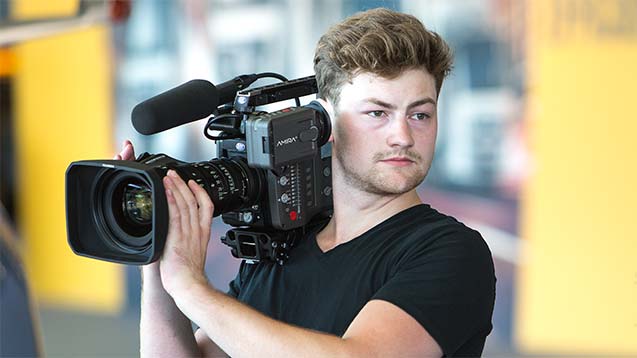
1. $40K Arri Amira. Recently upgraded to 4K, this camera produces amazing images in a near-perfect shoulder mounted form factor. And with Arri color science, it is a perfect match for industry-standard Alexa. But at $40K, its cost is prohibitive for most indies and micro-budget filmmakers. This camera will continue to see considerable use at the high end of the market, but for indies, the price mismatch between Amira and URSA Mini is ridiculous - you could buy a Mini for less than the price of renting an Amira for a week.


2. $16K Canon C300 Mark II (and $2.5K XC10). Canon's pre-NAB announcement of these cameras was clearly designed to steal the limelight at the show. URSA Mini has pretty much stolen it back. The C300 Mark II costs 5 times is much and lacks the Mini's internal raw recording.  Plus, it requires expensive rigging to get it up on your shoulder. As for the XC10 - it costs almost as much as Mini, but is a fixed lens, 1" sensor toy by comparison.


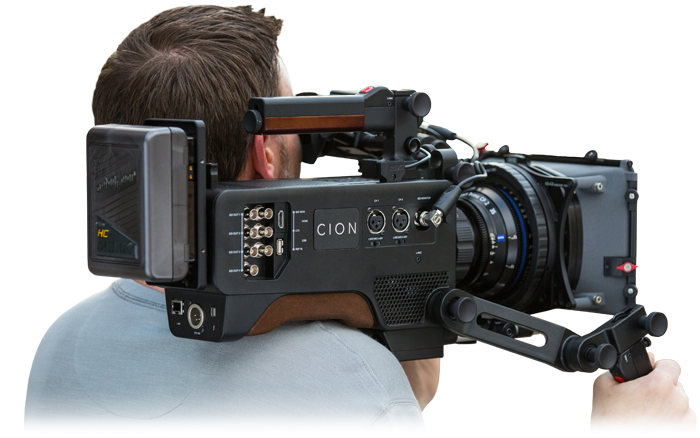
3. $9K AJA CION. Beautiful ProRes images in good light and nice shoulder mounted ergonomics - but no internal RAW. Overpriced compared to every Blackmagic RAW camera, to include Mini.


4. $8K Sony PXW-FS7. With its shoulder mount, optional viewfinder and extensible hand grip, URSA Mini appears to be a clone of the FS7 - but for $5000 less. Plus, Mini has the internal 4K RAW recording the FS7 lacks.


5. $4K JVC GY-LS300. URSA Mini very nearly strangles the LS300 in its cradle. JVC introduced this promising camera late last year, but has yet to ship it in meaningful numbers in the States. Despite the fact that its h.264 compression gave it the weakest codec of any of the cameras on this list,  it had the advantage of being the lowest priced UHD "4K" Super 35 interchangeable lens camera on the market - until today. Unfortunately for JVC, even with the viewfinder and a shoulder mount, Mini will be about the same price as the LS300 - with higher resolution, wider DR and a superior codec - and the LS300 is another camera that needs expensive rigging to get it up on your shoulder.

As far as Panasonic goes, we don't know much about their new "heir of DVX100" camcorder yet, but if it is not competitive on price, it will be stillborn at this morning's press conference.

Bottom line is that URSA Mini will force prices down even faster and further than we have seen already over the past couple of years.   Even if you never buy a Blackmagic camera, you should send Grant Petty a thank you note (unless, of course, you just bought a $2995 4K Blackmagic Production Camera).

Please keep checking back during the day for more updates - and for HCR's view of what all of this means for micro-budget shooters.

As always, if anything here has helped you to make a purchase decision, please shop using the links above or the displays below and in the margins. And even if you're not in the market for a new camera, please comment and make suggestions below. It won't cost you anything extra, and it will help to keep these posts coming.

And for the latest deals, news, tips and techniques, please follow HCR on Blogger, Twitter and YouTube  - and circle us on Google+.