Showing posts with label GH2. Show all posts

Monday, June 10, 2013

Panasonic GH2 shoots Denzel Washington/Mark Wahlberg Picture - "2 Guns"

Upstream Color won't be the only movie shot with hacked GH2s coming to cinemas this year. Hot Rod Cameras - an early pioneer in modifying Panasonic GH cameras for motion picture use (dating back to their trailblazing PL to micro 4/3 adapter for the GH1 back in 2009) - posted this on their Facebook page in May:
"Watch the movie trailer to "2 Guns". Hot Rod Cameras hacked (3x) Gh2 cameras and provided custom lens mounts so the filmmakers could use Panavision anamorphic lenses. Denzel Washington/Mark Wahlberg star in this high-energy action extravaganza!"
So...how much of this trailer do you think was shot with the GH2?


You can still find a few used GH2s on Amazon and eBay, but prices are going up - and they're becoming more difficult to find.

I love my GH3 - but I hope the more affordable G6 is as good (and hackable) as the GH2.

Sunday, May 12, 2013

New Panasonic G6 - contender for the GH2's video crown?

Julian at DIGIFOTO PRO has posted a comparison video between the "hacked" GH2 and the upcoming Panasonic G6. The G6 has a mic jack, the same sensor as the GH2, and shoots at 1080/60p.

For $749 with the kit lens (and less without?), the G6 could be a great GH2 replacement for shooters who can't afford a GH3 (even though used GH3 prices are coming down ).

Here is the comparison video (please watch at 1080p):


And here is a side by side that includes a shot of shingled roofs - a good test of a camera's susceptibility to moire (again, please watch at 1080p):


The good news is that the G6 seems to be as moire-resistant as the GH2 and the Nikon D5200/D7100! The bad news is that it won't be available until June. If you can wait until then, please support the blog by pre-ordering it from Amazon here :)

UPDATE: Great news - according to Panasonic, the G6 uses the DMW-BLC12 battery, the same battery used by the FZ200, the G5 and the GH2.  So all of you GH2 upgraders can keep your existing batteries!

Friday, May 10, 2013

Feature Film "Upstream Color" - Shot on Panasonic GH2 - Now in Theaters and on Amazon Instant Video!


I highly recomment Upstream Color, a feature film from all-in-one writer/director/DP/actor Shane Carruth shot on the Panasonic GH2 and now playing at your local theater!

Time Magazine's piece on this film asks if it is "One of the Best Films Ever Made?"

Here is the trailer:


If you can't make it to the theater, or it's not playing near you, you can buy or rent it on Amazon Instant Video.

If you prefer physical media, you can get it on DVD or DVD and Blu Ray.

And if you want to buy a GH2 and make your own movie, there are still a few left at Amazon and eBay :)

Shane is distributing the film himself instead of selling it to a studio - so more of the dollars you spend at the box office or at Amazon go to a fellow indie hybrid still/video camera shooter, and not to big Hollywood.  Pretty cool.

I'll say it again - this is a great time to be a filmmaker!

UPDATE: Box Office Mojo reports that Upstream Color has grossed $401,200 as of today!  We don't know how big the production budget was on this film, but if it was anything like the $7000 he spent on Primer, this is very good news for Shane and for the indie community.

I haven't seen the film yet, but plan to get over to Berkeley to see it this week.  I'll keep you posted.

Monday, February 4, 2013

Audio Technica AT835 and the GH3 - Pro mic vs Consumer Mic Shootout

Here is a test of my "new to me" Audio Technica AT835 plugged directly into the GH3.  I bought this AT835 used on eBay for $75 shipped.  This is not unusual.  If you are patient, it is possible to find deals on many old XLR shotgun mics.

To get the 600 Ohm balanced XLR output from the AT835 into my 2500 Ohm camera, I bought a Hosa MIT-156 XLR to 3.5mm line matching transformer for around $20.  You can pay more for a Shure A96F, but the Hosa does a great job.  Here is a picture of the setup, with a $23 Rainbowimaging pistol grip:


Please watch the video below to see how the $75 used AT835 stacked up against the $80 Azden SMX10 consumer mic, also plugged directly into the GH3.  Not to prejudice you before you listen to the test, but this experience tells me that picking up a used pro mic on eBay can be a pretty good investment - especially when compared to the price of camera mounted prosumer mics such as the $229 Rode VideoMic "Pro".

After trying the two mics out side-by-side, I am very glad to have adapted a pro mic to the GH3.  The only challenge is the length of the AT835. As you can see from the video, it is literally a "shotgun" - and sticks pretty far out in front of the camera.
I will probably end up getting something a little shorter (maybe a used Sennheiser K6/ME64 for about the same price as a VideoMic Pro), but, in the meantime, the AT835 is a great solution.
If you find these posts helpful in deciding to buy something through eBay, Amazon or Adorama, please use the links on this blog (at no extra cost to you). And if you found the video helpful, please link to it directly on Vimeo and donate a little something to the "tip jar".
To see the latest comparisons, reviews and other goings-on, please follow us on Vimeo and YouTube. Your help is greatly appreciated and will keep the reviews and blog posts coming.

Monday, January 7, 2013

Poor man's XLR jack for GH2/GH3

I was tired of noisy amateur "shotgun" mics with poor off-axis noise rejection, poor frequency response and flimsy little 3.5mm jacks and consumer cable.  I wanted to upgrade my mic quality - but I didn't want to spend a lot of money for a JuicedLink or Beachtek preamp/XLR to DSLR adapter.

 I heard that some people were running battery powered XLR mics directly into 3.5mm jack equipped camcorders and cameras with line matching transformers - so I set out on a quest to see if  could make it work - and I did.

I'm now running a $75 used Audio Technica AT835 mic (sourced from eBay) directly into my GH2 with a $15 Hosa Low Z to High Z transformer and a $5 Hosa GPM-467 3.5mm to 2.5mm adapter.  The windscreen is a $55 Olsen Mic Muff MM-21. It works really well for my application (standups right in front of the camera for my vlog).

The preamps on the GH2 are not great, but they are good enough for this - and the GH3's are even better.

No phantom power - but that's what battery powered mics are for.

When this setup is connected to the GH3, I won't need the GPM-467 any more.  A lot less expensive than Panasonic's $349 OEM solution :)


Tuesday, November 27, 2012

Canon T3i closing out - $599 w kit lens!


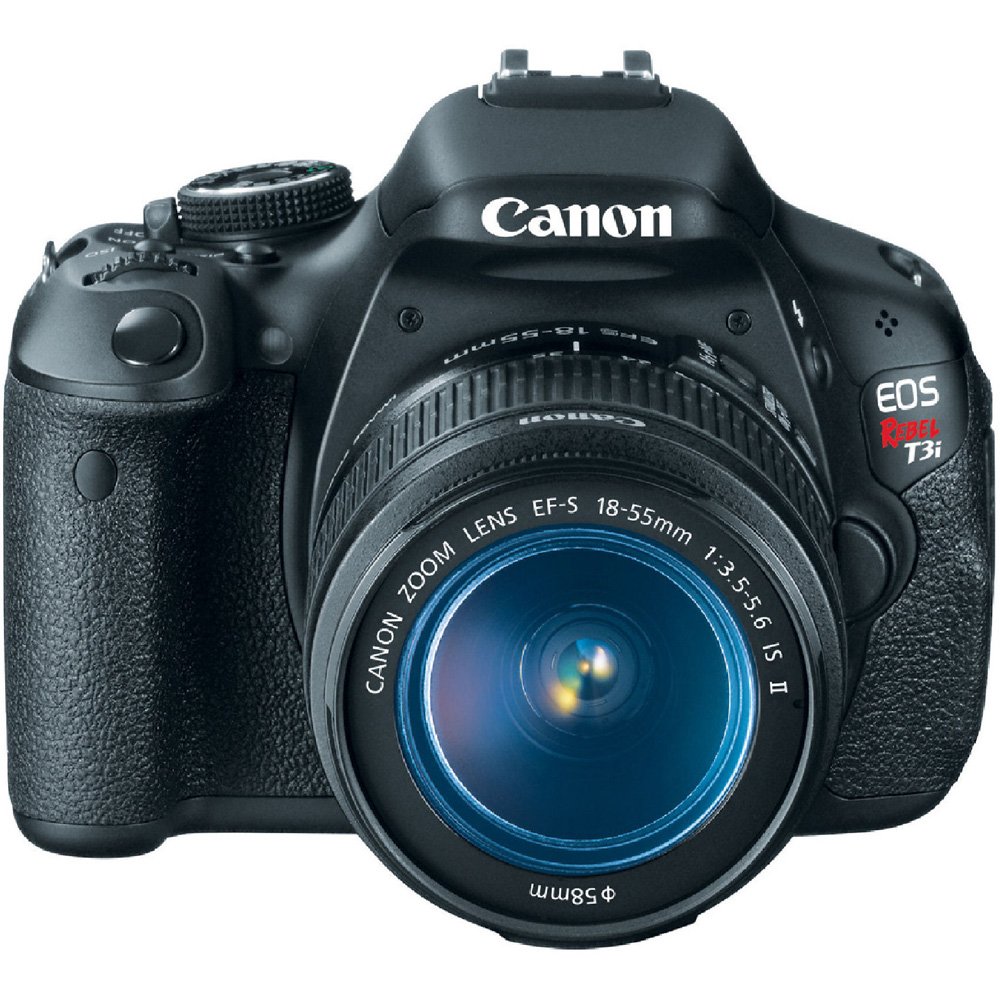
With the arrival of the T4i, Canon is discounting the still very capable T3i.  Readers of this blog will know that I recommend the Panasonic GH2 at this price point for video - but if you shoot more JPEG stills than video - or if you already own EOS lenses, Canon makes great cameras for the money.  In time for the holidays, the T3i is now $599 with the 18-55mm kit lens at Amazon new  - and even less than that refurbished.

Monday, September 17, 2012

Pre-ordered my Panasonic GH3 DSLM!


It's here!  As Andrew Reid at eoshd says, "This camera is basically a dream..."  I have to agree.  The convergence of pro stills and video in the same camera makes the GH3 the realization of the hybrid camera dream.

As a GH2 still shooter who was dissatisfied with the build quality, autofocus speed and the lack of dynamic range in my stills, the new magnesium alloy body, lightning fast autofocus and HDR mode are what I have been waiting for.

As a GH2 video shooter reluctant to hack my camera, I have been waiting for a high bit rate camera with a stable codec capable of shooting 1080/60p with one hour plus video clip length (outside of the EU), manual audio level control, a headphone jack, XLR inputs (or at least an external accessory with XLR inputs), and clean recordable HDMI output.

So, for $1300, Panasonic has given us much of what has been on photographers' and filmmakers' wish lists for the last couple of years - and more besides (official specs here).

After being tempted by one or two of the plethora of cameras that Sony has announced over the last few weeks, I have put my pre-order in for the GH3.  Sony came closest to getting my business with the $3600 EA-50 or the $2800 A99, but $3600 is a lot of money for a prosumer camera - and the A99's 30 minute continuous shot limit makes it a "video clip" camera, and not a video camera.

It is a great day to be a photographer/filmmaker!

If you enjoy these posts, please support this blog by pre-ordering your GH3 through these links from Amazon for $1299.00 or Adorama for $1299.99.  They won't charge your card until it ships.

Thanks so much.


Friday, September 14, 2012

It's almost here! New GH3 video from Panasonic US!

This morning, Panasonic posted a promo video for the GH3 (hat tip to 4/3 rumors) - which may or may not be pulled before the official announcement scheduled for Monday.   I admit that I'm biased - but this camera looks like it has been worth the wait.  Hard to tell from Vimeo, but the still images are impressive - it certainly looks like Panasonic has overcome the GH2's dynamic range challenge.  And with a ruggedized body and weathersealing; a battery grip; 1080/50 or 60p and 72mbps ALL-I encoding - this camera, if it adds the rumored headphone jack and retains the GH2's unique competitive advantages of near moire-free video and unlimited video clip length, becomes the hybrid camera to beat in the DSLR/DSLT/DSLM form factor.  If the price (and image quality) are right, Panasonic will sell a lot of these.


And is that Philip Bloom we see shooting with a GH3 at about 2:46 into the video? If so, it certainly is nice that he has an articulated, swiveling LCD to look at and doesn't have to crouch down behind the camera - not at all like the shot where he had to lie down on the beach in his review of the 5D Mark III with its old-fashioned fixed LCD :)

Friday, September 7, 2012

Blackmagic Design Rocks the Cinema World - Again!

I guess you can tell from the name of this blog that I'm a bit of a revolutionary - that's why I like "insurgent" companies like Blackmagic Design - whose mission in life seems to be to upset the old order.  Well, they did it with the original $2995 Blackmagic Design Cinema Camera (BMCC) for EF mount a few months ago, and now they've done it again with a new Micro 4/3 (MFT) mount version, announced at IBC 2012 in Amsterdam.  The new version will be available in December for the same $2995 price! (see image below, with Voitglander 17mm f/0.95)


This is great news - one of the major criticisms of the original camera has been the EF mount - which seemed to be a poor match for the size of the BMCC's sensor, limiting lens choices at the wide end.  This problem is dealt with much more easily with the new MFT mount.  With the MFT mount, the camera is opened up to a range of manual lens options not available with the EF-only mount, such as the $549 SLR Magic HyperPrime Cine 12mm T/1.6 - while still retaining the ability to use manual PL or Nikon lenses with inexpensive adapters - or EF lenses in auto mode with a $600 Redrock LiveLens Active Lens Mount.

So, for $4 or $5K (plus SSDs), you can have a camera with 2.5K resolution that shoots 12 bit RAW with 13 stops of dynamic range and will mount just about any lens ever made?

Although this blog is nominally about the hybrid still/cinema camera convergence, and this is "just" a cinema camera - I am still excited.  Because what this blog is really about is the revolutionary democratization of image-making made possible in this century by the breakneck pace of change in technology.  When I was in film school, Super 8 sound cameras were revolutionary.  The idea that amateurs could actually get lip-synced sound in their movies without a clapboard and a Nagra was pretty heady stuff. My Super 8 sound camera actually had full manual audio level control (I wish my GH1 and GH2 had that!).

But sadly, the image quality from those cameras was terrible, even by 1970s standards.  The images were grainy (even at low ISOs - or low ASAs in those days), the registration was awful, so the picture jumped around, and the resolution was so low it couldn't stand up to projection on the big screen.  Okay, 16mm was better for projection, but not much better.  And it was an order of magnitude more expensive (not just the cameras and lenses - but the film stock and processing cost a fortune).

Fast forward to today - and with a few thousand dollars, a film school or amateur or indy pro crew can produce image quality with nearly the dynamic range of film that will stand up to the 2K projection in most theaters. No more excuses.  Thanks Blackmagic Design!

If you like this blog, please support us by shopping with our sponsors through these links: AdoramaAmazonCrutchfieldOneCall, and Unique Photo

Saturday, August 18, 2012

Goodbye Frankenrigs! Hello Sony NEX-EA50!


Sony has taken another huge step towards the convergence of large sensor interchangeable lens hybrid still/video cameras with the new NEX-EA50 for $4500, including a new 18-200 servo zoom lens (also compatible with the FS700, but not and the FS100).  Here's the usual over-produced Sony release video (story continues after the jump):


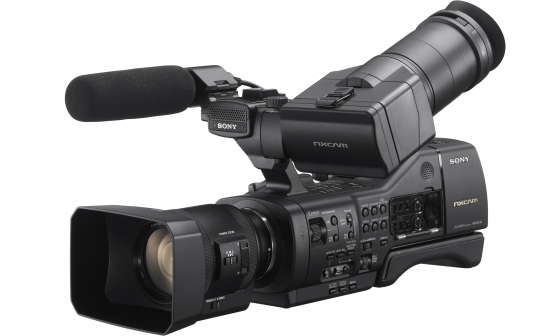
The specs look like Sony engineers and marketeers have been reading my mind.  Shoulder mount large-sensor camcorder with high resolution 16MP stills (with RAW). 1080/60p. Built-in XLR inputs with full manual audio level control and pro quality sound. A top handle. A real power zoom with a rocker instead of Panasonic's stupid ring. As anyone who reads my posts on this blog and elsewhere knows, I am a big fan of Panasonic's GH1 and GH2 cameras (I own both).  And I've been looking forward to the rollout of the GH3, rumored to be next month at Photokina in Berlin.

But, even without seeing a whole range of images from this camera, if it only matches the image quality of the VG20 (which I have some experience with) this new entry from Sony steals a lot of Panasonic's thunder.


The Panasonic GH3 is unlikely to have XLR inputs or a shoulder mount - so shooters will still have to buy shoulder rigs and external recorders, closing the price gap with this new camera.

If the GH3 is introduced at the $1000-$1200 body only price point (comparable to the OM-D EM-5 and NEX-7), shooters would have to add a $300 power zoom lens, a $170 XLR capable external recorder, a $220 XLR boom mic and a $1000 Redrock shoulder rig to make it as functional as a straight-out-of-the-box EA50.

And if the GH3 doesn't have a headphone jack and 1080/60p, it is going to lose a lot of sales to this camera - perhaps including mine.


Worse for Panasonic - at the ~$4000 price point, the EA50 arguably has better video camera ergonomics than the AF100 - with the addition of the still camera chops that the AF100 lacks (it is even a better still camera than the $8000 8MP capable Sony FD700!).

No, it doesn't have the AF100's built-in ND filter or HD-SDI-out, but a $30 variable ND filter and a $180 HDMI to SDI converter will fix that for significantly less than adding the cost of a shoulder rig and separate still camera to the price of the AF100.

This camera really hits a sweet spot for shooters who want to upgrade from a DSL camera to a hybrid still/video camcorder with built-in XLRs - but aren't that excited about bringing their shoulder rigs along with them - and don't want to pay $8000 for the still/video capable FS700.

And for those thinking about the FS100, who want a shoulder mount and the ability to shoot high quality stills - and who want to pay about $1000 less for a camera with the 18-200 lens included - it might be worth giving up a little sensor size and image quality (Andrew Reid at eoshd disagrees with me ;)).

I think Sony's going to sell a lot of these.

If you like this blog, please support us by shopping with our sponsors through these links: AdoramaAmazonCrutchfieldOneCall, and Unique Photo

Thursday, June 28, 2012

Canon T4i vs Panasonic GH2 shootout in progress


I rented the new Canon T4i with the 40mm STM (STepper Motor) pancake today for a side-by-side comparison with an unhacked Panasonic GH2.  I will shoot the comparison over the next few days, with the emphasis on the T4i's new video friendly features (autofocus in video mode, silent lenses, touch screen rack focus).  If there's anything else you'd like to see - please let me know in the comments section - I'll incorporate it in the shoot if I have time (it's a 3 day rental).

First impressions: After selling the T2i and shooting with the GH2 for a year and a half, I'd forgotten how big the mirror-box camera are.  Even with the pancake lens, the T4i seems heavy and bulky compared to the GH.  And I'd also forgotten how annoying it is not to have auto-switching between the viewfinder and the LCD - and to lose the viewfinder when I want to shoot video (grrr).

That said, I'd also forgotten how nice the Canon menus and interface are.  I haven't used the T4i's touchscreen for video yet, but I have used it to set the date and time - and it is a lot more responsive than the GH2's touchscreen.

This is going to be a great shootout!

If you like this blog, please support us by shopping with our sponsors through these links: AdoramaAmazonCrutchfieldOneCall, and Unique Photo

Friday, June 8, 2012

"New" Canon T4i - 2010's Features - Today

The new Canon T4i/650D was introduced today with several new features - to include a touchscreen, autofocus in video mode, new silent autofocus lenses, a built-in stereo mic and a new DIGIC 5 processor. Digital Camera World in the UK has the first hands-on preview:


As a former Canon T2i owner,  it is nice to see that Canon is making an effort to catch up  - and I look forward to seeing video images from the new DIGIC-5 processor, but it is hard to get too excited. I have had a touchscreen, video autofocus, a silent AF lens and a stereo mic on my relatively moire-free (and less expensive) Panasonic GH2 for a year and a half.

All that is left now for Canon is to do something about the 12 minute clip length limit and the viewfinder that goes black in video mode.

That said, this would be a great camera for digital filmmakers who have a significant investment in Canon glass. And the new high ISO modes made possible by DIGIC-5 look promising.  Hopefully, DIGIC-5 will push Panasonic towards higher ISO/better stock low light performance as they finalize the GH3.

Canon USA press release here.

Available for pre-order at Amazon and Adorama.

If you like this blog, please support us by shopping with our sponsors through these links: AdoramaAmazonCrutchfieldOneCall, and Unique Photo

Tuesday, December 6, 2011

GH2 and VG20 compared - first English language hands-on w VG20!

One month after the ship date of the Sony NEX-VG20, there are no (to the best of my knowledge) English-language full reviews, or even hands-on previews, of the camera. Contrast this with the roll-out of its predecessor, the NEX-VG10. Between Sony's announcement of the VG10 on July 13th, 2010 and its September 10th, 2010 US ship date; Luminous Landscape published a hands-on field report, Digital Camera Review published a first look review and Canadian retailer, The Camera Store, posted a hands-on review video with sample footage.

These early reviews were posted because Sony put the camera into the hands of well-known English-language sites. Something they are not doing this time around.

It is difficult to explain why Sony did not do this with the VG20 (Lack of confidence in the product? A strategic decision to emphasize NEX-5N/NEX-7/A65/A77? Sensor/parts shortages due to earthquake/tsunami/flooding in Asia?).

Whatever the reason, potential VG20 buyers in North America, Australia, New Zealand, the UK and the rest of the Anglophone world have little to go on when trying to decide whether to buy this $1600 (body-only) camera.  Frustrating.

That is why I decided to go out and rent the camera for 3 days from borrowlenses.com at my own expense. Working around my regular job, I shot a few side by side comparison shots with the VG20 and the Panasonic DMC-GH2 (widely acknowledged as the best video camera in the DSLR/DSLM form factor [with M standing for mirrorless]), which I will post here soon.

But until I can post the full hands-on comparison -- here is a quick preview of what I found:

Ergonomics

I come from a film background, so for me, the camcorder form-factor makes a difference in the ability to hold the camera steady without a rig. For some reason, I have less trouble with the two-point stability of the camcorder (right palm on the handgrip facing upward and viewfinder pressed against my eye) - than the three point stability of the DSLM form factor (left hand cradling the lens, right hand on a vertical grip, viewfinder pressed against my eye). This is very subjective, and may not make a difference for most people.

The lack of external controls on the VG20 was problematic, however.  After learning the knobs and switches on the GH2,  I can now change ISO/White Balance/Shutter Speed/Aperture and other settings without taking my eye away from the viewfinder.  Not possible with the menu-centric controls on the VG20.

Image Quality

The VG20 image seems softer to me. To my eye, the GH2 -- even without the hack -- beats the VG20 on image quality. On the other hand, the VG20 seems to have better high ISO/dB performance than the GH2.

Control of Audio and Video

Both cameras allow manual adjustment of picture and sound, with some important differences.

Both cameras have full manual control of aperture, shutter speed and white balance, but the GH2 has multiple picture profiles and the ability to adjust color and sharpness, which the VG20 does not. The 2.6x Extended Tele Converter function on the GH2 is also an advantage for the Panasonic.

But the VG20 has some advantages too. The headphone jack and high quality in-camera audio with manual gain control significantly reduce the need for dual system sound. With the GH2, if I want decent sound, dual system is a must, with all of the challenges that poses during shooting and in post.

Other Differences

There are other subtle advantages for the Sony beyond the principal advantage of the camcorder form-factor. With the VG20, for example, it is not necessary to go into the menu to switch settings in order to use non-Sony lenses. Contrast this with the GH2, where you have to drill down in the menu and switch a setting every time you change from a Panasonic m4/3 system lens to a Canon or Nikon (or other) manual lens.

Please check back over the next few days as I update this comparison and add stills and video.  In the meantime, if you found this comparison valuable and you've already decided that you want the GH2 or the VG20, please support this blog and future hands-on reviews by buying them through these links from AdoramaAmazonCrutchfieldOneCall, and Unique Photo.  Thanks!

Tuesday, July 12, 2011

RED Delivers Epic Convergence

I don't usually repost interviews, but there are several profound insights on the imminent convergence of stills and video in this interview with DSLR pioneer Vincent Laforet at aphotoeditor.com.

Laforet is now shooting with a RED Epic-M, and is able to pull high quality stills from 5K 96fps or 200fps streams.  In the interview, he tells this awesome story:

"For example this morning I was about to leave my home to go to work. I had my Epic with me and my daughter got into her ballerina dress for the first time. And I had a choice between my Leica M9 or the Epic, two very different tools, to very different ways of shooting, and two very different results obviously. One’s noticeably heavier. But with the Epic, I get 5k resolution stills. I’m shooting it at 96 frames a second, at a 200th of a second. And I’m able to get incredibly sharp 14 MP stills from the camera.
I’m most likely not going to print poster images of my daughter- as much as I love her. But I will definitely print 8×10, 11x14s with a 14 megapixel camera, which is what the 5k can do. And it’s going to allow me to pick one of 96 frames every single second. And I also have the benefit of having a video clip to go along with it. Slow motion video that is @6 times the resolution of 1080p content as a result. So why would I choose the Leica other than the form factor, obviously? And the fact that it’s a still image and slightly higher resolution.
You’d choose it for price.
We’re talking about the future here. Not what things cost today. My iphone shoots better pictures than my $20,000 Canon D2000 shot 10 years ago."
In a decade or less, we will be in a world where a 5K camera costs $5K. In that world, there will be a lot more people creating big-screen quality motion pictures -- and pulling high quality still images out of them -- putting a lot of ACs, camera assistants and still-only photographers out of work.

People have been predicting this since Laforet shot Reverie a little less than two years ago -- but the 5DMkII (and even my beloved GH2) were just harbingers of this revolution.  The Epic represents the main force.

Take a look at what revolutionaries Laforet and Bloom are doing with the Epic and tiny crews:


EPIC #308 from Vincent Laforet on Vimeo


Great Wooden Boats: RED EPIC from Philip Bloom on Vimeo


Welcome to the next chapter of the hybrid camera revolution. More power to the people!

If you like this blog, please support us by shopping with our sponsors through these links: AdoramaAmazonCrutchfieldOneCall, and Unique Photo.