Tuesday, June 30, 2020

Atomos enables large format 12-bit 4K ProRes RAW recording with Fujifilm GFX 100 (with Video)


Another day, another partner in the rapidly expanding ProRes RAW alliance. Today, Atomos and Fuji are announcing the first commercially available RAW recording capability for medium format cameras.  Here is the press release from Atomos (video below):

"Atomos are excited to announce RAW over HDMI recording with the Fujifilm GFX100 and Ninja V 5” HDR monitor-recorder. The Ninja V will record up to 4Kp30 12-bit Apple ProRes RAW video from the GFX100’s state-of-the-art large format CMOS sensor. This makes it the world’s first commercially available medium format RAW video shooting system available to buy. The GFX100, Ninja V and ProRes RAW gives filmmakers a whole new way to shoot. The look of large format video has recently become very popular in Hollywood, with the ability to use high quality lenses with different technical characteristics. This feel can now be achieved more affordably with the GFX100 and Ninja V, at the same time as fully harnessing the power of RAW. The resulting images have amazing depth, detail and the maximum latitude for post-production - optimal for HDR finishing or to give greater flexibility in SDR (Rec.709). Together the GFX100 and Ninja V create a large format camera system that is intuitive to use and light enough to hand hold, place in tight corners or mount onto gimbals. TV drama, indie films, corporate productions, documentaries and even motion pictures can now utilise the GFX100 and Ninja V to get the distinctive look that is set apart from regular full-frame shots. 
Atomos CEO Jeromy Young said: “I’m delighted that the Fujifilm GFX100 with our Ninja V delivers extraordinary large sensor RAW footage that was previously unattainable at this size and cost. It continues our mission to democratize filmmaking, giving cinematographers the option to own a RAW shooting large sensor video camera that’s in a class of its own. Our HDR technology, combined with Fujifilm’s long history of color excellence and Apple’s ProRes RAW codec are a winning combination. I look forward to seeing films, TV shows and commercials shot with this amazing setup.”
The accurate 5” 1000nit HDR high brightness display of the Ninja V allows users to view the GFX100 RAW signal in HDR in a choice of HLG and PQ (HDR10) formats, or utilise Fujifilm’s F-Log profile to draw on Fujifilm’s vast color science expertise. The monitor offers touchscreen access to tools like waveforms, magnify or engage peaking check focus for each angle and make any adjustments to get the perfect HDR or SDR shot. As an alternative to RAW the Ninja V can also record 10-bit 422 ProRes and DNx video up to 4kp60 from the HDMI output of the GFX100. For reliability and affordability, ProRes RAW or standard video files are recorded to AtomX SSD mini SATA drives in the Ninja V. The Ninja V and RAW recording also opens up the camera to the wider Atomos ecosystem for enhanced on-set HDR and SDR monitoring. A video signal can be output from the Ninja V to the Atomos Sumo19, or soon-to-be-released Neon line of production monitors, for perfect HDR viewing by directors, clients, focus-pullers or anyone else who needs access to an accurate view on-set. ProRes RAW is now firmly established as the new standard for RAW video capture with Fujifilm becoming the fifth major company to announce support for RAW over HDMI. ProRes RAW combines the visual and workflow benefits of RAW video with the incredible real-time performance of ProRes. The format gives filmmakers enormous latitude when adjusting the look of their images and extending brightness and shadow detail, making it ideal for HDR workflows. Both ProRes RAW, and the higher bandwidth, less compressed ProRes RAW HQ are supported. and manageable file sizes speed up and simplify file transfer, media management, and archiving. ProRes RAW is supported in Final Cut Pro X, Adobe Premiere and Grass Valley Edius, along with a collection of other apps including ASSIMILATE SCRATCH, Colorfront and FilmLight Baselight."
Here is some sample Ninja V ProRes RAW video shot with the GFX 100:


Fuji's 43.8mm x 32.9mm "medium format" sensor is smaller than traditional 53.4mm x 40mm medium format from Hasselblad or Pentax (as seen below) - but it is almost twice as large as 35mm full frame - with more sensitivity in low light and amazing bokeh.
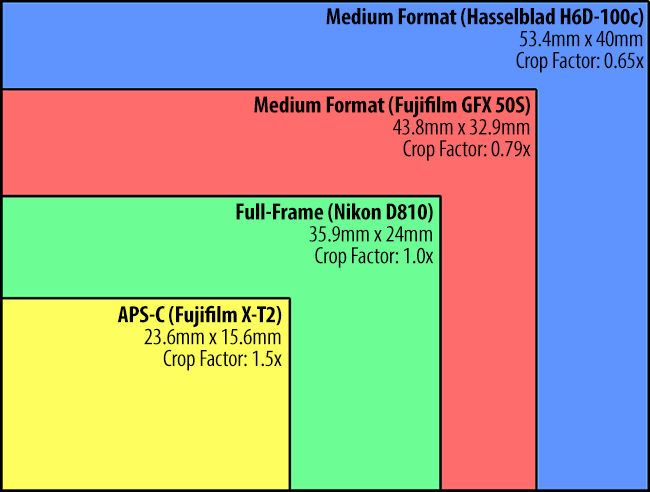
Fujifilm GFX 50S Sensor Comparison
From photographylife.com

This is still a huge sensor by motion picture standards - bigger than Super 35mm Vistavision (37.72mm x 24.92mm) and almost as big as 65mm Ultra Panavision (52.6mm x 23mm) - but large format motion picture cameras cost around $100,000.  That makes the $9,999 GFX 100 with the free Fuji ProRes RAW upgrade a bargain by comparison.

With this announcement, there are now five camera brands (Nikon, Panasonic, Z CAM, Sigma and Fuji) that can record to ProRes RAW with the Ninja V. I'm guessing we will see other brands announced in the future.

This is a very impressive list - especially when compared to only two brands (Blackmagic and Sigma) that can record to Blackmagic RAW today.  If Atomos can get Canon and Sony into the ProRes RAW alliance, that will effectively isolate Blackmagic and put pressure on their sales of both cameras and post-production software.  It will be interesting to see the response from Blackmagic Design.

Fujifilm GFX 100 and Atomos Ninja V on gimbal


All of that said, this is a very exciting announcement and another step towards the democratization of high end motion picture production.  Until today, large sensor cinema has been the exclusive province of Hollywood.  Now, anyone with a $15,000 camera budget can pick up a GXF 100 hybrid still/video mirrorless camera, a Ninja V plus a gimbal and a GF lens and start shooting smooth, "Vistavision plus" RAW cinema.

Welcome to the next phase of the Hybrid Camera Revolution. 


Disclosure of Material Connection: Some of the links in the post above are “affiliate links.” This means if you click on the link and purchase the item, I will receive an affiliate commission. This costs you nothing extra. Regardless, I only recommend products or services I believe will add value to my readers. I am disclosing this in accordance with the Federal Trade Commission’s 16 CFR, Part 255: “Guides Concerning the Use of Endorsements and Testimonials in Advertising.”

Thursday, June 25, 2020

Atomos enables Apple ProRes RAW recording up to 120fps with the SIGMA fp


Here's the press release:

Atomos and SIGMA are today announcing RAW recording over HDMI with the Sigma fp mirrorless camera and Atomos Ninja V HDR monitor-recorder. Together the fp and Ninja V will record Apple ProRes RAW at up to DCI 4Kp24 or UHD 4Kp30 directly from the camera’s full-frame sensor. It will also be the world’s first mirrorless camera to record RAW over HDMI video in HD at 120fps for amazing high speed shots. ProRes RAW gives creators amazing creative control  with flexibility to adjust the color and look of the video, while extending brightness and shadow detail. Footage can be finished in the highest possible quality and dynamic range for either HDR or SDR (Rec.709). The SIGMA fp also becomes the smallest camera combination to record ProRes RAW, opening up a wide range of shooting options. The camera’s small size means you can shoot with the full flexibility of RAW almost anywhere. The fp body is perfect for mounting as a POV or crash camera, for use on gimbals or even worn on the body. Alternatively, with the addition of Ninja V, cage and other accessories, the fp can also be built out into a fully rigged cinema-style camera with the option to use a wide range of L-mount lenses natively, or PL mount, EF mount and many other lenses via the use of adapters. 


The accurate 5” 1000nit HDR high brightness display of the Ninja V allows users to view the SIGMA fp RAW signal in HDR in a choice of HLG and PQ (HDR10) formats for optimal exposure. The monitor also offers touchscreen access to tools like 1-1 magnification and peaking for accurate focus, plus waveform, vectorscope and false color to nail exposure for the perfect HDR or SDR shot. Atomos CEO Jeromy Young said: “With SIGMA joining the Atomos RAW over HDMI family we now have an exciting option for filmmakers to shoot Apple ProRes RAW with a tiny full-frame camera that also excels in 120fps high frame rate shooting. This camera brings SIGMA’s unique approach to the photo industry into video and we are happy to be innovating together with them to enable the fp to shoot the most versatile RAW codec available. The Atomos Ninja V, SIGMA fp and ProRes RAW open up a whole range of creative opportunities for our customers and I can’t wait to see what users can do with it.” 

The Ninja V can also record 422 ProRes and DNx video up to 4kp29.94 and 120p119.88 from the standard 8-bit HDMI output of the SIGMA fp. For reliability and affordability, ProRes RAW or standard video files are recorded to AtomX SSD mini SATA drives in the Ninja V.
SIGMA is the latest major company to announce support ProRes RAW over HDMI. ProRes RAW combines the visual and workflow benefits of RAW video with the incredible real-time performance of ProRes. The format gives filmmakers enormous latitude when adjusting the look of their images and extending brightness and shadow detail, making it ideal for HDR workflows. Both ProRes RAW, and the higher bandwidth, less compressed ProRes RAW HQ are supported. Manageable file sizes speed up and simplify file transfer, media management, and archiving. ProRes RAW is supported in Final Cut Pro X, Adobe Premiere and Grass Valley Edius, along with a collection of other apps including ASSIMILATE SCRATCH, Colorfront and FilmLight Baselight. ProRes RAW recording requires the free SIGMA V2.00 firmware update for the fp available today, and the free AtomOS update for Ninja V which will be available in Summer 2020.

With this upgrade, an amazing camera has become even better.  Even though some still photography blogs have not been able to figure it out, the fp is a uniquely capable camera for video.  It is the only full frame camera that can record RAW internally for less than $2,000 - and the only full frame camera (at any price) that can record 12-bit RAW to a $90 USB-C SSD.  The Z CAM E2 F6 is $3,995, the Canon 1D X Mark III is $6,499 and the other full frame RAW cameras on the market (e.g. the Nikon Z6/Z7 and Panasonic S1H [someday]) can only record RAW externally.

This is a very powerful capability for a $1,799 camera - and it has enabled creators to produce some amazing work when recording to CinemaDNG RAW:


Admittedly, the camera's internal CinemDNG codec leaves something to be desired when it comes to ease of use (thus the ProRes RAW upgrade), but the fact that a $1,799 camera could record full frame,12-bit RAW to a $90 SSD straight out of the box was almost unbelievable.  Now that the camera can be upgraded to send RAW output to the Ninja V and record to ProRes RAW, it becomes an even more attractive option.

If you're a filmmaker on a budget who wants the full frame "look" plus the creative flexibility of RAW, the Sigma fp could be the right camera for you.


Disclosure of Material Connection: Some of the links in the post above are “affiliate links.” This means if you click on the link and purchase the item, I will receive an affiliate commission. This costs you nothing extra. Regardless, I only recommend products or services I believe will add value to my readers. I am disclosing this in accordance with the Federal Trade Commission’s 16 CFR, Part 255: “Guides Concerning the Use of Endorsements and Testimonials in Advertising.”

Monday, August 26, 2019

Best cinema camera below $1000 - Blackmagic Micro Cinema Camera or Z-CAM E2C?


Blackmagic Micro Cinema Camera (left) vs. Z-CAM E2C (right)

With the buzz around the recent releases of new Super 35 6K and Micro 4/3 4K cameras from Blackmagic Design and Z-CAM, the less expensive cameras in their product lines have gone relatively unnoticed.

But for filmmakers who can't afford a sub-$3000 6K camera such as the $2495 BMPCC 6K or the $2995 Z-CAM E2 S6 - or even a sub-$2000 4K camera such as the $1295 BMPCC4K or the $1995 Z-CAM E2 - a 10-bit or higher cinema camera below $1000 is a big deal.

Well, there are now two cameras in this price range that can shoot ProRes and/or RAW - the $995 Blackmagic Design Micro Cinema Camera and the new $799 Z-CAM E2C.

Each camera has advantages and disadvantages, so deciding which one to choose for your project will depend on which feature-set you need.

Here are the high level specs for the two cameras, with pros and cons:

  • 1080/60p
  • 12.48mm x 7.02mm (Super 16) sensor
  • Canon LP-E6 battery
  • 13 advertised stops of dynamic range (DR)
  • CinemaDNG RAW and ProRes
  • PWM & S-Bus external control
  • USB 2.0 Mini B data connection
  • 82.3mm x 66.0mm x 69.6mm (W x H x D)
  • Weighs 300.5 grams
Pros: CinemaDNG RAW, 13 stops of DR, readily available.
Cons: Limited to 1080p resolution, small sensor with 3X crop factor, external monitor required, no wireless or streaming, listed at $995 (but starting to see discounts).

  • 4K/30p and 1080/60p
  • 17.56mm x 13.11mm (Micro 4/3) sensor
  • Canon LP-E6 battery
  • 11.5 advertised stops of DR with Z-Log2
  • 10-bit h.265 (Z CAM is working on getting it ProRes certified)
  • Wi-fi & Ethernet external control and streaming
  • USB 3.0 data connection
  • 91.2mm x 83.9mm x 89.1mm (W x H x D)
  • Weighs 668 grams
Pros: 4K, larger sensor with ~2x crop factor, free iOS app for control and preview from iPhone, wireless control & streaming, $799 price.
Cons: DR with LOG no better than a hybrid still/video mirrorless camera, still a pre-order item as of this post, but starting to appear in the wild. (UPDATE: now widely available)

I didn't mention it as a pro or con - but the BMMCC is somewhat smaller and weighs half as much.

The headline differences between the two cameras, of course, are that the Z-CAM records to 4K, while the Blackmagic is limited to 1080p - and that the BMMCC records to RAW, while the E2C is limited to 10-bit h.265. (UPDATE: the E2C can now record ZRAW to inexpensive SSD drives such as the Samsung T5).

In my view, 4K 12-bit ZRAW from the E2C looks pretty darned good:


...but so does 1080p RAW from the BMMCC:


.

So it really boils down to two questions - 1) which is most important to you - the E2C's 4K resolution or the Micro Cinema Camera's dynamic range? - and 2) how much camera can you afford?

I can't answer those questions for you - but I can say that the new Z-CAM E2C is a very impressive camera for the price - and low budget filmmakers never had it so good.


Disclosure of Material Connection: Some of the links in the post above are “affiliate links.” This means if you click on the link and purchase the item, I will receive an affiliate commission. This costs you nothing extra. Regardless, I only recommend products or services I believe will add value to my readers. I am disclosing this in accordance with the Federal Trade Commission’s 16 CFR, Part 255: “Guides Concerning the Use of Endorsements and Testimonials in Advertising.”

Friday, February 15, 2019

New Atomos Shinobi super bright HDR touchscreen monitor - available now for $399


Today, Atomos announced the Shinobi - which takes the great 1000 nit HDR touchscreen from the $695 Ninja V and turns it into a $399 5" monitor.

From Atomos:

  • When you’re shooting video on mirrorless cameras and DSLRs, the Shinobi gives you the perfect view and is packed with the latest features, but is small and light enough to take anywhere – weighing in at a mere 200g (7 oz).


  • Shinobi shares the same HDR 1920x1080 display and color processing found in the multi-award-winning Atomos Ninja V monitor/recorder. With a professional 1000nit brightness screen it can be seen clearly even in daylight.


  • It has an impressive pixel density of 427 PPI (pixels per inch) and is factory calibrated for color accuracy.

The Shinobi's "Atomos Analysis" view allows you to simultaneously see what you are shooting, view a waveform, histogram and vector scope.

You can even switch between different waveform, histogram and vector scope options 'on the fly', with a single touch.


Atomos Shinobi Analysis View

Here's the Shinobi promo video from Kai Wong:


If you need a bright 5" monitor with HDR, a touchscreen and professional exposure control, Shinobi is shipping now.


Disclosure of Material Connection: Some of the links in the post above are “affiliate links.” This means if you click on the link and purchase the item, I will receive an affiliate commission. This costs you nothing extra. Regardless, I only recommend products or services I believe will add value to my readers. I am disclosing this in accordance with the Federal Trade Commission’s 16 CFR, Part 255: “Guides Concerning the Use of Endorsements and Testimonials in Advertising.”

Wednesday, September 5, 2018

Death knell for the DSLR? Canon introduces full frame mirrorless EOS R (with video)


It's here - this morning, Canon formally announced the new EOS R line of full frame mirrorless cameras and lenses.  It is somehow fitting that this release took place a decade after the Photokina 2008 introduction of the world's first mirrorless interchangeable lens camera, the groundbreaking Panasonic DMC-G1.

With Sony full frame mirrorless cameras outselling Nikon and Canon DSLRs, it was only a matter of time before the two biggest DSLR makers in the world saw the handwriting on the wall.


First Nikon - and now Canon have each introduced a full frame mirrorless 4K camera line and are now contenders for the 'best mirrorless camera' title.


And so, the ten year battle between reflex mirrors and electronic viewfinders is essentially over and the electrons seem to have won.


We'll have to see how this plays out in the marketplace, but my guess is that it will hard to find a full frame DSLR on the show floor at Photokina 2028.


As a still camera, the EOS R is a good value for money - its 30.3MP sensor gives it higher resolution than the comparably priced Sony A7 III and Nikon Z6.  And dual pixel AF will give it an advantage over Sony and Nikon. That said, at HCR what we really care about is video.


Video Performance


Although we were underwhelmed by the EOS R's leaked video specs (please see our previous post), the image quality from early sample videos seems to be very good.  The production values are high (much higher than the production value in the recent samples from the BMPCC 4K) and the dynamic range looks as good as a high-priced Canon Cinema EOS 4K camcorder (on YouTube and Vimeo, at least).


The first sample was shot at 4K (8-bit internal) by Devin "Supertramp" Graham with new Canon RF glass, as seen in the video and behind-the-scenes below:


The second sample was shot by Canon Ambassador Nicolai Brix.  It is 10-bit 1080p output to an Atomos recorder.  According to this morning's press release from Atomos, the EOS R's 4K 10-bit output is fully compatible with their new Ninja V recorder monitor.


Although Canon claims that the EOS R system is a "complement" to their full frame DSLRs, my guess is that this camera will very quickly outsell the 5D Mark IV and 5DS.

We have to hand it to Canon - they have come to the party late and with an under-spec'd camera (no 1080/120p slow motion, no IBIS, 1.7x 4K crop) - but Canon color, fast autofocus and compatibility with EF lenses will cause a lot of EOS shooters who were tempted to jump ship to either stay with Canon or perhaps even come home from Sony and Panasonic.

Well played, Canon - well played.

If you'd like to pre-order the Ninja V, please click on the links here in the text or the display at the bottom of the page.

It won't cost you anything extra, and will help keep these posts coming.

Sadly, the EOS R is not yet available for pre-order, but if you want to learn more from Adorama, click on the banners at the top and bottom of the page.

Thanks for supporting the Hybrid Camera Revolution!


Disclosure of Material Connection: Some of the links in the post above are “affiliate links.” This means if you click on the link and purchase the item, I will receive an affiliate commission. This costs you nothing extra. Regardless, I only recommend products or services I believe will add value to my readers. I am disclosing this in accordance with the Federal Trade Commission’s 16 CFR, Part 255: “Guides Concerning the Use of Endorsements and Testimonials in Advertising.”

Sunday, September 2, 2018

Leaked! Spec sheet for Canon EOS R full frame mirrorless


Image courtesy of Nokishita Camera

Japanese site Nokishita Camera has posted a set of alleged specs and pics of the soon-to-be-announced Canon EOS R full frame mirrorless.

Looks like it will be a full frame 30.3MP still camera with 5,655 focus points and a maximum burst rate of 110 fps.

That said, although we're a hybrid still photo/video blog here at HCR, anyone who has spent any time following us knows that our primary interest is video - so here's our take on the video specs for this camera:

The Good:
  • Codec is MPEG-4 AVC/H.264 (ALL-I and IPB up to 480mbps) - no more memory hungry MJPEG
  • UHD on a full frame Canon mirrorless 
  • Dual pixel AF at all resolutions
  • Some websites are reporting a fully articulated LCD (!)

The Not-so-good:
  • Still limited to 29 minutes, 59 seconds of continuous recording
  • No DCI 4K
  • No 10-bit (internal or external)
  • No in-body stabilization
  • 60 fps slow motion limited to 1080p resolution (no 4K/60p)
  • 120 fps slow motion limited to 720p resolution (no 1080/120p)
  • A single (SD) card slot
Video section of the spec sheet below (click on image to expand):


To be honest, I'm not really impressed.  If these specs are accurate, this looks like another 8-bit camera that fixes the 5D Mark IV's most egregious problems but isn't much of a technology leap.

The new Nikon Z6 and Z7 cameras, with their 10-bit N-LOG output, will be highly competitive with this camera - and if Panasonic finally enters the full-frame fight later this month with a 10-bit internal camera, 2019 will be a great year for 4K full frame video.

If, after seeing the EOS R's specs, you've decided to go ahead and pre-order the Nikon Z6 or Z7, please click on one of the links above or the display ads at the bottom of this post.

It won't cost you anything extra and will help keep these posts coming.

Thanks for supporting the Hybrid Camera Revolution!


Disclosure of Material Connection: Some of the links in the post above are “affiliate links.” This means if you click on the link and purchase the item, I will receive an affiliate commission. This costs you nothing extra. Regardless, I only recommend products or services I believe will add value to my readers. I am disclosing this in accordance with the Federal Trade Commission’s 16 CFR, Part 255: “Guides Concerning the Use of Endorsements and Testimonials in Advertising.”

Wednesday, August 29, 2018

First official videos from the Blackmagic Pocket Cinema Camera 4K

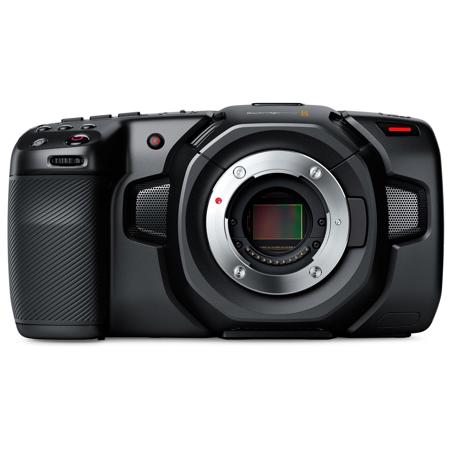
Blackmagic Design Pocket Cinema: Picture 1 regular
Blackmagic Design Pocket Cinema Camera 4K - $1295


In the four months since the BMPCC 4K's introduction at NAB 2018, the biggest question surrounding this camera has been "will the image quality meet the high expectations set by the amazing specs?"

Over the past few days, filmmakers Mark Wyatt, John Brawley, Andreas Neumann, Peter Nearhos and Areia Creations and Sitipong Kongtong - have released several official and unofficial sample videos that go a long way towards answering that question.

'Mountain', 'Zoo',  'Bubble Gum' and 'Dreamcatcher' were shot in RAW, while the rest were shot in ProRes, so we get to see both codecs in action. 

Here are all of the samples released to date (please watch at 2160p and your monitor's highest resolution):


'Zoo', 'Bubble Gum' and 'Dreamcatcher' are downloadable from their Vimeo pages, and the official Blackmagic videos are downloadable directly from Blackmagic Design so you can test grade them yourself.

Some have observed that these images could have been produced with a GH5/GH5s or an A7 III. Perhaps so, it's hard to say with YouTube/Vimeo compression.

But the GH5, GH5s and A7 III all cost more than $1300 (in some cases, a lot more), so I'm sticking with my BMPCC 4K pre-order - and can't wait to get my hands on this camera.

If, after seeing these samples, you'd like to pre-order the camera from Adorama, please click here or on the images at the top and bottom of this post. 

It won't cost you anything extra, Adorama won't charge your card until the camera ships and it will help to keep these blog posts coming.

Thanks for supporting the Hybrid Camera Revolution!


Disclosure of Material Connection: Some of the links in the post above are “affiliate links.” This means if you click on the link and purchase the item, I will receive an affiliate commission. This costs you nothing extra. Regardless, I only recommend products or services I believe will add value to my readers. I am disclosing this in accordance with the Federal Trade Commission’s 16 CFR, Part 255: “Guides Concerning the Use of Endorsements and Testimonials in Advertising.”